



Pink Lustre Ceramic
These pink lustre ceramic pieces bring metallic sheen and maritime transfer prints to the table, offering a tangible slice of nineteenth-century trade and pottery history.
Pink Lustre Ceramic
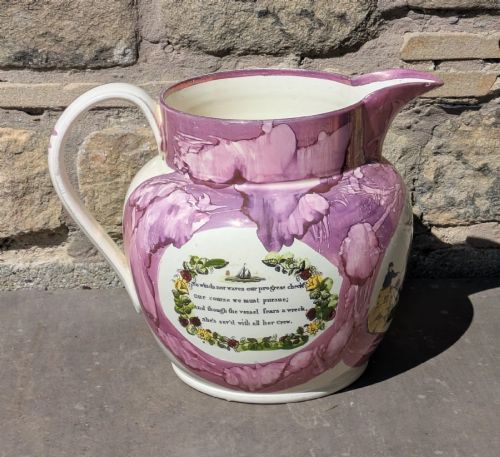
When you search for pink lustre ceramic, you are looking at earthenware and pearlware items decorated with a metallic glaze that fires to a shimmering rose colour. The pieces most commonly met on this page are jugs, pitchers, and bowls spanning the Georgian and Victorian periods.
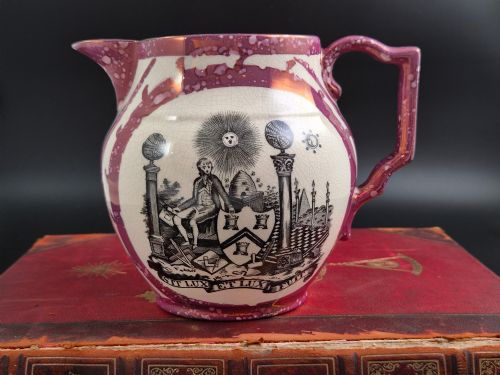
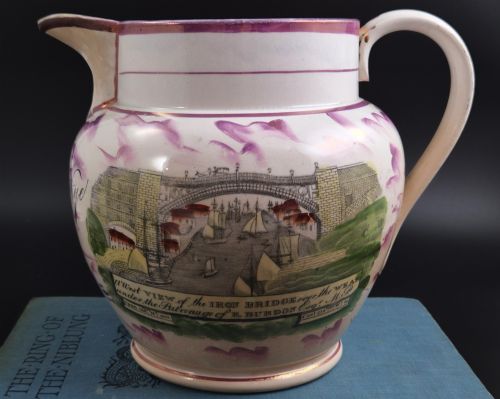
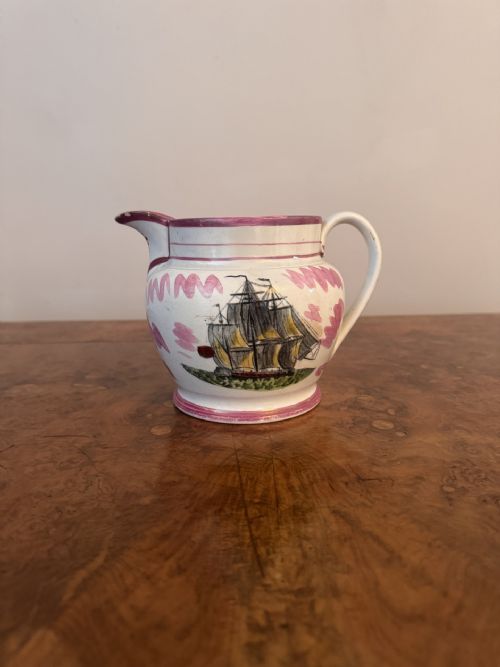
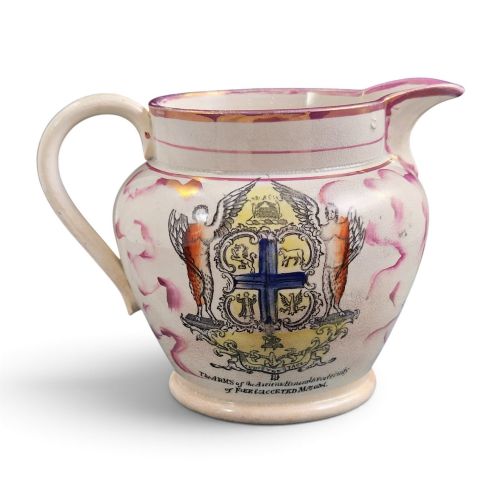
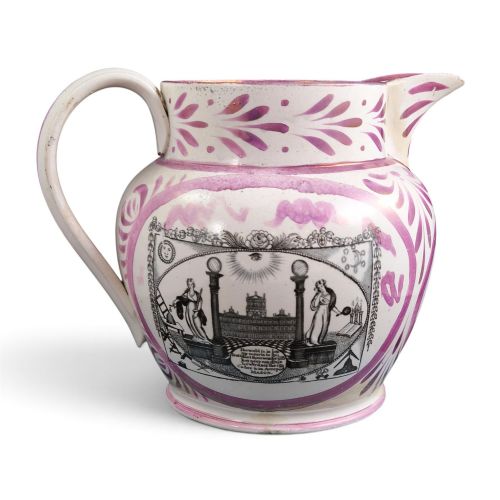
Many of these vessels originate from Sunderland and Staffordshire potteries, carrying transfer-printed scenes of ships, bridges, or Masonic emblems alongside poetic verses. Jugs and pitchers dominate the selection, ranging from standard table vessels to large commemorative display pieces.
While the core of the inventory centres on nineteenth-century earthenware, later twentieth-century variations also appear, including dragon bowls and patterned teacups. Buyers encounter everything from modest domestic items to large vessels bearing detailed maritime themes.
Materials and technique
Potters built these items using earthenware, pearlware, or ceramic bodies, often shaping them into jugs, bowls, and teacups. The characteristic metallic glaze relied on metallic oxides and gold leaf applied to the surface before a secondary low-temperature firing.
Transfer printing provided the underlying pictorial scenes, using engraved copper plates to apply purple or black transfer decoration onto the pottery. Artisans then added the lustre glaze by hand, creating either an even sheen or a mottled splash effect across the surface.
Pink Lustre Ceramic Retail Price Guide 2026
Typical asking prices for pink lustre ceramic among the pieces listed under this phrase on Sellingantiques today, from the lower quarter to the upper quarter. They describe what is for sale here now, not the wider market.
Early potters occasionally added poetic verses to maritime jugs, ensuring every sailor had a moral lesson poured right into his tea.
Qualities that set pieces apart
The crispness of the transfer print and the depth of the metallic glaze determine the visual impact of an individual item. Finer examples display bold, clear maritime scenes or detailed Masonic emblems without blurring in the purple transfer decoration.
The application of the pink lustre itself creates variation, with controlled splash effects and rich metallic oxide coverage distinguishing superior vessels from simpler, plain-glazed wares. Scale and form also matter, as larger commemorative jugs with named panels command greater attention than standard utility cups.
Garrison Pottery·Wedgwood
The Pink Lustre Ceramic Glossary
- Pink lustre
- A ceramic glaze incorporating gold or other metallic oxides that produces a shimmering pink or purple metallic sheen upon firing. It appears frequently on nineteenth-century jugs and bowls.
- Pearlware
- A refined earthenware developed in the late eighteenth century with a slightly bluish glaze that pooled in crevices. It served as a common body for early lustre-decorated wares.
- Transfer print
- A decorative technique where an engraved metal plate transfers a design onto paper and then onto the ceramic surface. This method allowed potters to produce complex maritime and poetic scenes consistently.
- Splash lustre
- A decorative variation where the metallic glaze is flicked or splashed across the ceramic body rather than applied in a solid coat. This creates a mottled, marbled pink appearance.
- Earthenware
- A porous pottery body fired at lower temperatures, commonly used for domestic jugs and pitchers before being glazed and decorated.
Pink Lustre Ceramic: Frequently Asked Questions
What is pink lustre ceramic?
It is earthenware pottery decorated with a metallic glaze containing gold or other oxides that fires to a pink or purple sheen.
Potters during the Georgian and Victorian eras used this technique primarily on jugs, bowls, and tea wares, often combining it with transfer-printed maritime or Masonic designs.
How were these jugs used?
Many of these vessels served practical domestic functions for pouring liquids at the table or in inns.
Larger examples functioned as commemorative pieces, celebrating sailors, local bridges, or fraternal orders rather than serving daily household needs.
How do I date a piece?
Dating relies on examining the ceramic body, such as distinguishing early pearlware from later Victorian earthenware, along with stylistic clues in the transfer prints.
Named and dated inscriptions on pieces like Sunderland jugs provide direct chronological markers for specific styles.
How do I care for pink lustre?
These fragile ceramic items require gentle handling and hand washing to protect the delicate metallic glaze and transfer-printed decoration.
Avoid abrasive cleaners and harsh scrubbing, which can wear away the thin metallic film and gold leaf over time.