

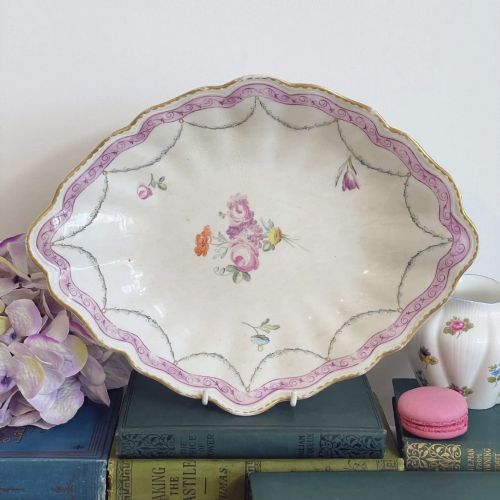


Pink Hand Painted Tray
These pink hand painted tray pieces bring colour and hand-finished detail to a room, offering both decorative presence and practical service.
Pink Hand Painted Tray
A pink hand painted tray brings together painted botanical or floral motifs and ceramic forms, ranging from ribbon-edged porcelain to trefoil and hexagonal shapes. When searching for a pink hand painted tray, buyers encounter items produced across multiple centuries, including Georgian wares and pieces from the nineteenth and twentieth centuries.
The selection includes serving dishes, dessert sets, and planters with drip trays alongside decorative trays and platters. British factories such as Royal Worcester and Wemyss sit alongside Chinese export porcelain and continental European wares.
Most examples rely on floral subjects, featuring cabbage roses, fruit bouquets, and polychrome flowers applied by hand. Forms vary from traditional serving plates to specialised shapes like shamrock and trefoil trays.
How they were made
Makers utilised porcelain, bone china, glazed earthenware, and enamel as the primary substrates for these painted surfaces. Artisans applied polychrome pigments directly to the ceramic body, often incorporating gold leaf or gilt detailing to highlight rims and handles.
Firing techniques varied according to the period, with eighteenth-century pieces utilising underglaze or overglaze enamels fixed in kilns. Later twentieth-century items maintained hand-painting traditions on refined porcelain bases, sometimes featuring maker marks or seals on the underside.
Pink Hand Painted Tray Retail Price Guide 2026
Typical asking prices for pink hand painted tray among the pieces listed under this phrase on Sellingantiques today, from the lower quarter to the upper quarter. They describe what is for sale here now, not the wider market.
Materials recorded across the inventory include porcelain, bone china, glazed earthenware, enamel, gold leaf, and gilt.
What varies in quality
The skill of the brushwork dictates the distinction between standard production and superior examples, particularly in the rendering of floral details and foliage. Signed pieces or those carrying specific factory marks demonstrate higher artistic intent and documented origin.
The preservation of the painted surface and any applied gold leaf or gilding influences the overall standard of a piece. Finer items retain crisp enamel colours without significant rubbing or loss across the decorated areas.
Herend·Derby·Wemyss·Royal Worcester
The Pink Hand Painted Tray Glossary
- Famille Rose
- A major palette of Chinese ceramic glazes featuring opaque pink enamel, introduced during the Qing dynasty. This grouping dominates many antique export porcelain items.
- Polychrome
- Decorated in several colours. This term describes ceramic pieces featuring hand-painted floral and pictorial designs in varied hues.
- Gilt
- Covered thinly with gold leaf or gold paint. Artisans applied this finish to accent the borders and handles of serving trays.
- Trefoil
- Having the shape of a clover with three leaves. Potters utilised this outline for specialised decorative trays and dishes.
- Earthenware
- Pottery made of clay fired to a porous state and then glazed. Glazed varieties serve as the base body for certain hand-painted decorative wares.
Pink Hand Painted Tray: Frequently Asked Questions
How do I clean a painted tray?
Clean these surfaces gently with a soft, dry cloth or a slightly damp sponge without harsh detergents. Avoid immersing antique gilt or enamel items in water for extended periods.
Protect the painted and gilded details from abrasive sponges or chemical cleaners to preserve the original finish.
Can I use these for food?
Many of these pieces functioned originally as serving dishes, dessert sets, or platters for dining tables. Older enamel and painted surfaces require careful consideration depending on wear and glaze stability.
Verify the condition of the glaze before serving food directly on eighteenth or nineteenth-century ceramic items.
How do I date an antique tray?
Examine the base for factory marks, seals, or blue underglaze stamps that indicate specific potteries and production eras. Stylistic clues such as Neo-Rococo shapes or Chinese export characteristics also help narrow the timeline.
Compare the ceramic body, weight, and painting technique with documented examples from periods like the Georgian era or the early twentieth century.
Where should I display a tray?
Display these items on flat surfaces, within cabinets, or mounted securely on walls depending on the tray depth and weight. Planters and drip trays suit tabletops where their painted motifs remain visible.
Keep pieces away from direct sunlight to prevent the hand-painted pink and polychrome enamels from fading over time.