

Pink Glass Lighting
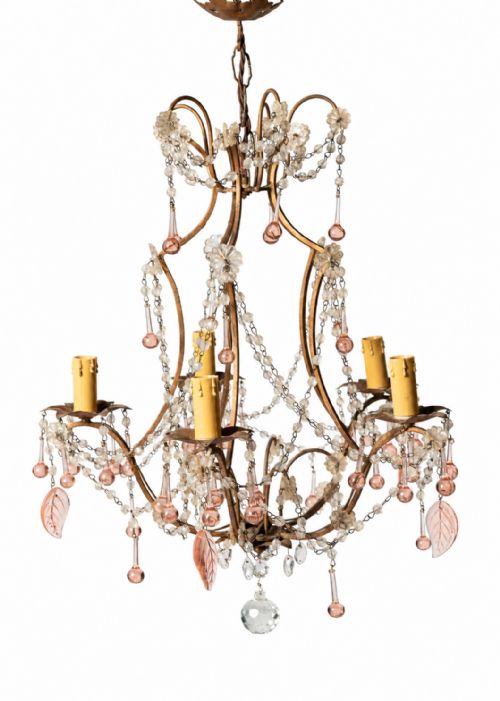
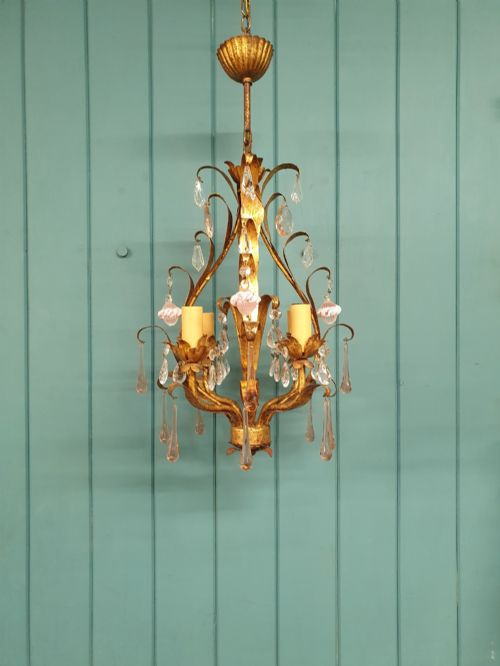
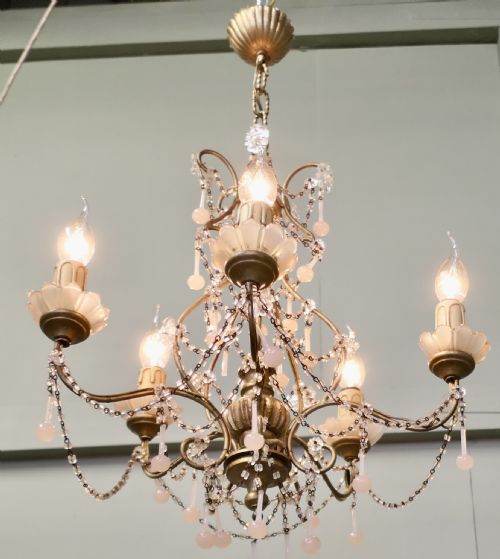
Pink glass lighting brings a warm, rosy glow to a room through Victorian oil lamps and Art Deco chandeliers.
Pink Glass Lighting
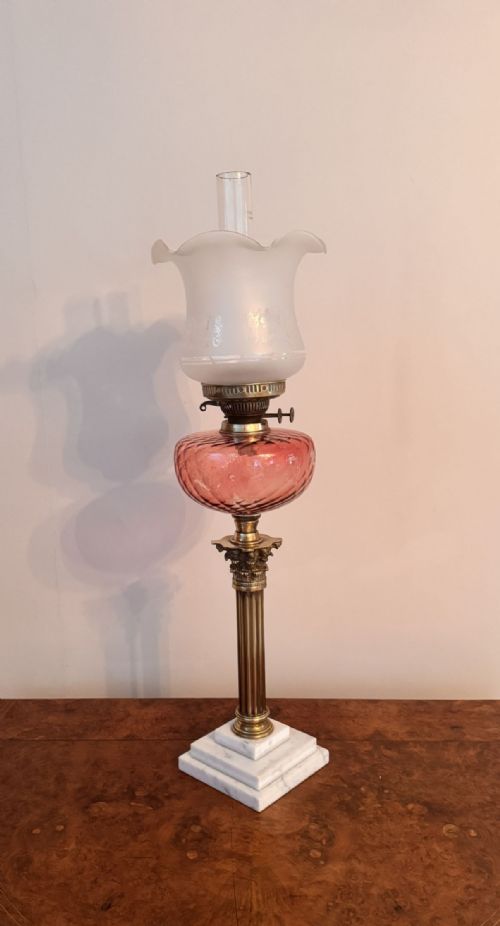
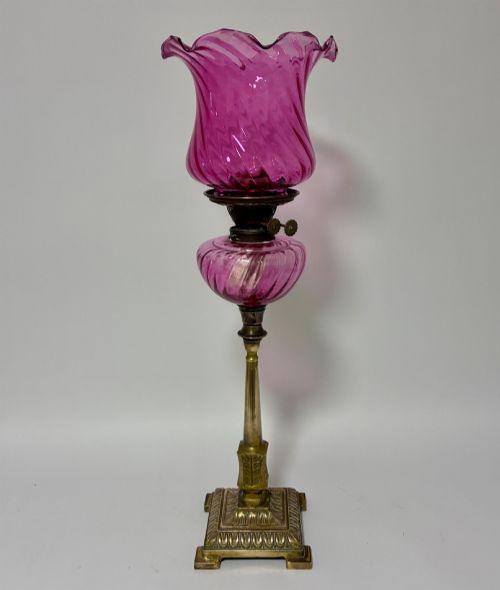
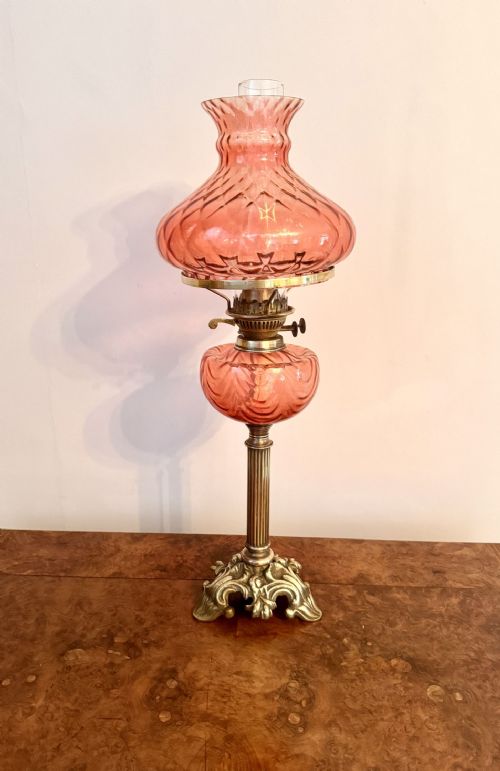
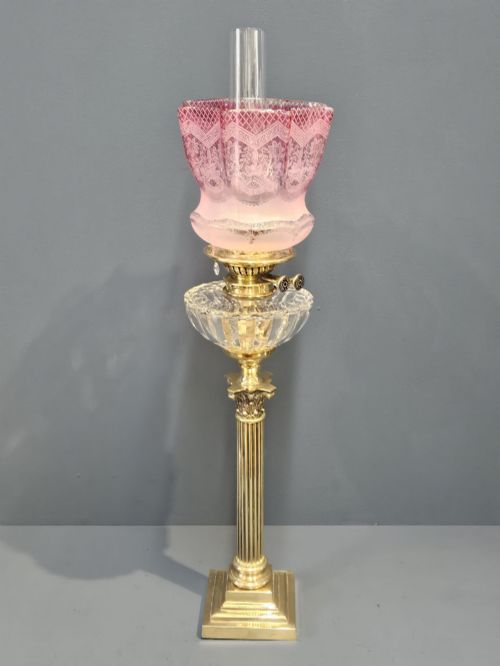
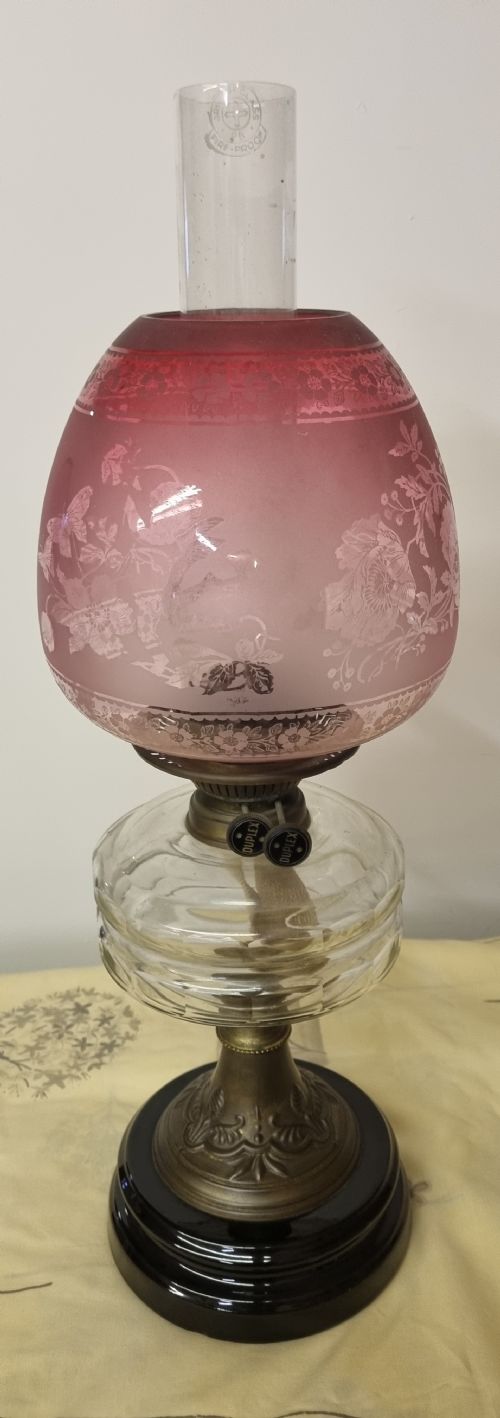
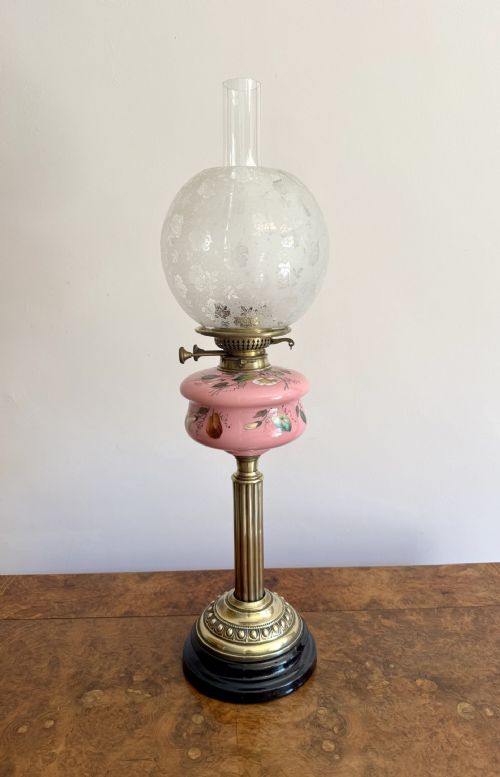
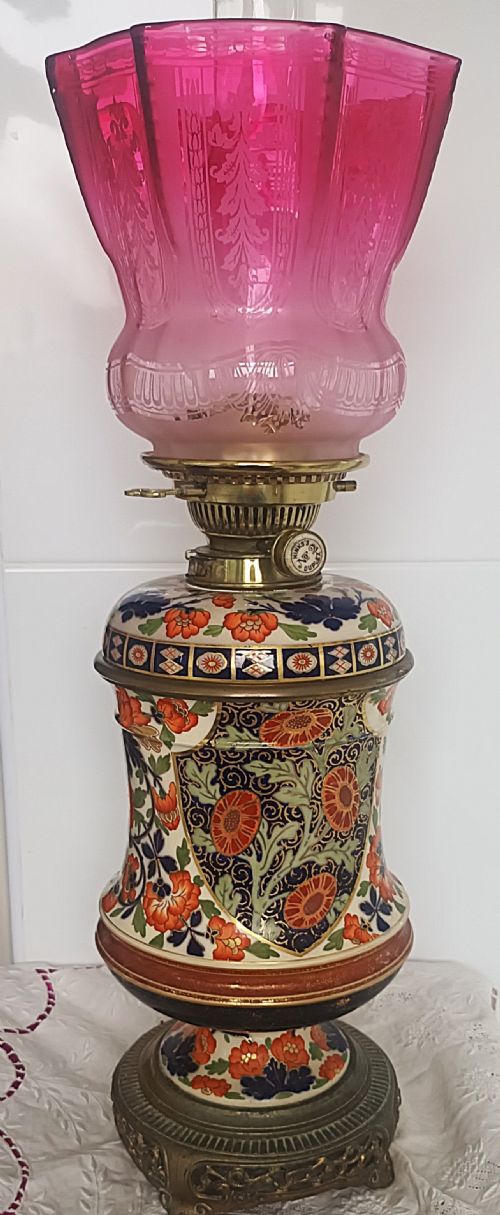
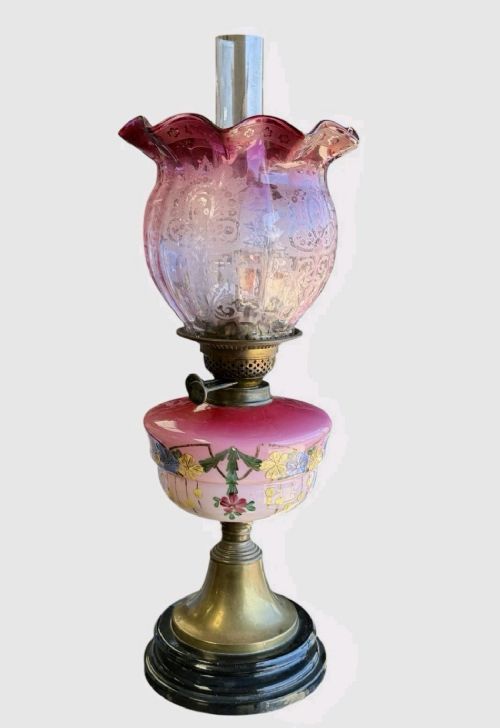
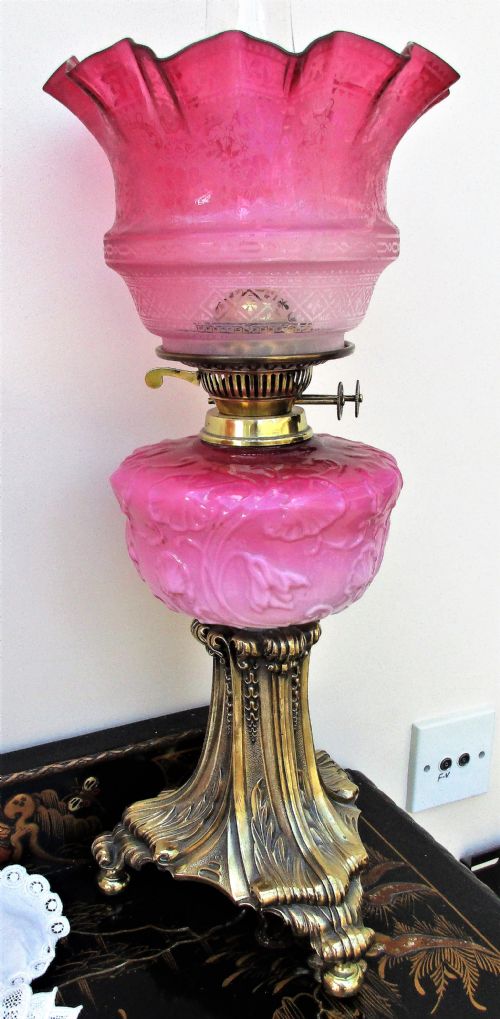
Pink glass lighting encompasses functional and decorative pieces spanning the Victorian, Edwardian, and Art Deco periods, ranging from oil lamps to multi-arm chandeliers. Buyers searching for pink glass lighting most frequently encounter Victorian oil lamps featuring cranberry or opaque pink glass fonts and matching shades paired with brass bases.
Form and function intertwine closely in these pieces, which include table lamps, floor lamps, hanging ceiling lights, and lustres. Earlier examples rely on oil as a fuel source, whilst later twentieth-century pieces adopt electric fittings for modern interiors.
How they were made
Glassmakers produced the characteristic pink and cranberry hues by adding gold or copper compounds to the molten batch before blowing or moulding the vessels. Metalworkers combined brass, crystal, porcelain, and marble to form the structural mounts, columns, and bases that support the glass elements.
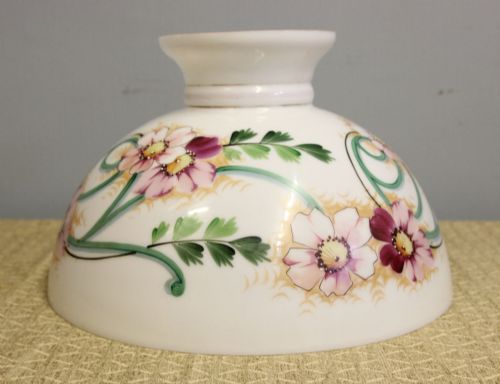
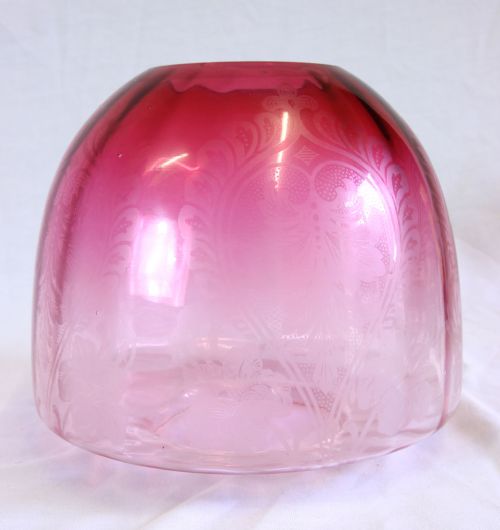
Many shades and fonts received additional hand-painted enamel decoration, etched patterns, or crimped rims while the glass remained pliable or after initial cooling. Metal components such as swan neck brackets and adjustable standards utilised cast and turned brass techniques typical of nineteenth and early twentieth-century workshops.
Pink Glass Lighting Retail Price Guide 2026
Typical asking prices for pink glass lighting among the pieces listed under this phrase on Sellingantiques today, from the lower quarter to the upper quarter. They describe what is for sale here now, not the wider market.
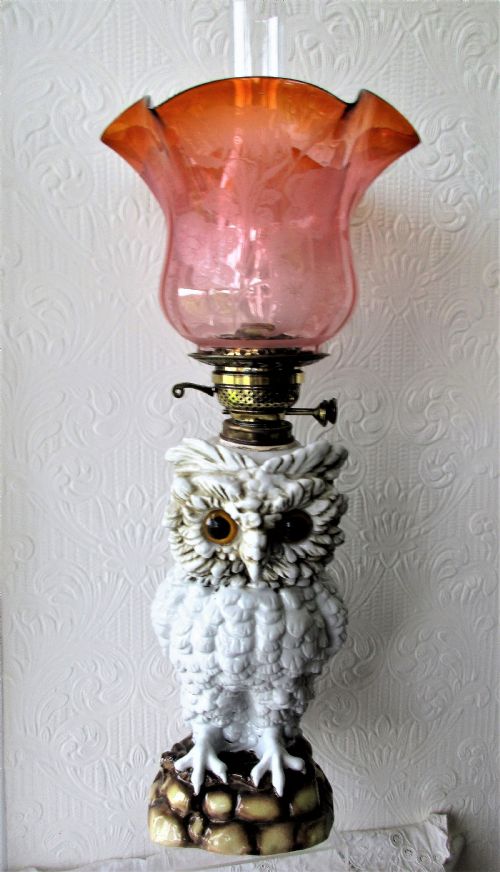
An owl-shaped porcelain oil lamp sits quietly amongst the glassware, watching over the room with painted ceramic eyes.
What varies in quality
The sophistication of the glass colour and the crispness of any hand-painted or etched surface decoration separate standard production items from finer examples. Heavy brass casting, telescopic mechanisms, and matching original shades indicate superior workshop standards during the Victorian and Edwardian eras.
Proportion and material integration dictate the overall success of a piece, particularly in complex multi-branch chandeliers and large oil lamps where brass, porcelain, and coloured glass meet.
Hinks / Taylor Tunnicliff·Sitzendorf
The Pink Glass Lighting Glossary
- Cranberry glass
- A rich red-pink transparent glass created by adding gold chloride to the molten metal. It is widely seen in Victorian oil lamp fonts and shades.
- Lustre
- A decorative glass mantel ornament featuring hanging crystal prisms that catch and reflect light. They often share the same pink glass palette as contemporary lamps.
- Font
- The oil reservoir section of a lamp, usually positioned above the base and below the burner. In these pieces, the font is frequently made of coloured or painted glass.
- Opaline glass
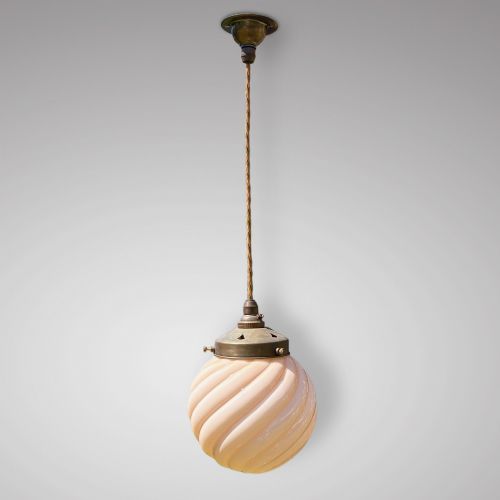
- An opaque, pale glass that diffuses light softly. It appears frequently in Edwardian and Art Deco pendant shades and lighting fixtures.
Pink Glass Lighting: Frequently Asked Questions
Are these oil lamps still usable?
Most antique oil lamps have been converted to electricity for safe modern domestic use.
Original burners and fittings are frequently retained for decorative authenticity even when the wiring has been updated.
How do I clean pink glass shades?
Warm water and mild soap suit smooth glass surfaces, avoiding harsh abrasives that might damage painted or gilt details.
Care should be taken around hand-painted enamel sections and delicate crimped glass edges during cleaning.
What is the difference between cranberry and pink glass?
Cranberry glass achieves a deep, translucent red-pink tone through the use of gold in the glass batch. Standard pink or opaque glass relies on different mineral agents to create a solid or pastel hue.
Both varieties appear across Victorian and Edwardian lighting fixtures.
How do I date a brass and glass lamp?
Victorian examples often feature Corinthian columns, heavy brass bases, and hand-painted fonts. Later Art Deco pieces display geometric lines, opaline shades, and simpler marble or spelter supports.
Adjustable mechanisms and telescopic columns also help distinguish late nineteenth-century designs from early twentieth-century production.