

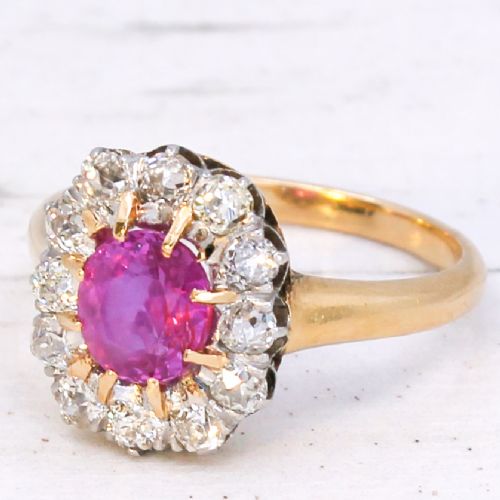

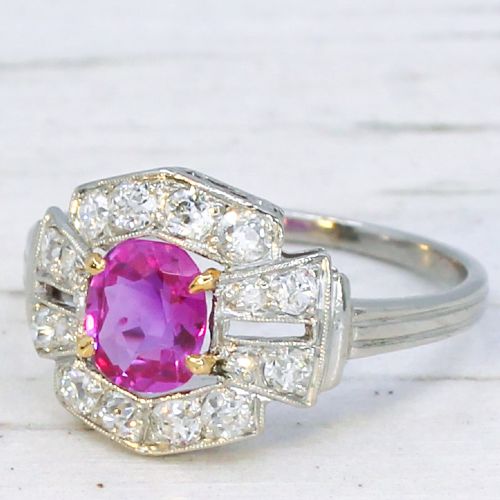


Pink Gemstone Cluster Ring
A pink gemstone cluster ring brings together vibrant coloured stones and sparkling diamonds, offering a striking display of period craftsmanship that catches the eye immediately.
Pink Gemstone Cluster Ring
A pink gemstone cluster ring centres on a prominent pink stone, frequently a sapphire, tourmaline, spinel, or coral, encircled by smaller diamonds or pearls. These pieces appear across Victorian, Edwardian, Art Deco, and Mid-Century periods, showing shifting tastes in mountings and stone arrangements.
The most common examples on this page date from the Victorian era through the Art Deco period and into the mid-twentieth century. Buyers encounter both delicate floral pearl designs from the nineteenth century and geometric platinum or white gold mountings from the nineteen-thirties.
How they were made
Goldsmiths and jewellers utilised precious metals ranging from fifteen-carat yellow gold in Victorian pieces to platinum and eighteen-carat white gold during the Art Deco period. Metals were hammered, cast, and shaped to secure central pink stones alongside supporting diamonds.
Stones were hand-set into claw, bezel, or pave settings designed to maximise light passage through unheated sapphires, tourmalines, and spinels. Seed pearls and coral were threaded or pegged into place with precision during the nineteenth century.
Pink Gemstone Cluster Ring Retail Price Guide 2026
Typical asking prices for pink gemstone cluster ring among the pieces listed under this phrase on Sellingantiques today, from the lower quarter to the upper quarter. They describe what is for sale here now, not the wider market.
Listings span seven distinct decades, stretching from eighteen-eighty Victorian pieces through to nineteen-sixty Mid-Century designs.
What varies in quality
The quality of a pink gemstone cluster ring rests primarily on the saturation, clarity, and origin of the central stone, alongside the brilliance of the surrounding diamonds. Natural unheated pink sapphires from Burma or Ceylon command attention for their depth of colour.
The integrity of the metalwork and the precision of the stone setting also distinguish finer examples. Heavier gold Shanks, intact platinum millegrain work, and secure claw settings reflect higher standards of period workmanship.
The Pink Gemstone Cluster Ring Glossary
- Cluster ring
- A ring featuring a central gemstone surrounded by a group of smaller stones, typically diamonds or pearls. This arrangement maximises visual impact and presence on the hand.
- Millegrain
- A decorative jewellery technique involving a line of tiny raised metal beads along the edge of a setting. It was particularly popular during the Edwardian and Art Deco periods.
- Unheated
- A gemstone that has undergone no artificial thermal enhancement to improve its colour or clarity. Natural unheated sapphires are prized by collectors.
- Spinel
- A durable natural gemstone frequently found in historic jewellery alongside sapphires and rubies. It occurs in various shades including vivid pink.
Pink Gemstone Cluster Ring: Frequently Asked Questions
How do I date a pink gemstone cluster ring?
Dating relies on the combination of metal types, stone cuts, and overall design characteristics. Victorian pieces often feature fifteen-carat yellow gold with pearls or tourmalines, whereas Art Deco examples utilise platinum or white gold with geometric diamond borders.
Examining the underside of the setting and the shank style provides further clues regarding the manufacturing period.
Are these pink sapphires treated?
Many period stones listed are unheated, meaning they display their natural geological colour without thermal enhancement. Evidence in descriptions frequently highlights unheated Burmese or Ceylon origins.
Checking specific listing details helps confirm whether a sapphire has remained in its natural state since extraction.
Can I wear my cluster ring daily?
Diamonds, sapphires, and spinels possess high durability suitable for regular wear. However, rings set with softer materials such as pearls or coral require greater care to avoid abrasion and moisture damage.
Removing antique rings during vigorous activities protects delicate settings and older metal claws from undue stress.
What metals are used in these rings?
Makers utilised a variety of precious metals depending on the decade of production. Nineteenth-century examples frequently feature fifteen-carat yellow gold.
Later pieces from the nineteen-thirties onwards often incorporate platinum or eighteen-carat white gold to complement the sparkle of surrounding diamonds.