





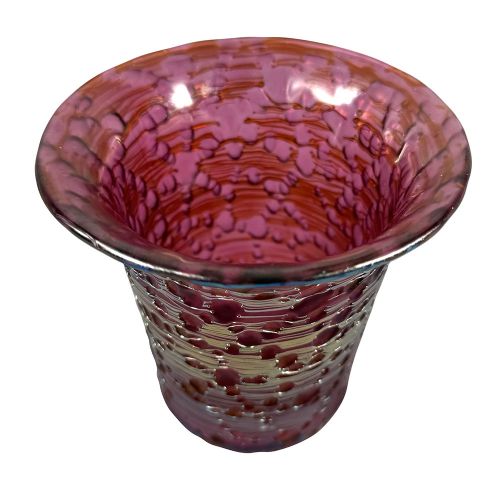


Pink Art Glass
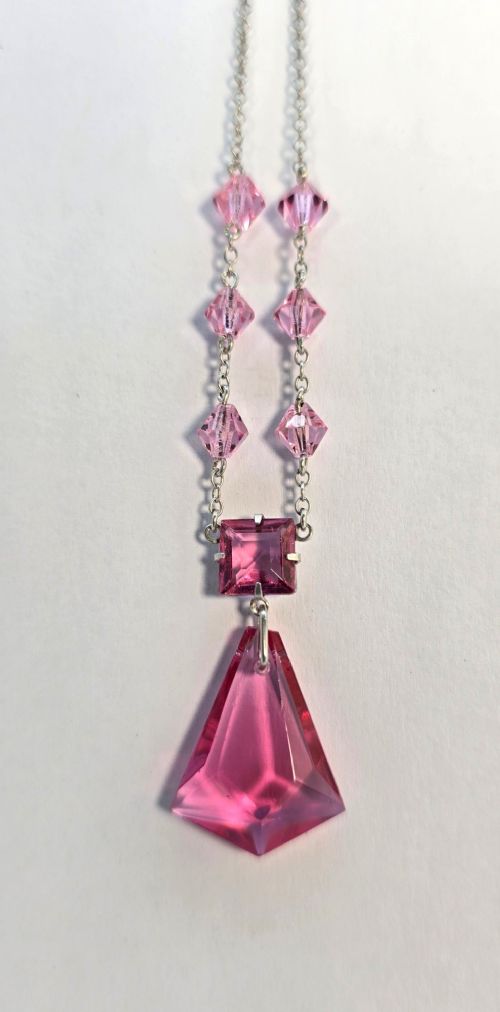
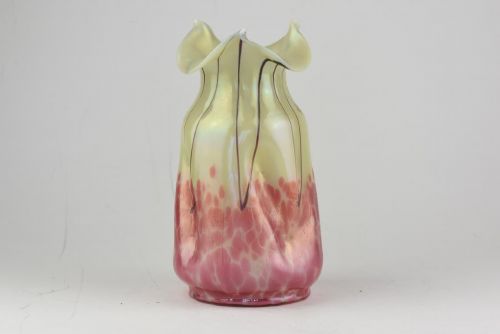
Pink art glass brings together vibrant Victorian vessels and geometric Deco lighting that catch the light.
Pink Art Glass
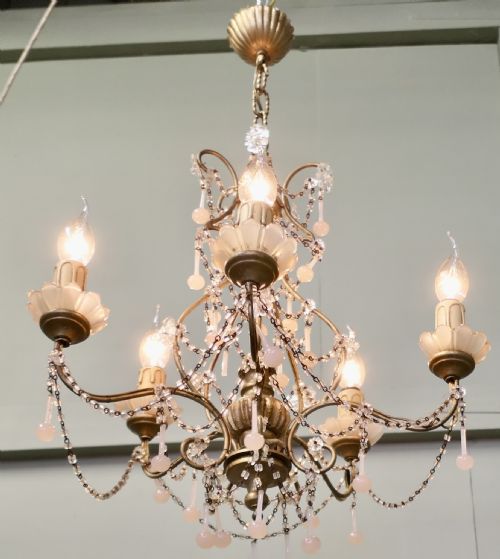
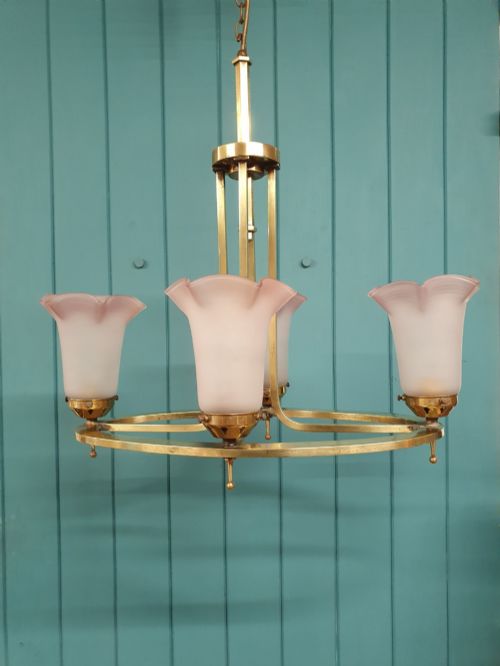
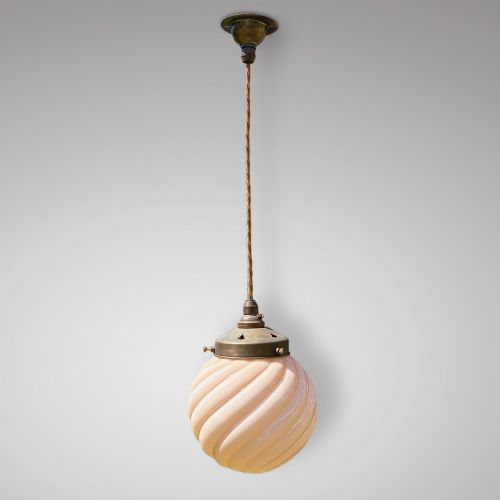
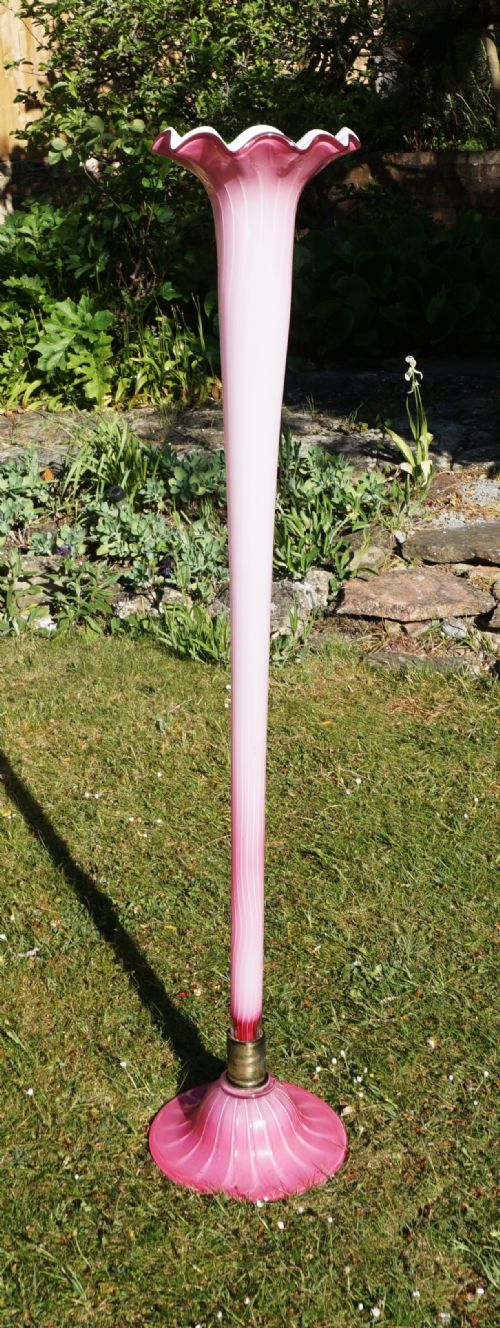
Pink art glass spans delicate Victorian flower vases, heavy Edwardian desk lamps, and bold Art Deco chandeliers or peach glass wall lights. The material takes many forms across the nineteenth and twentieth centuries, including cased vessels, moulded clam shell shades, and frosted lighting fixtures.
Buyers frequently encounter Art Deco pieces from the nineteen twenties and thirties alongside nineteenth-century cranberry glass and iridescent Art Nouveau vases. These items function as ornamental bowls, table lamps, pendants, and mirrors designed to introduce colour into domestic spaces.
Materials and production methods
Makers shaped glass through blowing, moulding, and cased layering, often combining pink hues with white cane decoration, uranium green glass bases, or silver overlays. Techniques such as cameo carving and pate de verre created textured surface designs with distinct tonal depth.
Metal mountings in brass, chrome, and silver frequently accompany these glass bodies, particularly in lighting fixtures, clocks, and dressing table accessories. Enamel detailing and hand-cut crystal further define the craftsmanship seen across these periods.
Listings feature items spanning the nineteenth century through the Art Deco era, incorporating brass, chrome, and enamel elements.
Assessing quality in pink art glass
Quality rests in the crispness of moulded details, the depth of cased or layered colours, and the integration of metal hardware such as brass or chrome. Pieces by established makers display finer handling of surface motifs, from delicate carved begonias to precise geometric facets.
The weight of the glass, the clarity of the tint, and the preservation of original mounts or fittings distinguish finer examples from standard production items.
Libochovice·Pallme Konig·Daum France·Thomas Webb and Sons·Argy Rousseau·Emile Galle·Walther and Sohne·Monart·Jaz
The Pink Art Glass Glossary
- Cased glass
- Glass formed of two or more distinct layers of different colours fused together during the blowing process. This technique allows exterior layers to be cut away to reveal contrasting tones underneath.
- Pate de verre
- A glass-crafting method where finely crushed glass is packed into a mould and fused in a kiln. It produces a dense, slightly frosted object with subtle colour gradations.
- Cameo glass
- Vessels carved through multiple fused glass layers to create raised relief designs. It requires considerable skill to maintain uniform depth across the outer layer.
- Cranberry glass
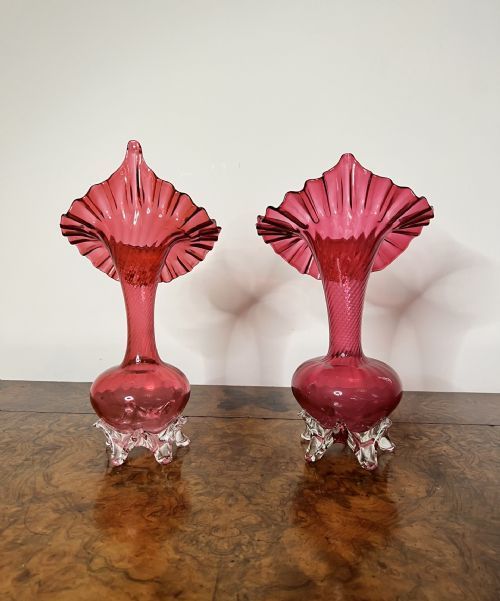
- A rich pinkish-red glass coloured by the addition of gold chloride during manufacture. It appears frequently in Victorian tableware and decorative vases.
Pink Art Glass: Frequently Asked Questions
How do I clean antique pink art glass safely?
Wash the glass gently in lukewarm water using a mild, unscented soap and a soft cloth. Avoid harsh chemical cleaners or abrasive sponges that might damage delicate surface enamelling or iridescent treatments.
Dry the piece thoroughly with a lint-free towel and handle metal mounts separately to prevent moisture from causing tarnish or corrosion.
Are these lamps wired for modern use?
Many lighting pieces retain older wiring or have been updated by previous owners. It is advisable to have a qualified electrician inspect any vintage lamp before regular daily use.
Rewiring preserves the original brass or chrome frame while ensuring safety standards meet contemporary domestic requirements.
How can I tell Victorian pink glass from Art Deco pieces?
Victorian examples tend to feature ornate forms like jack-in-the-pulpit shapes, applied trailing, and layered cranberry colours. They often rely on hand-blown techniques and floral motifs.
Art Deco items embrace geometric lines, moulded peach tones, and machine-made precision, frequently paired with chrome or mirrored glass.
Where should I display pink art glass in my home?
Place vases and bowls near natural light sources to highlight the depth of the cased or iridescent colours. Mantelpieces and side tables offer stable surfaces for heavier glass clocks and lamps.
Keep delicate items away from direct, harsh sunlight to maintain the integrity of the coloured glass over time.