

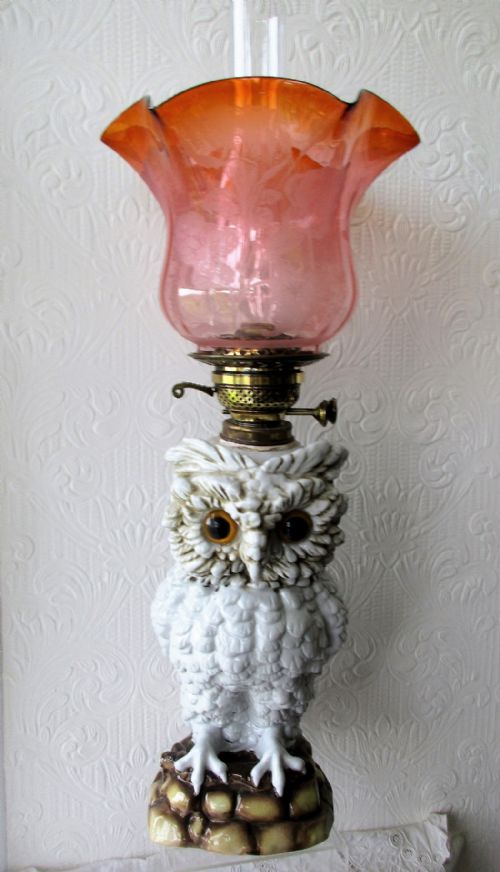


Pink and White Glass
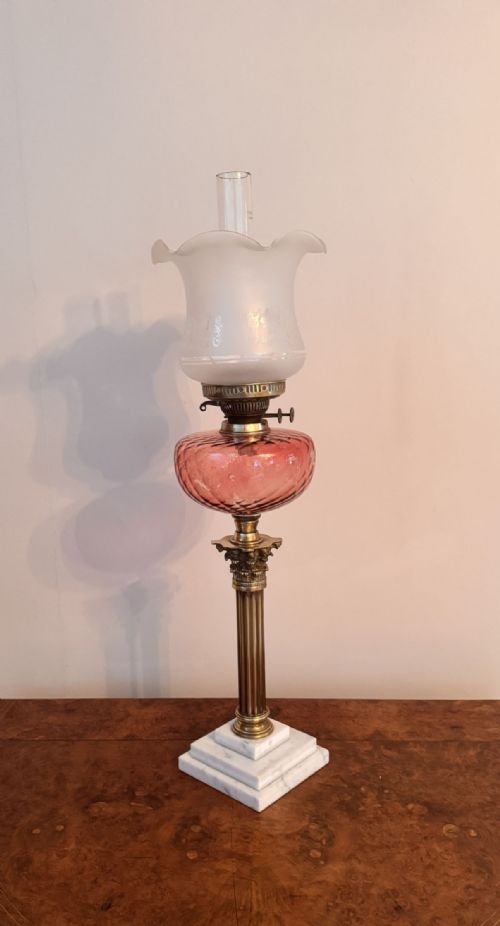
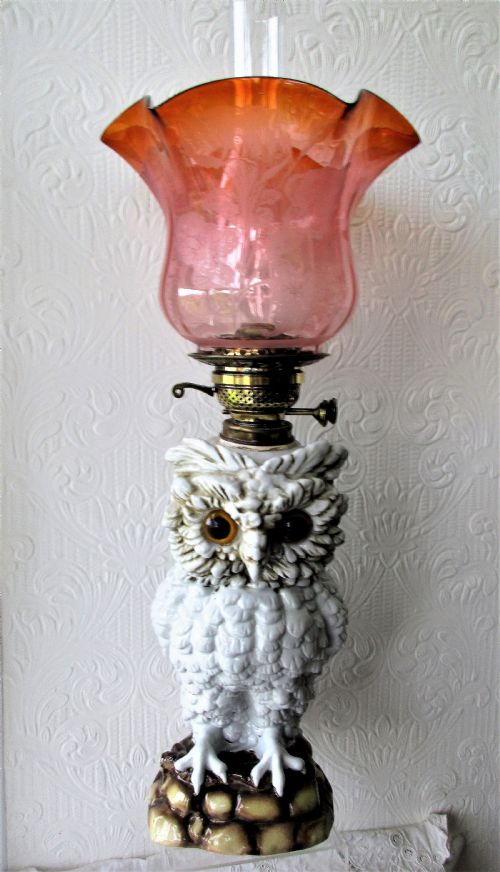
These pink and white glass pieces bring soft, layered colour and distinct form into a room.
Pink and White Glass
When buyers search for pink and white glass, they find domestic items spanning the Victorian era through the mid-twentieth century. The selection on this page includes oil lamp shades, vases, mantle lustres, and jugs.
The Victorian period contributes much of the glassware, often featuring cased glass techniques or opaline surfaces. Later pieces show shifts toward Art Nouveau enamelling and mid-century mirror designs.
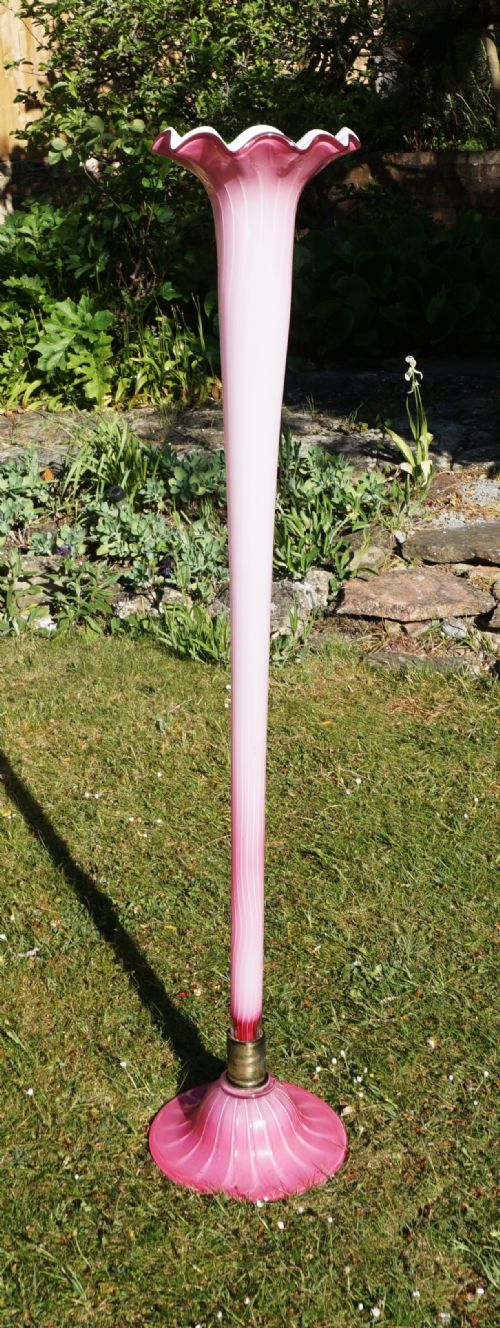
Vases appear in tall lily forms with white cane decoration and pink trails, alongside matched pairs of table wares. These objects combine utilitarian beginnings with decorative appeal.
How they were made
Glassmakers created these objects by combining layers of tinted material, as seen in cased glass vessels and opaline shades. White cane work and pink trails were applied hot to the exterior surface.
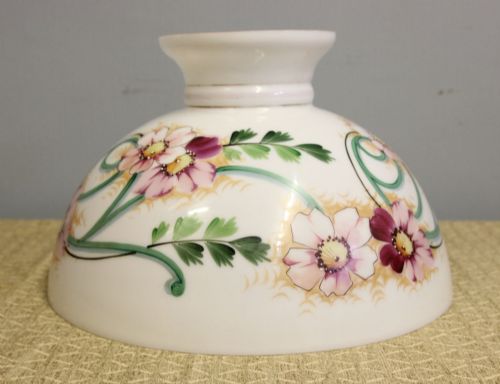
Enamel painting added surface detail to opaline bodies, while brass and porcelain often supported the glass components in oil lamps and lustres. Molten techniques dictated the fluid shapes of lily vases and jugs.
Pink and White Glass Retail Price Guide 2026
Typical asking prices for pink and white glass among the pieces listed under this phrase on Sellingantiques today, from the lower quarter to the upper quarter. They describe what is for sale here now, not the wider market.
Listings feature items in Victorian, Art Nouveau, Art Deco, and Mid-Century Modern styles, utilising glass, opaline glass, enamel, and porcelain.
What varies in quality
Quality rests upon the skill of the glassblower and the precision of the applied decoration. Clean separation of the pink and white layers distinguishes finer cased glass items.
Surface details such as hand-painted enamel work show varying degrees of dexterity and permanence. The integration of supporting materials like brass and porcelain also influences the finish of composite items like oil lamps.
Stuart Armfield·Sitzendorf
The Pink and White Glass Glossary
- Cased glass
- Glass formed of two or more distinct layers of different colours fused together during blowing. This technique allows a white interior to show through a pink exterior layer.
- Opaline glass
- An opaque or translucent pale glass developed in the nineteenth century. It provides a smooth surface suitable for enamel painting.
- Mantle lustre
- A decorative glass vase hung with glass prisms designed to catch the light. They typically appeared in pairs on nineteenth-century mantelpieces.
- Cane decoration
- Glass rods incorporated into a vessel during shaping to create linear patterns. White canes frequently appear inside clear or tinted glass bodies.
Pink and White Glass: Frequently Asked Questions
What periods do these glass pieces come from?
The listings span from the nineteenth century through the Victorian period, Art Nouveau, Art Deco, and mid-century modern eras.
Victorian and Edwardian examples sit alongside pieces from the nineteen-fifties, reflecting changing domestic tastes across multiple decades.
How were opaline glass vases decorated?
Opaline glass often received hand-painted enamel decoration directly onto the opaque white or tinted surface.
This technique allowed makers to add floral or abstract motifs that stood out sharply against the pale background.
What is cased glass?
Cased glass consists of two or more distinct layers of glass fused together during the blowing process.
In pink and white examples, a white inner layer is typically encased within a translucent pink outer layer to create depth of colour.
Where were mantle lustres placed?
Mantle lustres were traditionally positioned on the mantelpiece in Victorian reception rooms.
Their hanging crystal prisms caught the flickering light of candles or oil lamps to brighten the space.