




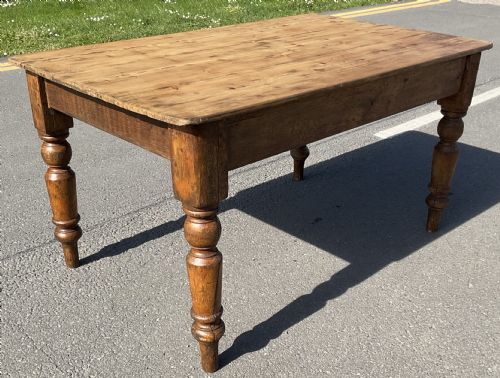
Pine Plank Table
A pine plank table brings honest utility and generous proportions to the room, built for daily service from robust timber.
Pine Plank Table
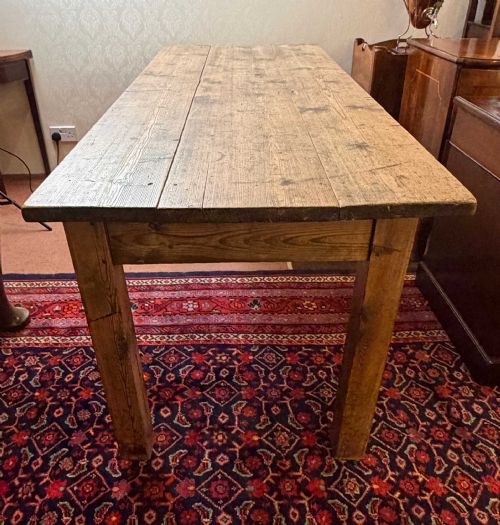
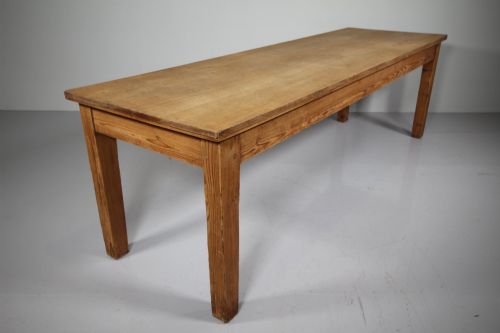
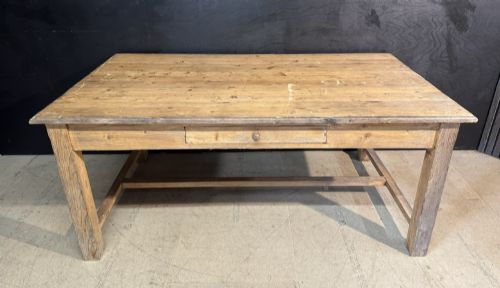
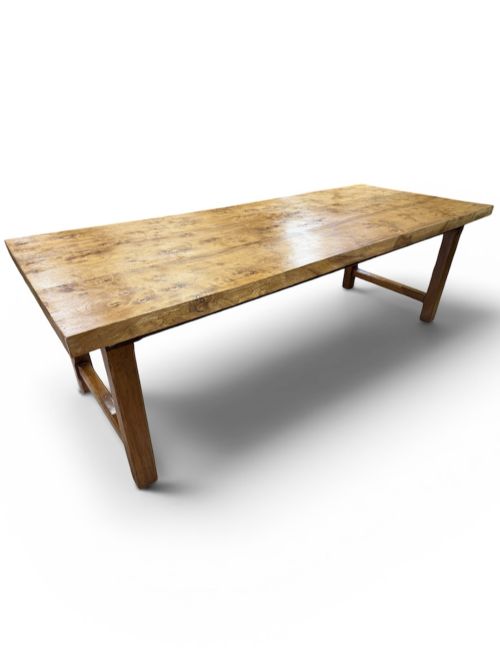
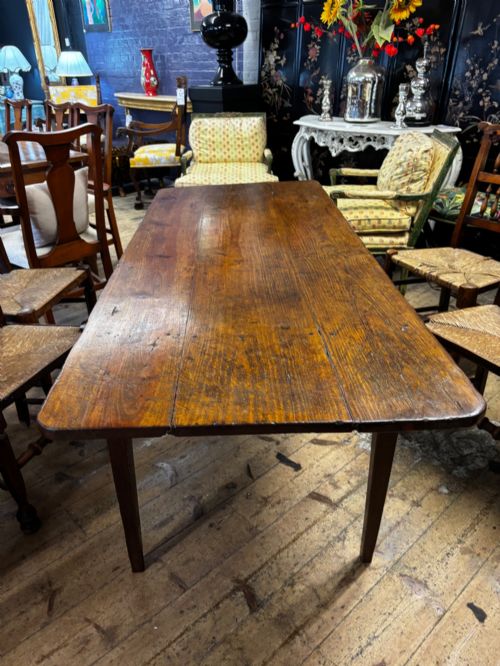
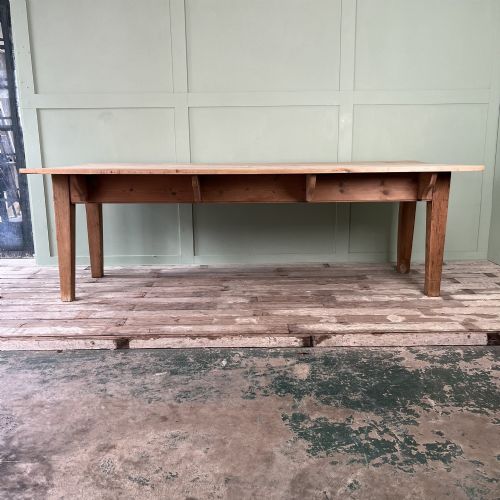
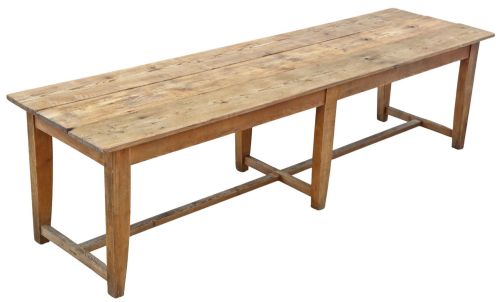
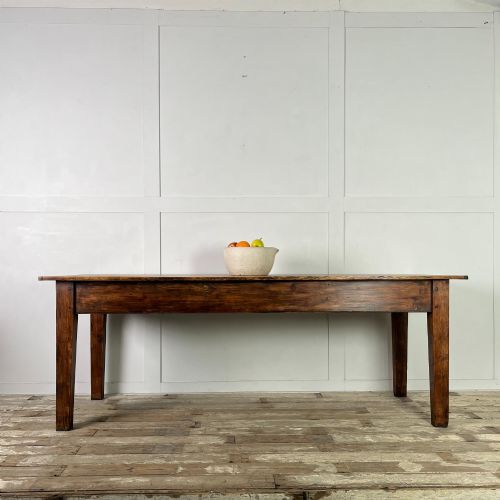
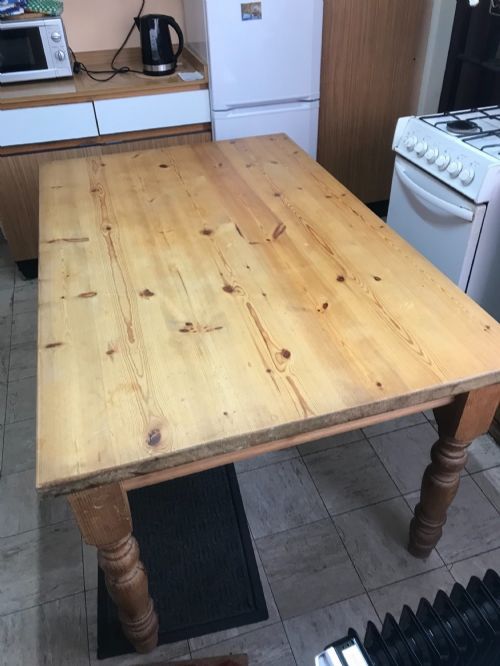
A pine plank table is a heavy dining or kitchen board designed for hard work, typically constructed with boards joined along their length to form the surface. You will most frequently encounter nineteenth-century examples and Victorian farmhouse iterations on this page.
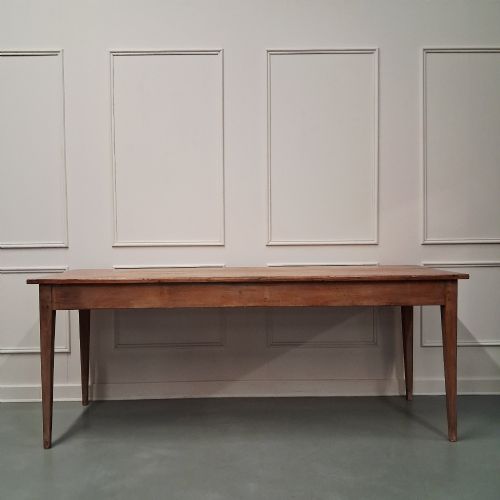
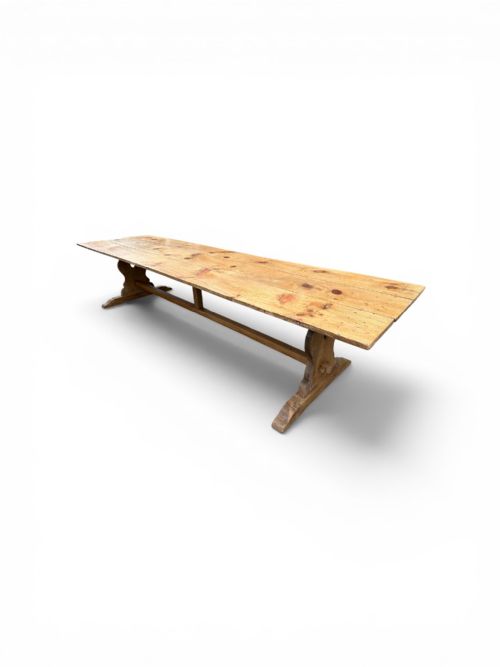
Forms range from large refectory and trestle dining tables to smaller kitchen preparation surfaces, round tables, and low coffee variants. Their origins span English country houses and French provincial kitchens, reflecting utilitarian domestic traditions.
The aesthetic leans towards rustic farmhouse and country styles, where visible grain and straightforward carpentry take precedence over ornate decoration. These surfaces show decades of domestic use, bearing the marks of preparation and gathering.
Materials and construction
Construction relies primarily on solid pine timber for the main boards and bases, occasionally paired with oak or fruitwood for contrast or durability. The tops are assembled from broad planks secured to sturdy framing underneath.
Joinery methods utilise straightforward pegged joints, stretchers, and aprons designed to withstand heavy downward pressure without buckling. Surfaces are left bare or finished simply with historic paint layers rather than heavy varnishes.
Pine Plank Table Retail Price Guide 2026
Typical asking prices for pine plank table among the pieces listed under this phrase on Sellingantiques today, from the lower quarter to the upper quarter. They describe what is for sale here now, not the wider market.
Several boards retain faint flour dust and pastry scars embedded deep in the grain from generations of past baking.
Judging quality and proportion
Quality rests in the selection of the timber and the integrity of the original structure rather than decorative flourishes. Planks chosen from mature trees show tighter growth rings and greater resistance to warping over generations of use.
Proportion and stance dictate the character of the piece, with well-balanced legs and minimal unnecessary reinforcement marking better work. The depth of patination on the bare wood tells the history of handling and cleaning.
The Pine Plank Table Glossary
- Plank top
- A surface constructed from several wide boards laid side by side. This method allows the timber to move naturally with humidity changes.
- Refectory table
- A long, narrow dining table originally designed for communal eating halls. They often feature central stretchers for added stability.
- Trestle table
- A design supported by two or more upright frames connected by a horizontal beam. This configuration maximises legroom along the length of the boards.
- Fruitwood
- Dense timber harvested from fruit-bearing trees such as cherry or pear. It offers a finer grain and harder surface than standard softwood.
- Patina
- The surface sheen and colour developed through age, handling, and regular scrubbing. It serves as a visual record of the object's longevity.
Pine Plank Table: Frequently Asked Questions
How do I clean a pine plank table?
Wash the surface using warm water and mild soap on a damp cloth, avoiding harsh chemical strippers that strip the historic finish. Dry the timber thoroughly afterward to prevent moisture retention.
Regular waxing with a natural beeswax feed helps nourish the grain and protects against everyday spills without creating an artificial gloss.
Can I use daily as a dining table?
These boards were originally built for heavy kitchen and dining work, making them exceptionally suited for modern family meals. Their robust construction handles daily gatherings without issue.
Use coasters and placemats to mitigate extreme heat and moisture, allowing the historic surface to absorb normal wear gracefully.
How do I date a timber table?
Examine the underside and joints for hand-cut tool marks, pegged joinery, and the lack of modern machine-screw fixings. The width of the planks and the oxidation of the wood beneath also indicate age.
Comparing construction styles with documented nineteenth-century examples helps narrow down the decade of manufacture.
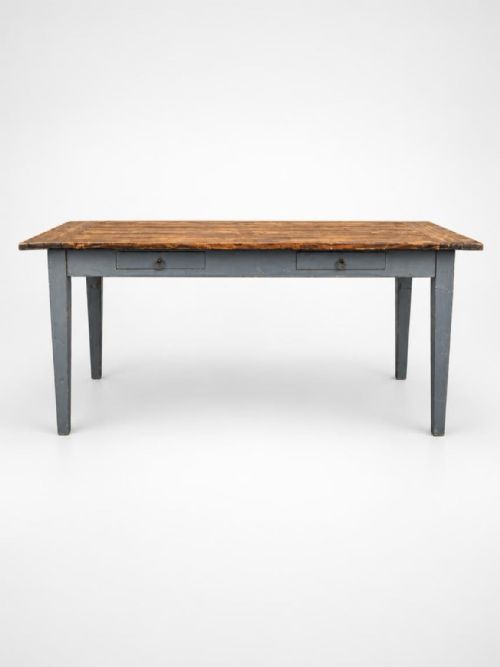
Why do some tops have drawers?
Kitchen preparation boards often incorporated small storage spaces for knives, cloths, and utensils close to hand. This practical addition was standard in domestic workspace designs.
Check the drawer runners and dovetails to ensure the compartment belongs to the original period of construction.