


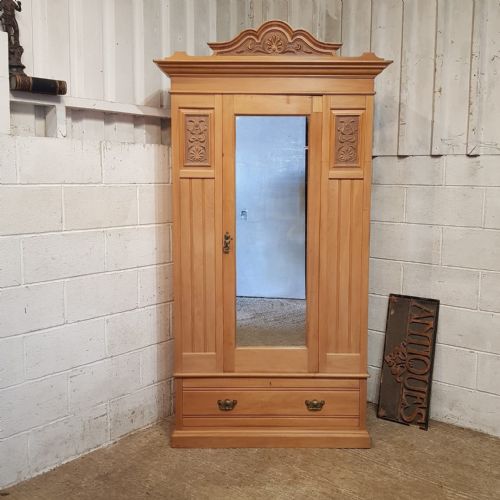


Pine Mirror Wardrobe
A pine mirror wardrobe combines generous bedside storage with a full-length glass plate, offering a practical centrepiece for bedroom dressing.
Pine Mirror Wardrobe
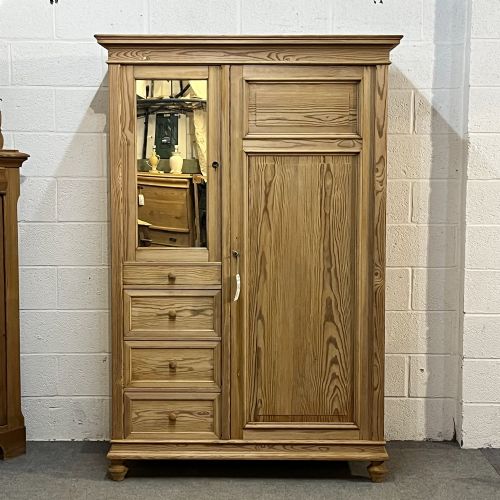
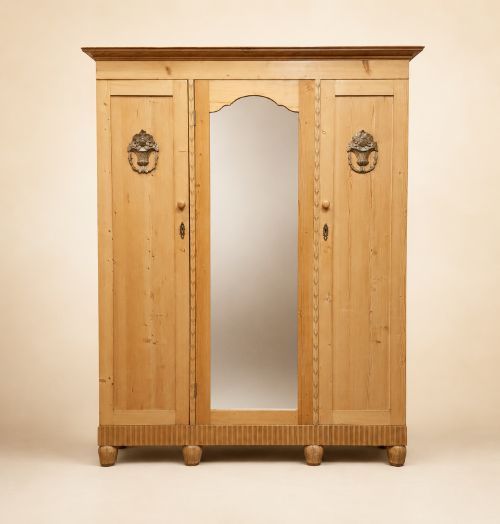
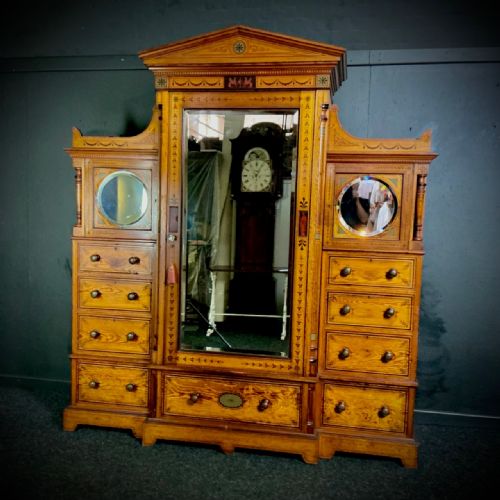
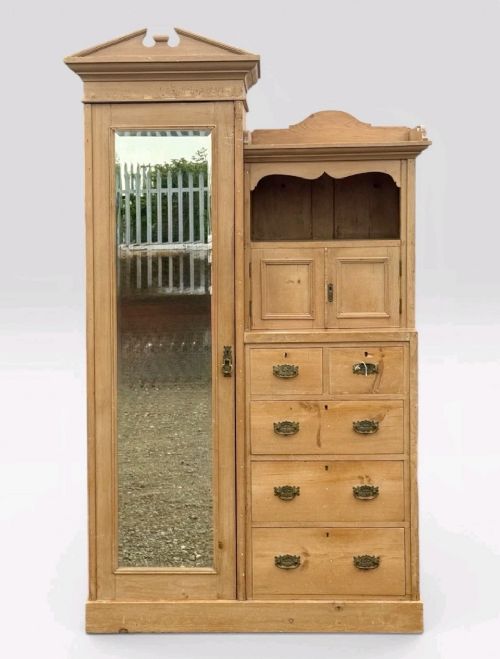
When you search for a pine mirror wardrobe, you encounter substantial timber bedroom furniture designed primarily during the Victorian and Edwardian periods, alongside examples from around nineteen-thirty. These pieces range from single-door hall wardrobes and compactum units to expansive triple and four-piece configurations that dismantle for transport.
The version you meet most frequently on this page is the Victorian or Edwardian two-door or triple wardrobe constructed from solid pine or pitch pine, featuring an integrated mirrored door and internal hanging space or drawers.
How they were made
Carpenters utilised softwood pine and denser pitch pine, assembling carcasses with pegged joints and panelled backs to withstand daily use. Many large items incorporate knockdown construction using bolts or wedges so the carcase dismantles into manageable sections for moving.
Makers set bevelled or flat mirror glass into timber doors, often securing the plate with wooden beads, and added brass or iron handles, hinges, and hooks for internal hanging.
Pine Mirror Wardrobe Retail Price Guide 2026
Typical asking prices for pine mirror wardrobe among the pieces listed under this phrase on Sellingantiques today, from the lower quarter to the upper quarter. They describe what is for sale here now, not the wider market.
Several larger wardrobes on this page are explicitly noted as dismantling into components to simplify transport.
What varies in quality
Quality depends on the selection of the timber, distinguishing plain deal boards from highly figured pitch pine with deep grain patterns. Better examples maintain original brass hardware, clean unblemished mirror glass, and crisp decorative mouldings rather than later replacements.
Construction methods also set pieces apart, separating basic nailed carcases from sophisticated compactum layouts featuring fitted interior drawers, linen slides, and lead light panels.
Maple and Company
The Pine Mirror Wardrobe Glossary
- Pitch pine
- A dense, resinous North American pine variety with pronounced grain patterns, utilised for heavier Victorian and Edwardian wardrobe construction.
- Compactum
- A large fitted wardrobe combining hanging compartments with internal banks of drawers and shelves.
- Knockdown
- A piece designed to dismantle completely into panels and sections using internal bolts or pegs for transport.
- Chifferobe
- A hybrid storage piece combining elements of a wardrobe and a chest of drawers.
- Lead light
- Glass panels held together with lead caming, sometimes incorporated into wardrobe doors alongside mirrors.
Pine Mirror Wardrobe: Frequently Asked Questions
How do I dismantle a pine wardrobe?
Many large nineteenth-century wardrobes use internal bolts, screws, or wooden pegs to join the cornice, base, and sides to the back panel. Unscrewing these internal fittings allows the carcase to separate into flat sections for moving.
Keeping track of original screws and marking the position of each panel ensures straightforward reassembly in a new room.
What is pitch pine?
Pitch pine is a heavier, harder variety of pine containing high levels of natural resin, which produces a warm colour and distinctively bold grain pattern. Makers favoured it for robust bedroom furniture that required extra structural strength.
Objects built from pitch pine often weigh significantly more than standard deal equivalents and resist knocks more effectively.
How do I clean old pine?
Maintenance depends on whether the surface carries a wax polish or a painted finish. Light dusting and occasional application of beeswax keep waxed pine nourished without building up sticky residues.
Harsh chemical cleaners strip historical patina and soft finishes, so gentle wiping with a dry or barely damp cloth remains the safest approach.
Did wardrobes always have mirrors?
Mirrored doors became widespread during the Victorian and Edwardian periods as glass production advanced and full-length dressing mirrors grew fashionable in bedrooms. Earlier nineteenth-century examples relied on solid wood panels without glass.
Wardrobes listed as compactums or hall units frequently integrated mirrors to serve multiple functions in smaller domestic spaces.