
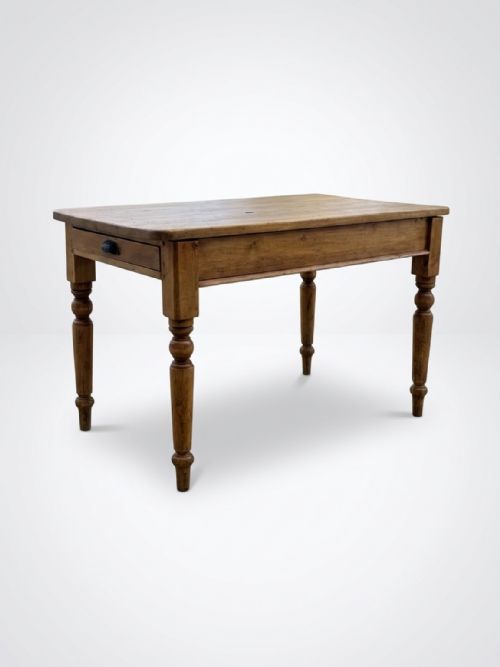
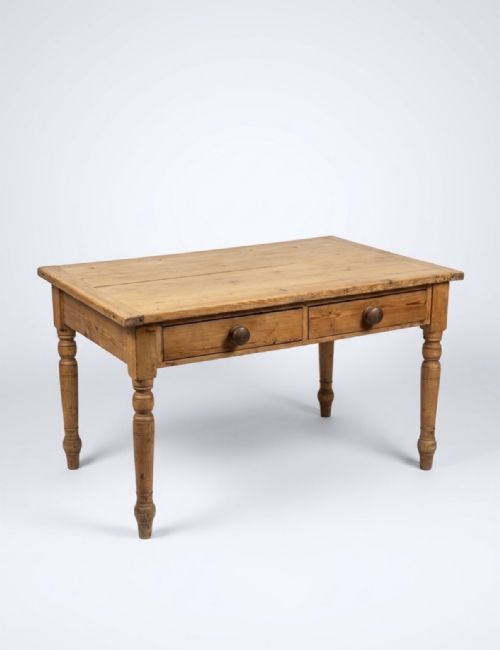
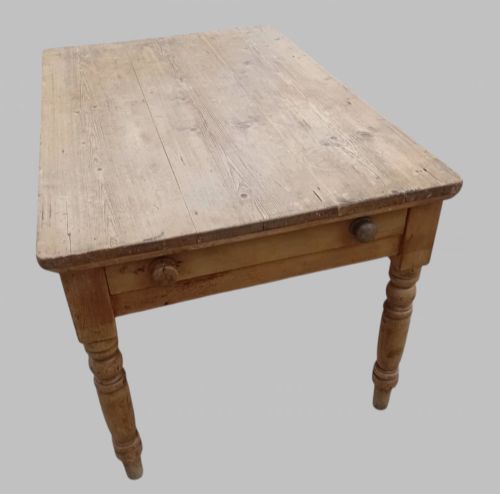
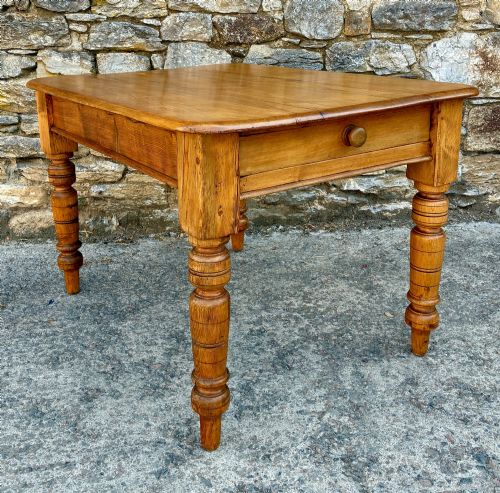
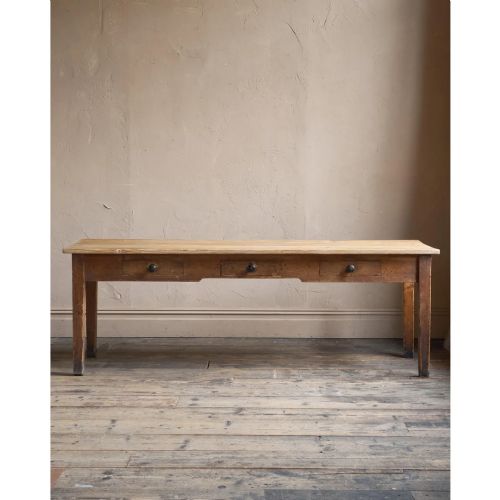
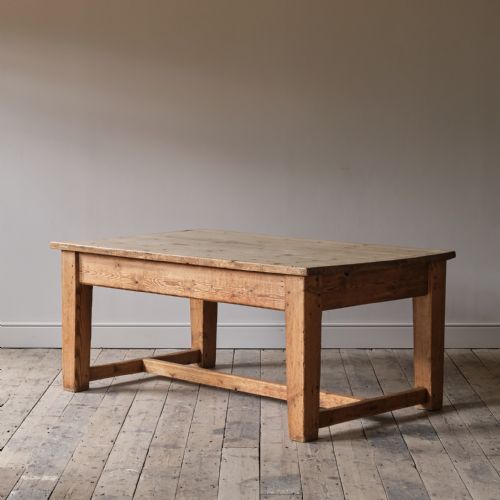
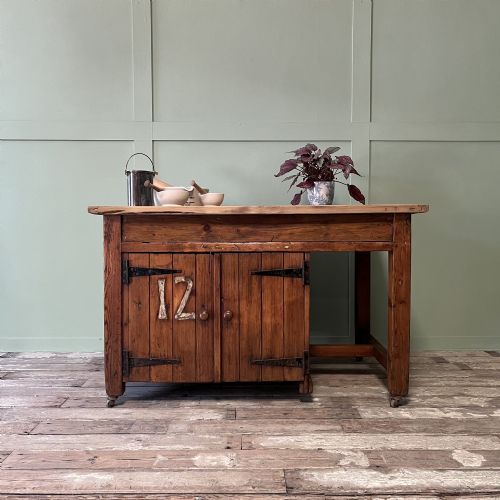
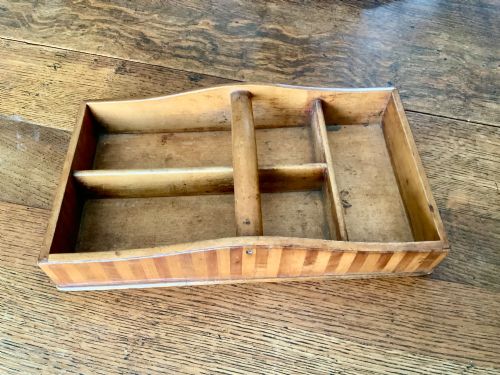
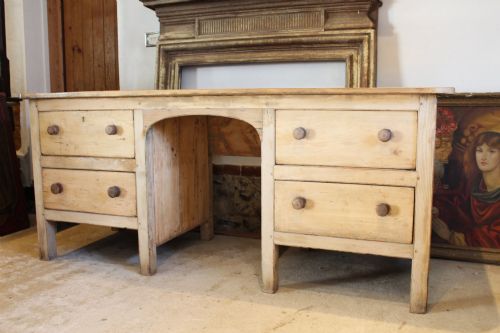
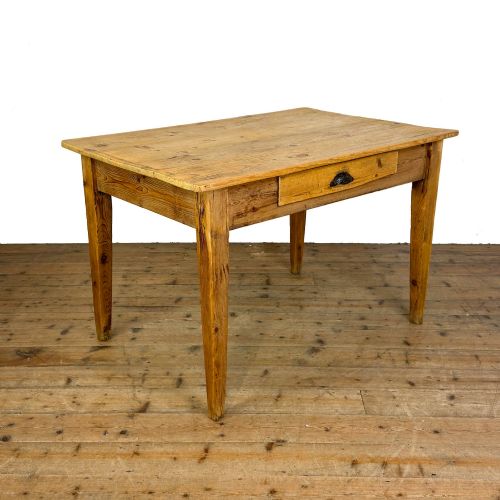
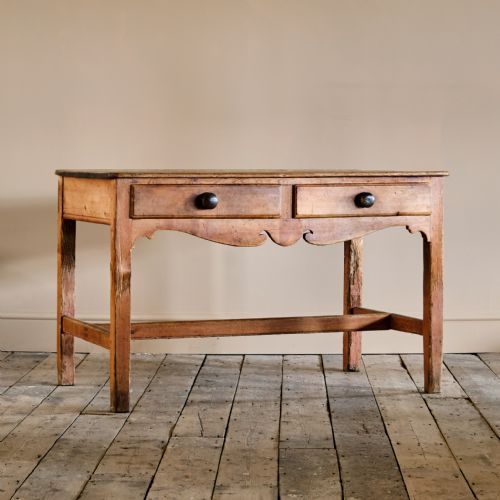
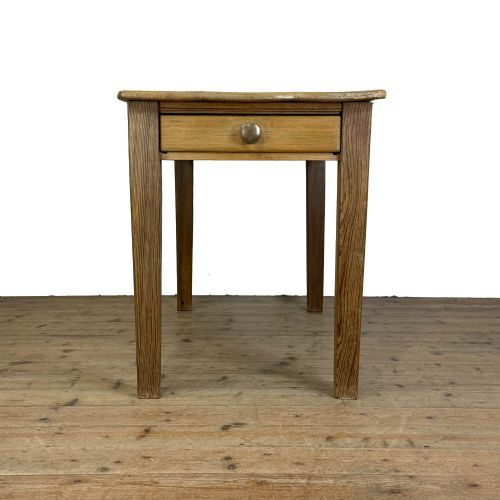
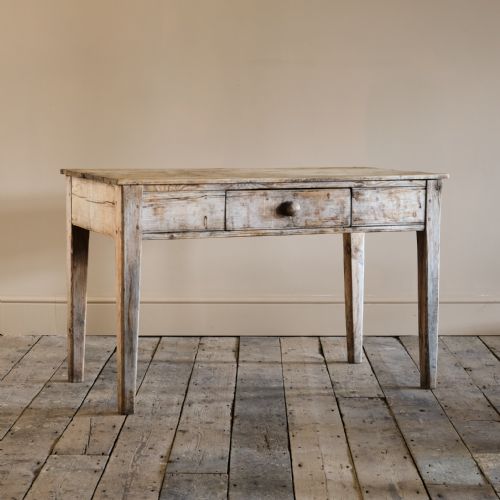
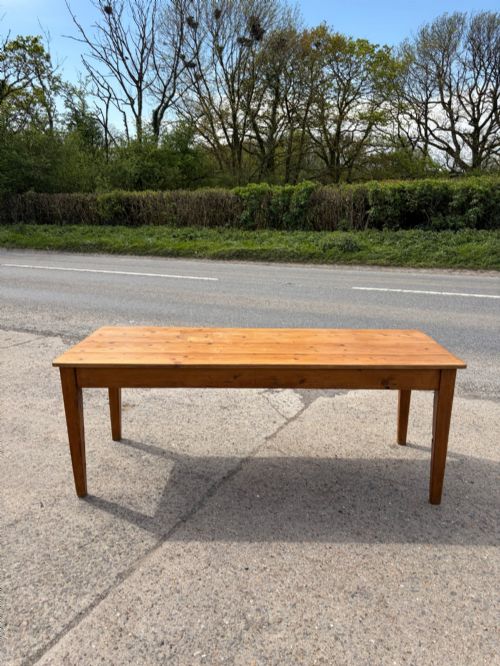
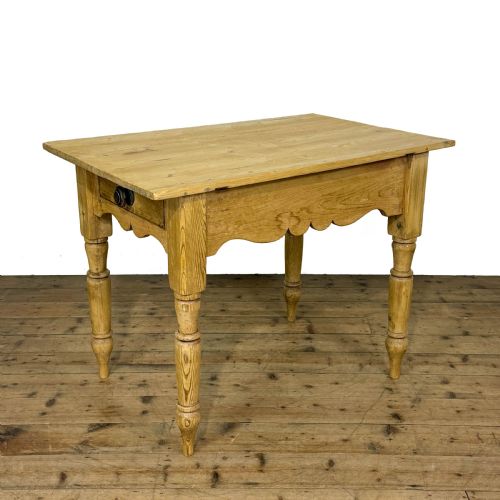
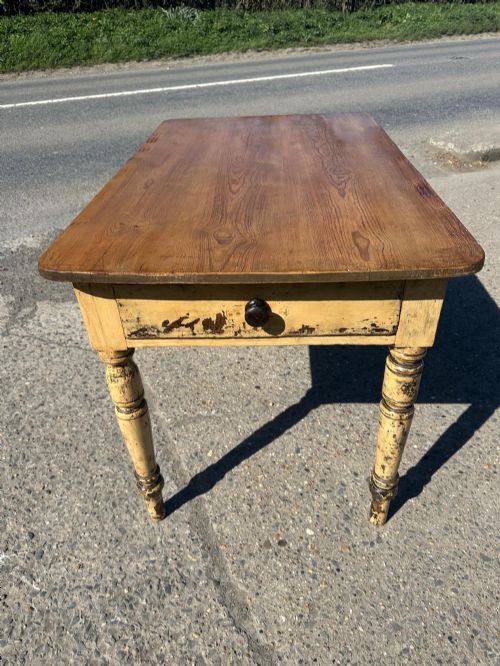
Pine Kitchen Desk
A pine kitchen desk brings working practicality and honest timber grain into domestic spaces.
Pine Kitchen Desk
A pine kitchen desk combines utility and domestic character, drawing on forms like farmhouse tables, prep tables, and writing tables from the nineteenth and early twentieth centuries. These pieces reflect regional traditions from England, Wales, Scotland, France, and Sweden, utilising durable softwoods alongside secondary timbers such as fruitwood, sycamore, and oak.
Buyers seeking a pine kitchen desk encounter versatile formats including single-drawer tables, scullery tables, and trestle designs suited to daily food preparation or workspace needs. Such surfaces balance rustic simplicity with functional storage drawers integrated into the front frieze.
The selection ranges from compact side tables and folding tables to large work tables and drapers tables, often displaying scrubbed tops or original painted finishes. These utilitarian objects served hardworking spaces before transitioning into central domestic furniture.
How they were made
Makers constructed these utility pieces primarily from pine and pitch pine, occasionally combining them with harder woods like fruitwood and sycamore for working surfaces or structural components. Iron brackets, brass handles, and trestle bases added necessary reinforcement to heavy work tables.
Surfaces were frequently left bare to be scrubbed clean or treated with traditional coatings such as Swedish Falu paint to protect the timber. Joinery relied on sturdy pegged joints, dovetailed drawer construction, and straightforward framing designed for longevity under daily use.
The available furniture styles include Victorian Country, Rustic Farmhouse, Georgian, and Scandinavian Country forms.
What varies in quality
The distinction between ordinary utility items and superior examples lies in the retention of original surfaces, such as unblemished scrub tops and authentic painted legs. Fine quality reveals itself in well-proportioned framing, intact original hardware like brass or iron pulls, and minimal timber replacement.
Proportion and structural integrity separate standard workshop pieces from more distinctive regional variants, such as French drapers tables or Swedish trestles. The balance between the pine top and supportive bases, along with the crispness of drawer dovetailing, dictates the overall standard.
The Pine Kitchen Desk Glossary
- Scrub top
- A bare wooden tabletop designed to be repeatedly scrubbed clean with water and sand. This process wears the softer grain away and leaves the harder growth rings standing proud.
- Frieze
- The horizontal band situated directly beneath the tabletop. Drawers are commonly built into this section.
- Trestle
- A support structure consisting of horizontal beams and angled legs rather than four vertical posts. This design provides maximum legroom beneath long work tables.
- Pitch pine
- A dense, resinous variety of pine timber noted for its durability and strong grain pattern. It was frequently utilised in utilitarian and ecclesiastical furniture.
- Drapers table
- A long, wide table historically used for measuring and cutting fabric. These items provide generous surface area and practical storage drawers.
Pine Kitchen Desk: Frequently Asked Questions
How do I clean a pine kitchen desk?
Wash the timber surface gently using mild soap and warm water applied with a soft cloth. Avoid harsh chemical cleaners that strip the natural character of antique wood.
Dry the surface thoroughly after cleaning to prevent moisture damage. Natural beeswax can be applied occasionally to nourish dry pine boards.
Can I use a pine desk for cooking preparation?
Many historic utility tables were originally designed for food preparation and scullery work. Unsealed pine surfaces handle daily kitchen tasks well if maintained properly.
Treat bare wood regularly with food-safe mineral oil to resist moisture and staining. Promptly wipe away spills to preserve the integrity of the antique timber.
What is a scrub-top table?
A scrub top refers to an untreated wooden surface designed to withstand vigorous daily cleaning. Historic owners scoured these boards with brushes and abrasive materials.
This cleaning method creates a distinct undulating texture where the soft grain wears down faster than the hard growth rings. Such surfaces showcase authentic patination accumulated over generations of use.
How do I date a Victorian pine desk?
Examine the construction methods and hardware used in the drawers and frame. Hand-cut dovetails and forged iron or brass fittings typically indicate nineteenth-century manufacture.
Consider the overall style, paint layers, and wear patterns present on the timber. Regional variations from English, French, or Scandinavian workshops also offer clues regarding origin and era.