







Pine Hall Chair
A pine hall chair is a robust timber seat for an entryway, offering practical utility and striking regional character for your home.
Pine Hall Chair
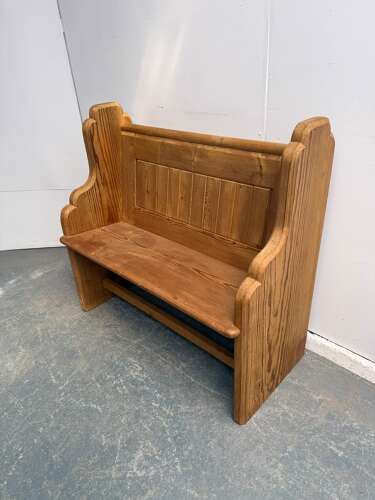
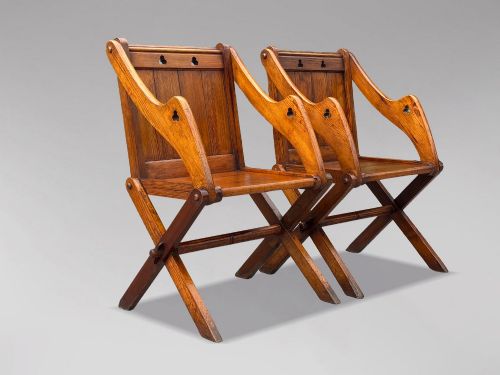
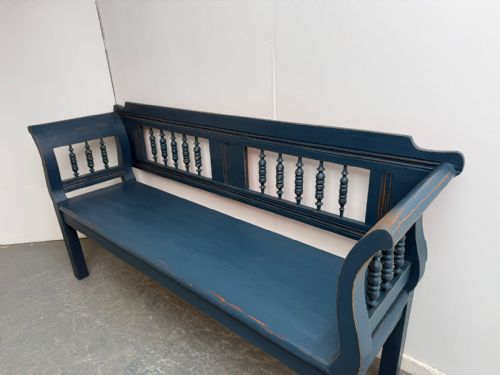
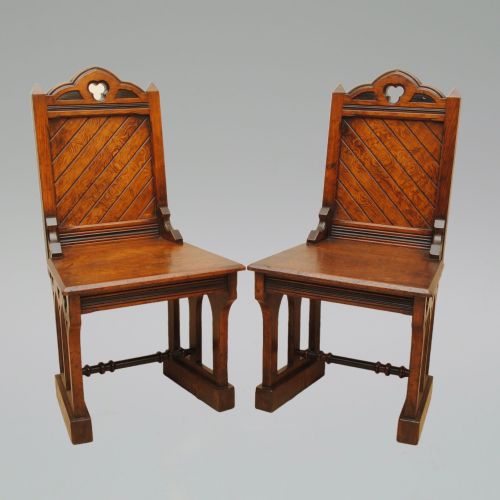
A pine hall chair spans sturdy Victorian pitch pine seating, Georgian country settles, and painted Hungarian folk benches. You encounter single church pews, matched pairs of Glastonbury armchairs, and sets of Gothic revival parlor chairs.
The selection ranges from tall barrel-backed settles to rigid side chairs and monastic throne armchairs. Most examples date from the nineteenth century, drawing on English Gothic tastes and European country traditions.
Makers utilised native softwoods alongside denser pitch pine, often finishing surfaces with traditional wax or vibrant regional paintwork. These forms served hallways, churches, and farmhouses where durable seating was essential.
How they were made
Carpenters constructed these seats primarily from solid pine and pitch pine, selecting timber for its dense grain and structural strength. Workshops joined heavy planks using traditional pegged mortise and tenon joints to withstand constant daily use.
Surface treatments vary between clear protective wax applications and layers of historic paint in grey, blue, or natural wood tones. Detail work often includes carved Gothic tracery, metal studs, and occasional upholstery fabric on select parlor chairs.
Pine Hall Chair Retail Price Guide 2026
Typical asking prices for pine hall chair among the pieces listed under this phrase on Sellingantiques today, from the lower quarter to the upper quarter. They describe what is for sale here now, not the wider market.
Some Hungarian box settles hide surprisingly deep compartments beneath their seats, originally designed for storing heavy winter blankets.
What varies in quality
The distinction between standard utility seating and superior examples rests upon the ambition of the design and the integrity of the timber. Pitch pine variations display tighter, more dramatic grain patterns, whilst finer Gothic pieces exhibit deeply carved tracery and architectural proportions.
Original painted surfaces and untouched surface patination elevate an object above pieces that have undergone later stripping or aggressive restoration. Construction depth, such as heavy barrel backs and substantial framework, separates simple vernacular items from master-carpenter output.
The Pine Hall Chair Glossary
- Pitch pine
- A durable softwood with high resin content, yielding a distinctively heavy timber with prominent grain patterns frequently utilised in Victorian Gothic furniture. It resists wear exceptionally well.
- Settle
- A wooden bench with a high back, solid arms, and often a storage box beneath the seat. This form protected sitters from draughts in entrance halls and farmhouses.
- Gothic Revival
- An architectural and decorative style drawing inspiration from medieval buildings, characterised in seating by pointed arches, trefoils, and imposing vertical lines. It dominated nineteenth-century church and domestic design.
- Glastonbury armchair
- A specific nineteenth-century ecclesiastical chair design with an X-framed undercarriage, sloping armrests, and a flat panelled back. The form originated from early medieval prototypes.
- Barrel-backed
- A seating form featuring a curved, solid wooden back that wraps entirely around the sitter. This construction method offered maximum protection against cold hallway drafts.
Pine Hall Chair: Frequently Asked Questions
Where should I place a pine hall chair?
These seats suit narrow hallways, boot rooms, and landings where their upright profiles and narrow depths function without obstructing movement.
Larger settles and church pews anchor empty wall spaces in kitchens or living areas, providing both seating and concealed storage.
How do I care for waxed pine furniture?
Maintain waxed surfaces by applying a traditional beeswax polish sparingly once or twice a year, buffing gently with a soft cloth to restore the sheen.
Keep timber away from direct heat sources and radiators to prevent the pine from drying out or splitting.
Are these chairs comfortable for daily use?
Most hall chairs and church pews were built for upright posture rather than lounging, offering firm wooden support for short periods.
Armchairs and upholstered parlor variants provide slightly softer seating, though many owners use them primarily as decorative statement pieces.
How can I tell a Georgian settle from a Victorian one?
Georgian examples, such as those from around eighteen-thirty, typically display simpler country proportions and hand-planed surfaces shaped by earlier hand tool methods.
Victorian pieces often incorporate heavier Gothic revival ornament, machine-sawn components, and denser pitch pine timber selections.