

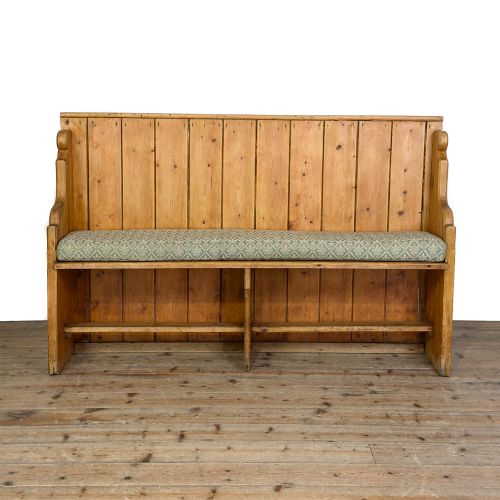
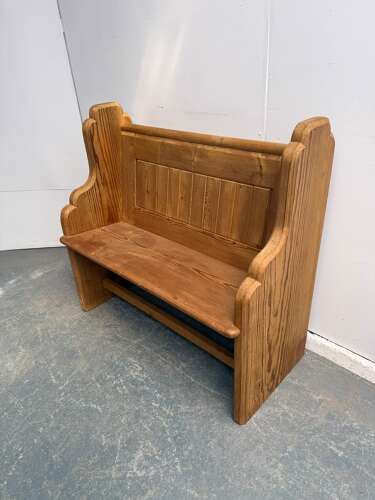
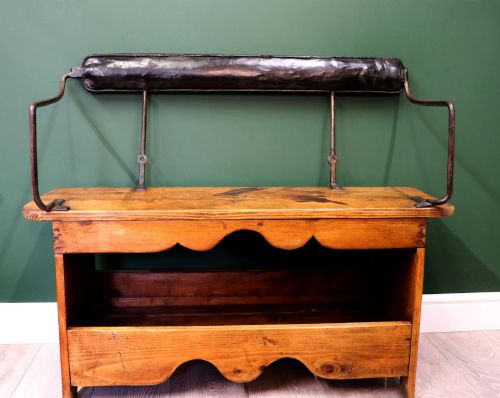
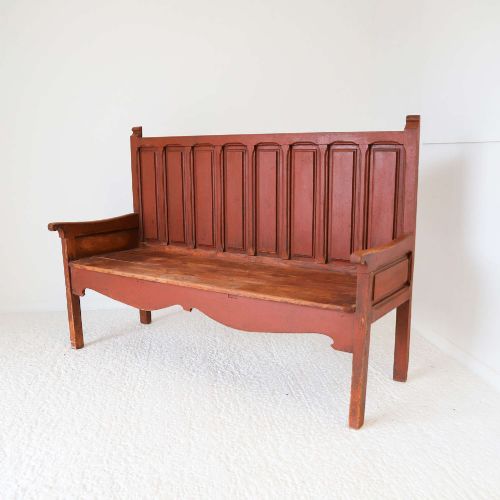





Pine Entryway Seat
These pine entryway seat pieces bring practical country storage and sturdy timber seating into a hallway.
Pine Entryway Seat
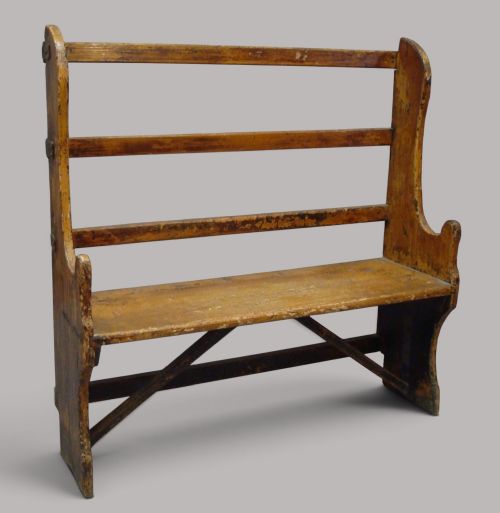
A pine entryway seat provides solid timber seating and hallway organisation across periods from the eighteenth century to the twentieth. You will frequently meet settles, church and chapel pews, and hall benches shaped by rustic country, Victorian, and Georgian traditions.
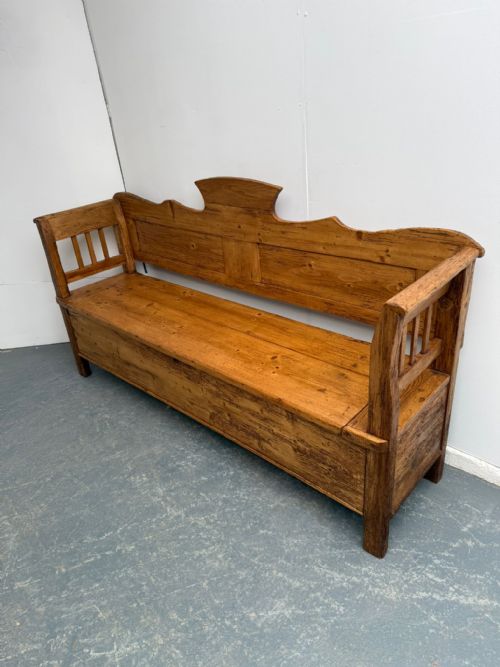
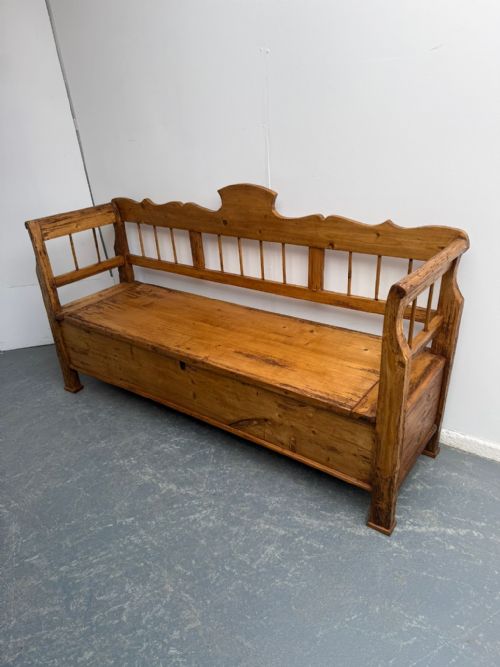
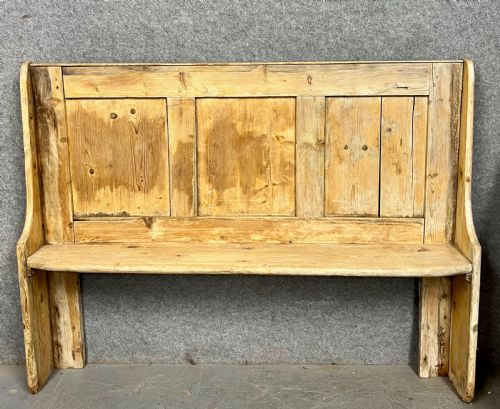
These forms range from single-seater church pews and multi-seater box settles to panelled hall benches and bow-back settles with drawers. Their origins span English, Spanish, Hungarian, and French workshops, showing how different regions adapted simple timber for daily use.
The material is predominantly pine, alongside pitch pine, paint, wax, iron, fabric, and leather. Settles often include built-in storage boxes beneath the seat, while pews and benches offer long, linear seating suited to narrow corridors.
How they were made
Makers constructed these pieces from solid timber planks, utilising pine and pitch pine joined with panelled construction, scratch-built framing, and pegged joints. Surfaces were typically finished with wax to nourish the grain or coated in paint and scumble glazes.
Iron hardware such as hinges, brackets, and latches reinforced structural stress points on lids and box settles. Drawer mechanisms were integrated into the base framework of later twentieth-century forms to add utility.
Pine Entryway Seat Retail Price Guide 2026
Typical asking prices for pine entryway seat among the pieces listed under this phrase on Sellingantiques today, from the lower quarter to the upper quarter. They describe what is for sale here now, not the wider market.
Materials recorded across the inventory include standard pine, pitch pine, iron, paint, wax, fabric, and leather.
What varies in quality
Quality rests in the integrity of the timber selection, the crispness of panel joins, and whether original surfaces like paint or early wax remain intact. Proportion and form also dictate distinction, separating standard utility benches from pieces with unusual barrel backs or neat dimensions.
The retention of original ironwork and structural hardware influences the character of a piece. Finer examples display thoughtful construction details, such as integrated storage drawers and deep panelled backs that survive from the eighteenth and nineteenth centuries.
The Pine Entryway Seat Glossary
- Settle
- A wooden bench with high back, solid arms, and often a closed base or box compartment beneath the seat. This form protected sitters from draughts in corridors and hearth rooms.
- Scumble
- A decorative painting technique where a translucent glaze is dragged or brushed over a base coat to imitate finer grained woods. It appears frequently on nineteenth-century country furniture.
- Pitch pine
- A durable, resinous variety of pine timber with a pronounced grain pattern. It was often utilised for nineteenth-century church pews and institutional seating.
- Box settle
- A variant of the bench featuring a hinged seat lid opening to a storage compartment below. This design maximised utility in tight spaces.
- Bow back
- A curved upper framework where the backrest spindles or solid slats follow a rounded sweep. This construction style distributed weight and offered comfortable support.
Pine Entryway Seat: Frequently Asked Questions
What is a pine entryway seat used for?
These pieces provide a stable place to sit while putting on boots and shoes near a doorway. Many incorporate built-in storage boxes or drawers beneath the seat to hold everyday items.
Their substantial height and solid backs also serve to block draughts in open hallways and corridors. Historically, they fulfilled this functional role in churches, chapels, taverns, and farmhouses alike.
How do I care for waxed pine?
Keep the timber away from direct heat sources and radiators to prevent the wood from drying out and splitting. Apply a clear beeswax periodically to nourish the surface and maintain a soft sheen.
Avoid using harsh chemical sprays or excess water on waxed timber. A dry cloth is sufficient for regular dusting.
How can I tell a Georgian settle from a Victorian one?
Georgian pieces often display simpler country primitive construction, with hand-planed panels and deeper patination acquired over centuries of use. They frequently take the form of box settles with pegged joints.
Victorian examples sometimes embrace more decorative or revivalist styles, including Gothic pitch pine elements or barrel-back forms. Industrial influences and varied paint finishes also emerge more frequently in the later nineteenth century.
Will a settle fit in a narrow hallway?
Many hall benches and pews are designed with shallow depths specifically for corridors and narrow entryways. Box settles require clearance for the seat lid to open if they incorporate storage.
Checking the specific measurements of the back height and seat depth ensures the piece leaves adequate walking space.