
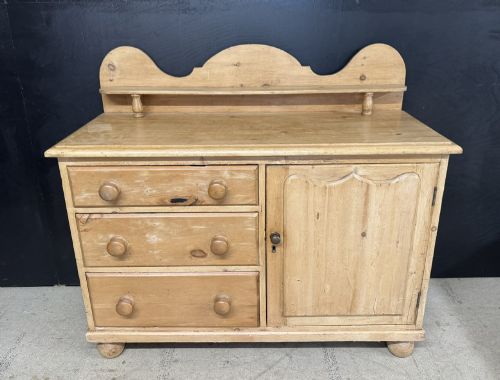
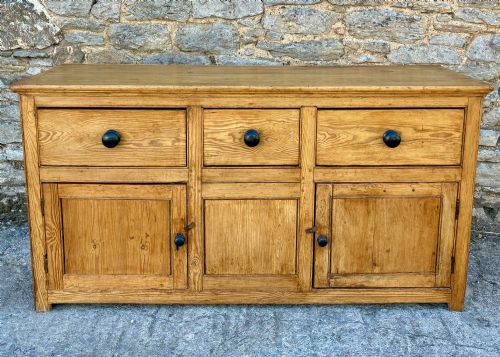
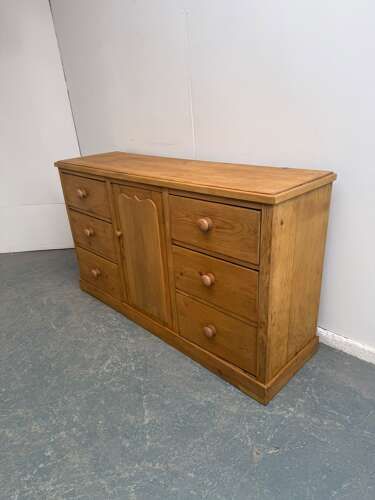

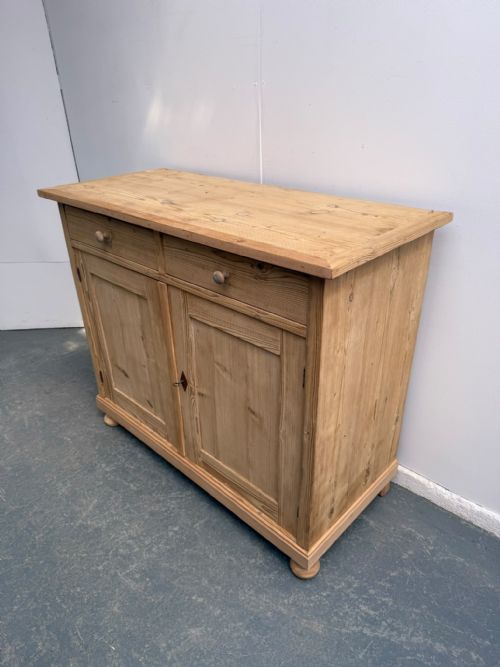


Pine Buffet Server Cabinet
These pine buffet server cabinet designs bring honest domestic utility into a room, offering sturdy timber storage with enduring everyday charm.
Pine Buffet Server Cabinet
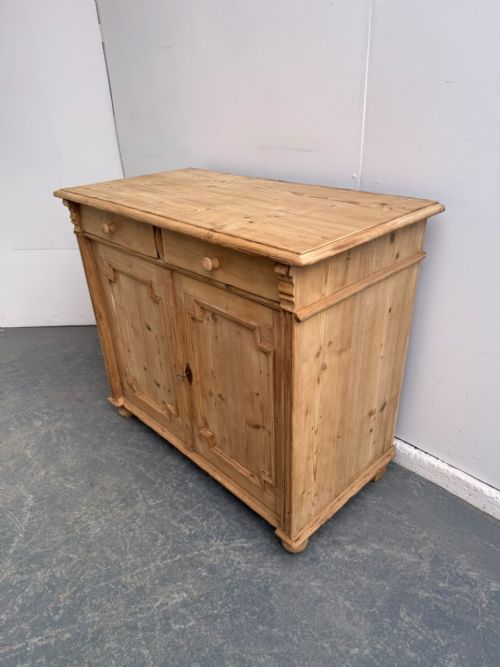
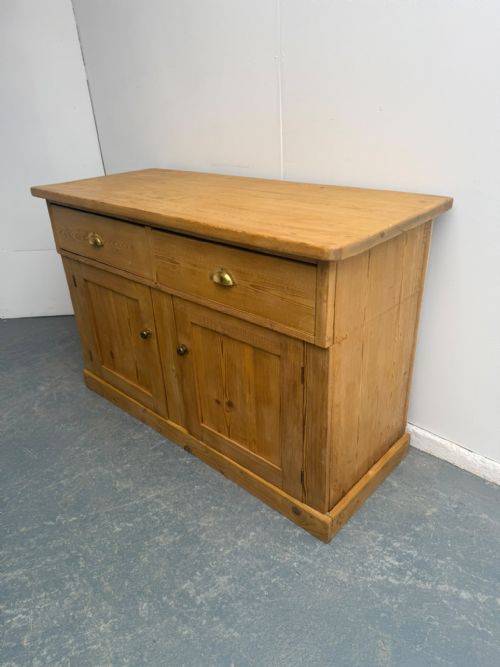
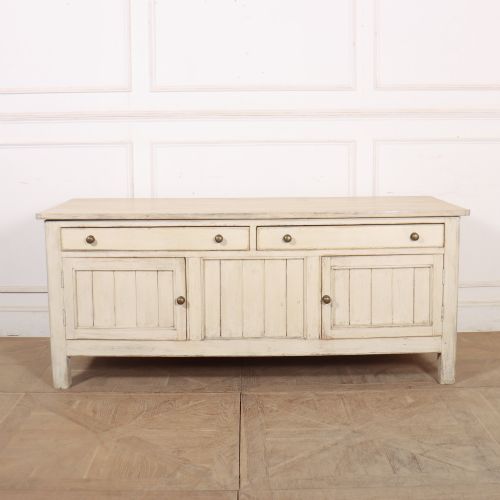
Most items on this page appear as dresser bases, sideboards, and cupboards rather than formal dining room buffets. These functional forms range from wide two-door two-drawer constructions to long farmhouse sideboards and smaller hall cupboards.
Originating largely from English country workshops, alongside notable Hungarian folk art pieces, these items emphasise practical utility through cupboards, drawers, and bread slides. They serve equally well in contemporary kitchens and dining spaces as functional storage furniture.
What varies in quality
Quality in these items rests upon the integrity of the timber construction and the retention of original surfaces. Pieces displaying uncompromised proportions and honest patination sit at the upper end of the scale.
The refinement of joinery and the presence of original hardware elements distinguish standard utilitarian examples from more elaborately carved or painted regional variations.
One exceptional piece arrives complete with a dedicated bread slide for when kneading dough on the sideboard became too much.
The Pine Buffet Server Cabinet Glossary
- Dresser base
- The lower section of a traditional kitchen dresser, typically comprising cupboards and drawers beneath a flat top surface. It functions independently as a sideboard or serving counter.
- Bread slide
- A pull-out wooden board integrated into the cabinetry of a dresser base, historically used for cooling bread or food preparation. It adds a practical sliding shelf to the storage layout.
- Chiffonier
- A compact sideboard or low cupboard developed during the nineteenth century, often fitted with drawers and doors for dining room storage. It offers a more enclosed profile than an open dresser base.
- Patina
- The surface sheen and colour acquired by wood through decades of handling, waxing, and ageing. It represents the authentic historical character of the timber.
- Folk art
- Decorative ornamentation and painting applied by regional craftspeople, distinguishing vernacular furniture from standard commercial output. Hungarian floral examples demonstrate this tradition.
Pine Buffet Server Cabinet: Frequently Asked Questions
What is a pine buffet server cabinet used for?
These pieces provide heavy-duty surface space and enclosed storage for tableware, linens, and kitchen provisions.
In modern interiors, they function effectively as sideboards in dining rooms or as freestanding preparation counters in kitchens.
How do I identify a Victorian pine dresser base?
Victorian pieces often feature characteristic drawer proportions, turned wooden knobs, and specific pine grain patterns developed over the nineteenth century.
Examining internal construction methods and timber thickness helps distinguish these items from later reproductions.
What is the difference between a dresser base and a sideboard?
A dresser base derives from kitchen and utility traditions, often retaining characteristics like bread slides and deep cupboards.
Sideboards were more frequently designed for formal dining rooms, though nineteenth-century country examples frequently overlap in form and function.
Should I choose waxed or painted pine?
Waxed pine highlights the natural grain and warm patination of the solid timber built up over generations.
Painted pine preserves historical surface treatments or allows you to match specific interior colour schemes while retaining antique construction.