

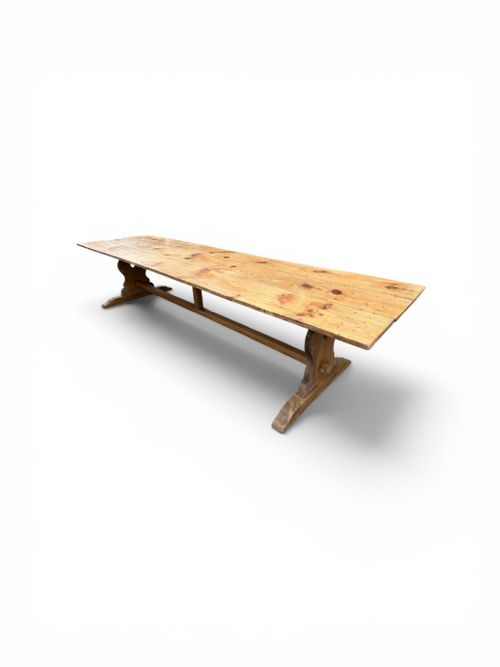


Pine and Oak Table
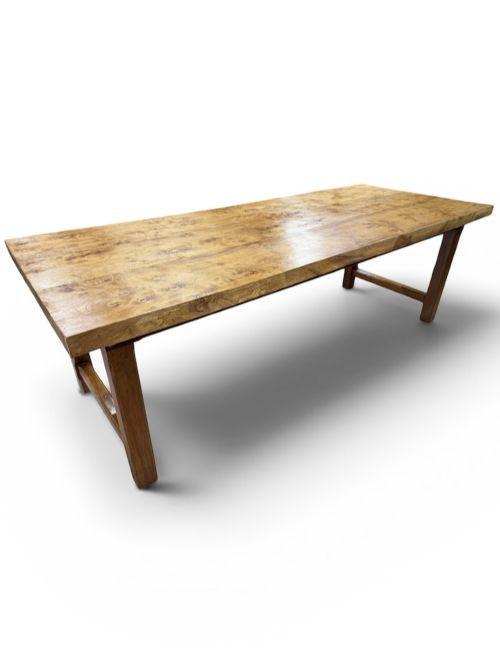
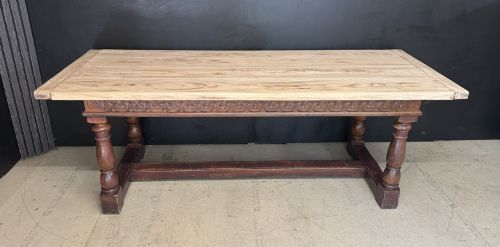
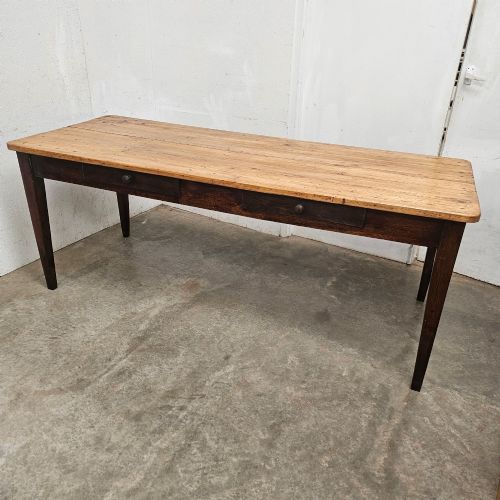
When you search for a pine and oak table, you enter a world of robust farmhouse dining furniture combining sturdy wooden bases with durable plank tops.
Pine and Oak Table
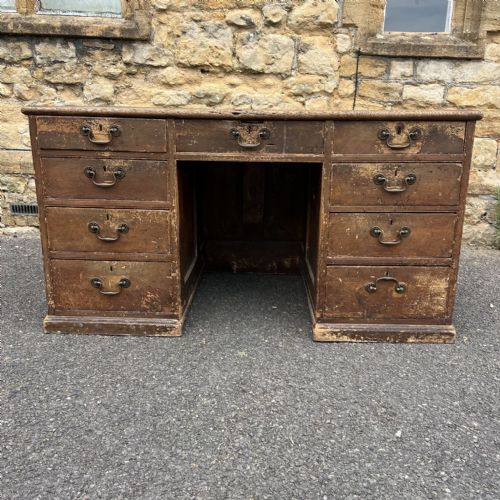
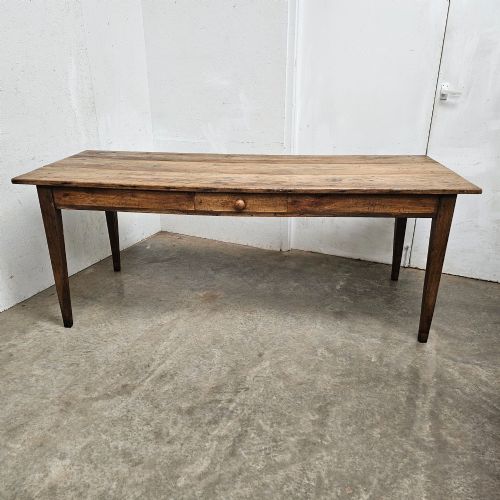
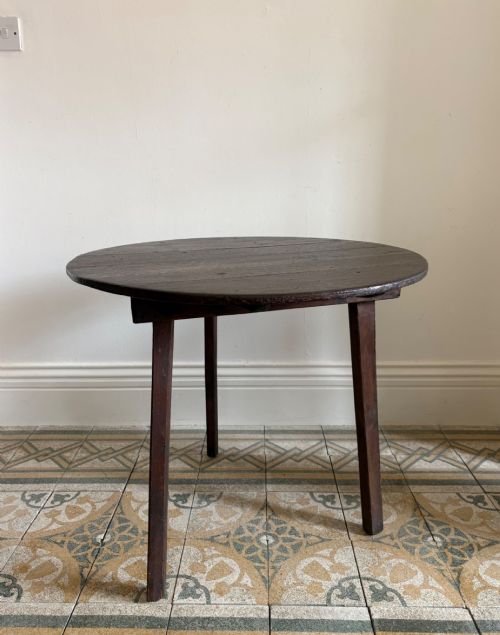
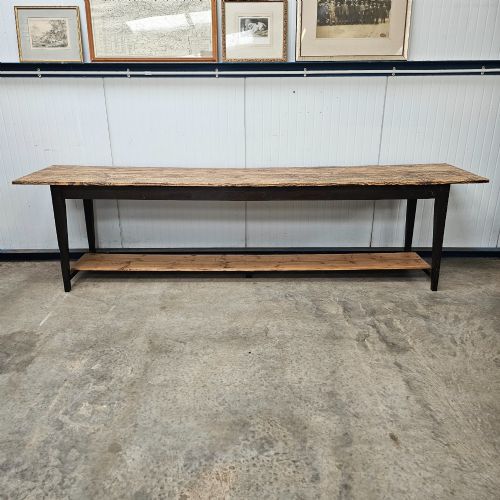
A pine and oak table typically takes the form of a large farmhouse dining table, a kitchen refectory surface, or a compact cricket table designed for occasional use. The listings on this page frequently present these dual-wood combinations in 19th-century vernacular designs.
Makers historically paired durable oak for structural stability and top surfaces with softer pine for frames, bases, and drawers. These domestic items originate from English, French, Welsh, and Swedish traditions, reflecting regional utility in rural homes.
The inventory demonstrates how utilitarian objects transitioned into central dining pieces. Buyers encounter various formats ranging from long harvest boards to small tavern and side tables.
Materials and Construction
Makers constructed these tables by joining heavy oak planks to resilient pine underframes, often utilising pegged mortise and tenon joints to secure the legs and stretchers. Surfaces were left natural, scrubbed clean, or occasionally finished with wax and paint.
Structural elements frequently incorporated secondary timbers such as ash or elm alongside the primary woods, while hardware elements like brass or iron appeared on drawers and fittings.
Listings demonstrate construction spanning the 18th century through the Victorian era, utilising oak, pine, and painted wood.
Assessing the Pieces
Quality rests in the integrity of the timber integration and the retention of original surfaces, such as scrubbed finishes or early paint applications. Tables that display honest wear from generations of daily use retain greater character than those with heavily altered components.
Proportion and scale distinguish finer vernacular examples, where the contrast between the dense grain of the oak top and the softer pine base creates a balanced, harmonious silhouette.
The Pine and Oak Table Glossary
- Cricket table
- A small, three-legged occasional table with a round wooden top, traditionally used in British country homes. The three legs ensure stability on uneven stone floors.
- Refectory table
- A long, narrow dining table historically used in communal dining halls. These pieces feature sturdy stretchers running low between the legs for added support.
- Harvest table
- An elongated utility table designed to accommodate large groups during seasonal gatherings. They typically feature long pine tops supported by sturdy wooden frames.
- Tavarn table
- A heavy-duty wooden table built for commercial or domestic hospitality use. They are characterised by thick timber tops and robust underframing designed to withstand heavy daily wear.
Pine and Oak Table: Frequently Asked Questions
What rooms suit a pine and oak table?
These tables find a natural home in kitchens and dining rooms where their robust construction handles daily domestic use. Their mixed-wood appearance complements both rustic country interiors and simpler modern spaces.
Smaller formats like cricket tables or side tables work well in hallways and living areas as occasional display surfaces. Their varied scales allow them to anchor large dining spaces or fit comfortably into compact rooms.
How do I clean a wooden table top?
Maintenance involves wiping surfaces with a damp cloth and drying them immediately to protect the grain. Avoid harsh chemical cleaners that strip natural waxes and historical finishes.
Applying a traditional beeswax periodically helps nourish the timber and preserves the tactile quality of the wood. Gentle upkeep maintains the historic patina accumulated over centuries.
Are these tables suitable for daily dining?
These pieces were originally built for heavy manual labour, kitchen preparation, and communal meals. Their durable timber construction makes them exceptionally resilient for modern family life.
Using placemats and coasters helps protect historic plank surfaces from moisture rings and excessive heat. The sturdy joinery ensures they remain stable under everyday use.
How can I tell the age of the wood?
Age is indicated by hand-cut joinery marks, tool impressions, and the natural oxidation of the timber over time. Oak typically darkens deeply with age, while pine develops a soft, honeyed patina.
Examining the underside reveals construction methods and historical repairs that signal genuine period manufacture. Consistent wear patterns around the edges reflect decades of human interaction.