
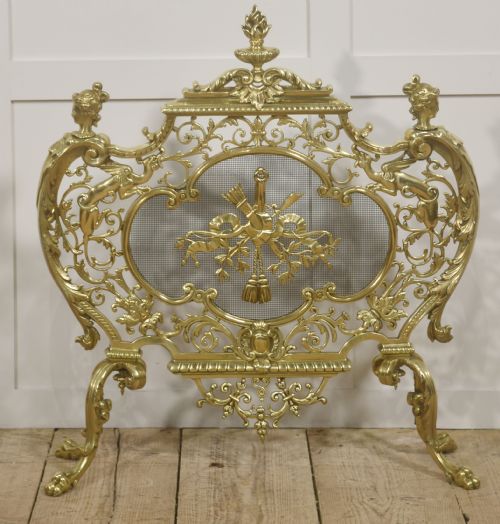


Pierced Metal Fireguard
A pierced metal fireguard protects the floor from hearth embers while bringing polished brass, steel and copper into the room.
Pierced Metal Fireguard
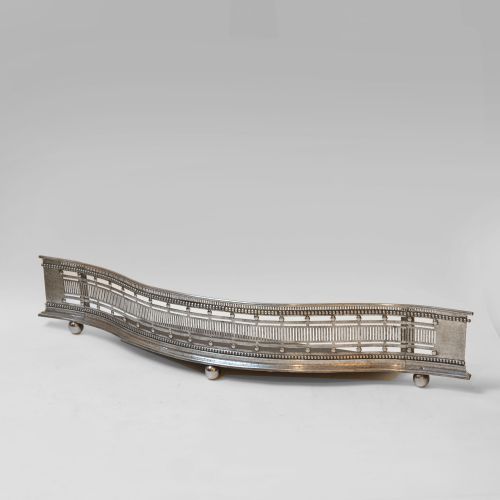
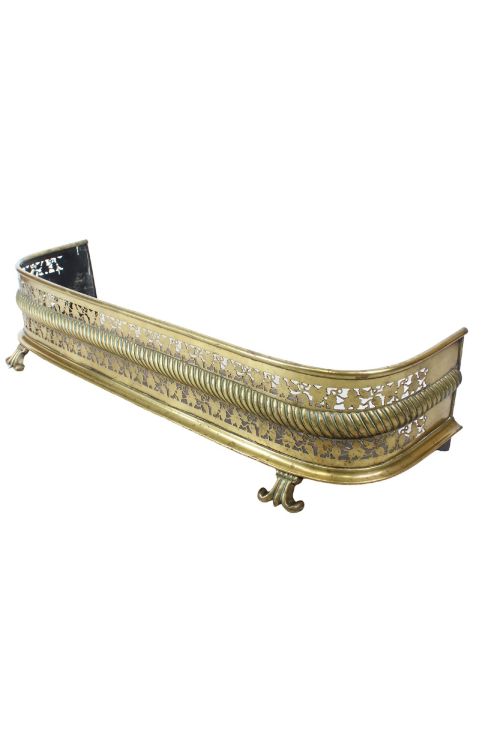
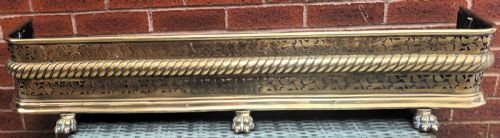
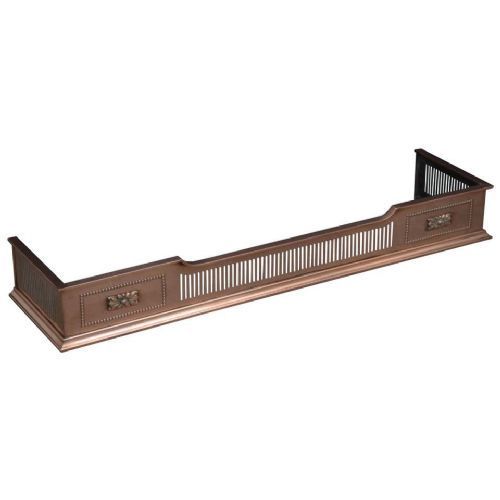
When you search for pierced metal fireguard, you find hearth protection that sits before the open fire to catch stray sparks and hot coals. These items appear as low fender curbs or upright fire screens, designed to frame the hearth.
The versions you meet on this page belong mainly to the Victorian and Georgian eras, spanning from the mid-eighteenth century to the end of the nineteenth century. They take the form of fireguards, curb fenders and fire screens.
Makers fashioned these hearth guards from brass, steel and copper, often adding wire mesh or decorative mouldings. Styles range from simple Regency and industrial metalwork to ornate French Rococo Revival pieces adorned with flower patera and beaded decoration.
How they were made
Craftsmen built these guards using heavy brass, steel and copper sheets, piercing the metal plates to create ornamental fretwork patterns. Many pieces combine steel frames with brass mouldings or incorporate wire mesh panels for added protection.
Workshops applied surface details such as flower patera, beaded decoration and black finishes onto the metal bodies. Bowfront shapes and curb profiles required precise hammering and joining of sheet metal to fit hearth openings.
Periods represented on this page span from George II in 1750 through the Regency and Victorian eras.
What varies in quality
Quality rests in the weight of the metal and the crispness of the pierced decoration. Heavy gauge brass and thick steel plates distinguish robust hearth furniture from lighter, simpler items.
Finishing separates the standard production from the exceptional. Fine examples display carefully struck flower patera, precise beaded decoration and harmonious combinations of brass and steel components.
The Pierced Metal Fireguard Glossary
- Fender
- A low metal guard placed around the hearth to keep burning coals from rolling onto the floor. These items appear in brass, steel and copper configurations.
- Fire Screen
- An upright panel placed before the fireplace to deflect heat when the fire dies down. They share materials and decorative pierced metalwork with fenders.
- Patera
- A circular ornamental motif resembling a classical libation dish, often stamped or cast onto metal fenders. This detail frequently appears alongside beaded decoration.
- Curb
- The structural border of a hearth fender that defines its boundary against the floorboards. Steel and brass curbs structure the base of the fireplace surround.
Pierced Metal Fireguard: Frequently Asked Questions
What is a pierced metal fireguard used for?
These metal furnishings sit around or before the fireplace opening to catch sparks and hot embers thrown from the fire. They serve both a protective role for the floor and a decorative purpose in the room.
Most examples function as low hearth curbs or upright screens that frame the burning coals. Their pierced metal panels allow heat to radiate into the space while maintaining a barrier.
How do I date a brass fender?
Dating relies on observing the materials, construction methods and decorative styles present on the piece. Georgian and Regency items often display restrained steel or brass work, while Victorian pieces lean towards heavier casting, copper accents and Rococo Revival motifs.
Examining the weight, finish and joining techniques helps place the item within the eighteenth or nineteenth century. Makers utilised distinct styles in each period, from simple bowfront steel curbs to ornate pierced brass.
Are these fireguards made of solid brass?
Many items feature solid brass components, whilst others combine brass with steel frames or copper sections. Heavier pieces often employ robust metal construction for durability around the hearth.
Workshop fabrication varied by era, with some Victorian and Georgian examples utilising mixed metals and wire mesh alongside sheet brass.
How do I style a hearth fender in a modern room?
A polished brass or steel fender anchors the fireplace area, creating an instant focal point in the room. Pairing the metallic finish with natural brick or stone hearths enhances the historic character of the space.
These pieces integrate well into contemporary interiors by adding texture through their pierced patterns and reflective metal surfaces. They work equally well empty or paired with matching fireplace accessories.