



Pierced Handle Serving Tray
These pierced handle serving tray examples combine practical service with fine period metalwork, offering a striking centrepiece for any table.
Pierced Handle Serving Tray
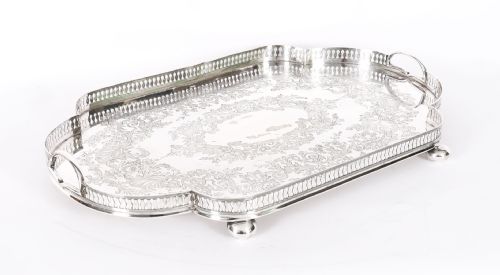
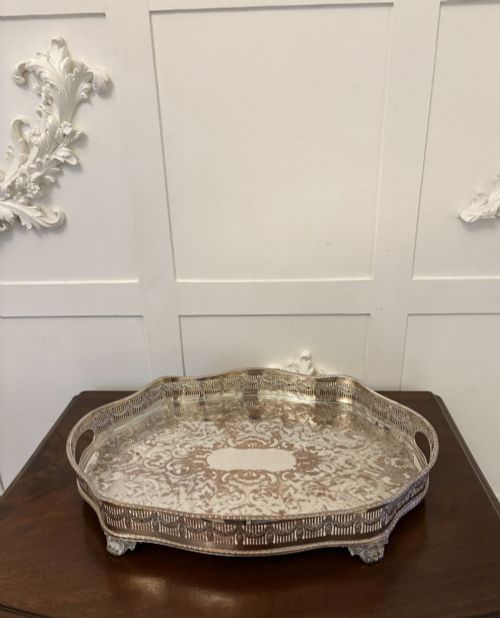
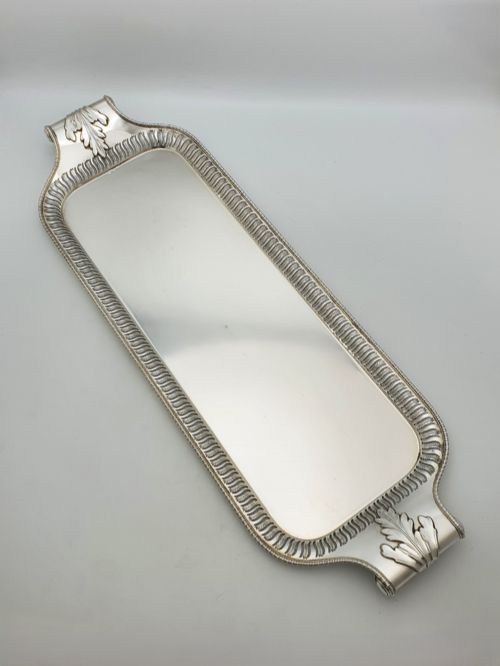
A pierced handle serving tray provides a functional surface for drinks and tea, distinguished by decorative cut-out sections along the rim or handles. Most pieces found here belong to the Edwardian and Victorian eras, alongside select silver and plated items from the early twentieth century.
The assortment includes gallery trays with pierced brass or silver plated borders, large oval cocktail trays, and handled bread baskets. Oak frames with silver plated mounts and engraved central fields also appear frequently across the collection.
Materials and construction
Makers utilised silver plate, electroplated nickel silver, and copper as base metals, applying traditional plating techniques over solid foundations. Several pieces incorporate solid oak timber frameworks fitted with metal handles and pierced galleries.
Pierced Handle Serving Tray Retail Price Guide 2026
Typical asking prices for pierced handle serving tray among the pieces listed under this phrase on Sellingantiques today, from the lower quarter to the upper quarter. They describe what is for sale here now, not the wider market.
Judging quality and craftsmanship
Quality rests upon the crispness of the pierced metalwork and the depth of the engraving on the tray bed. Superior examples maintain intact plating over nickel silver or copper, showing balanced proportions between the handles and the central field.
Heavier gauge metal indicates a more substantial piece that resists bending under weight. The integration of wooden elements, such as oak bases, demonstrates superior cabinetmaking alongside metalworking skill.
James Deakin·John Hunt
The Pierced Handle Serving Tray Glossary
- Gallery tray
- A tray featuring an upright pierced gallery or railing around the perimeter. This gallery stops glasses or decanters from sliding off during transit.
- Electroplated nickel silver
- A base alloy of copper, nickel, and zinc coated with a thin layer of pure silver through electrolysis. This method became widespread during the Victorian period.
- Sheffield plate
- An early form of silver plating produced by fusing a sheet of silver to a copper ingot. This technique precedes modern electroplating methods.
- Imari
- A style of Japanese porcelain decorated in underglaze blue and iron red with gilt highlights. Such pieces occasionally appear alongside metal serving wares in mixed period collections.
Pierced Handle Serving Tray: Frequently Asked Questions
How do I clean a silver plated tray?
Use a soft cloth and a gentle silver cream formulated to protect thin plating layers. Avoid abrasive pads that can wear away the silver coating.
Store the tray in a dry environment to prevent tarnishing between uses.
Can I use these trays for serving drinks?
Many sturdy Edwardian and Victorian trays are built to support heavy decanters and glassware. Check the structural rigidity of the handles before carrying heavy loads.
Lining the surface with a cloth protects the antique metal from direct moisture and scratching.
What is the difference between silver plate and sterling?
Silver plate consists of a thin layer of pure silver applied over a base metal such as copper or nickel silver. Sterling silver is a solid precious metal alloy containing a fixed proportion of pure silver.
Hallmarks usually indicate sterling items, whereas plated pieces bear manufacturer marks denoting the plating technique.
How do I date an antique serving tray?
Examine the style of the engraved motifs, the form of the handles, and any stamped maker marks on the underside. Edwardian pieces often display lighter floral engraving compared to heavier Victorian designs.
Materials such as early Sheffield plate or mid twentieth century oak provide further chronological markers.