




Pierced Brass Fire Guard
A pierced brass fire guard protects the room from stray sparks while bringing a bright metallic finish to the hearth.
Pierced Brass Fire Guard
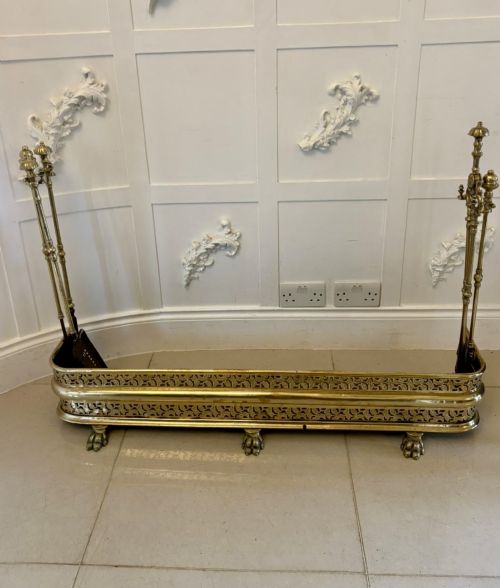
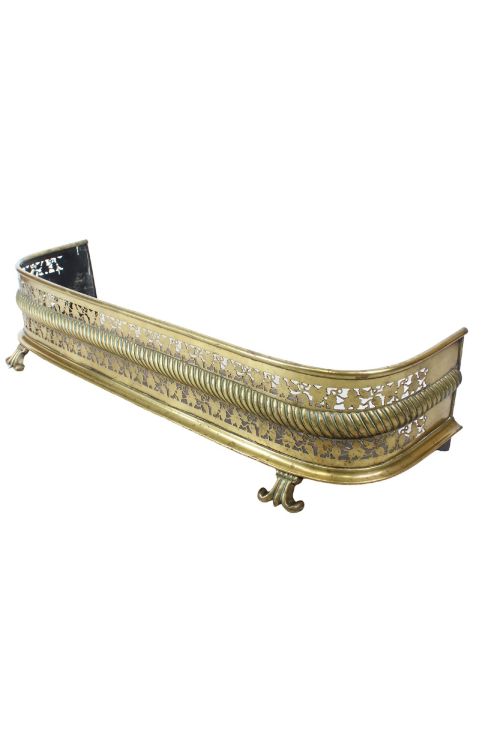
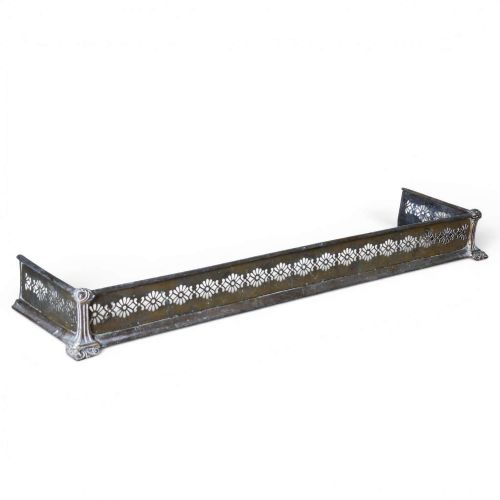
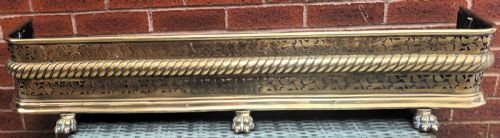
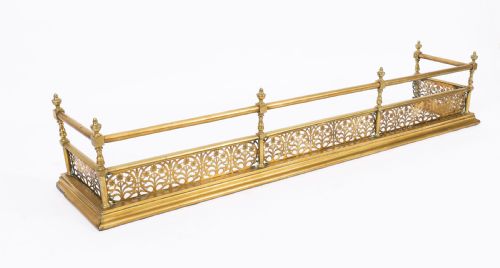
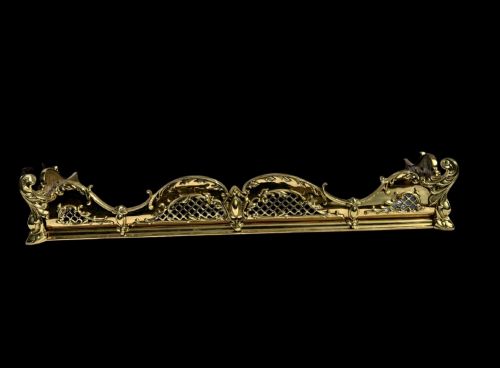
When you search for a pierced brass fire guard, you are looking at hearthside metalwork designed to contain embers and coal. These pieces range from low kerb fenders placed around the hearthstone to folding fan screens and upright nursery guards.
The examples on this page are predominantly Victorian and nineteenth-century pieces, alongside earlier Georgian and Regency designs and later twentieth-century folding screens. They appear in forms that combine brass frames with iron, steel, and wire mesh to balance decoration with safety.
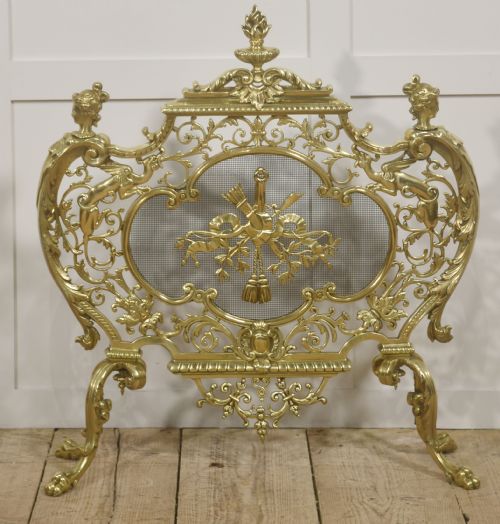
You will find variations from simple slotted kerbs to ornate French Rococo Revival and Art Nouveau panels. Each style reflects the interior taste of its period, from the geometric restraint of the Regency era to the botanical curves of the late nineteenth century.
How they were made
The primary material across these pieces is brass, often paired with iron, cast iron, steel, or polished steel for structural strength and weight. Workshops utilised sheet brass for piercing and stamping decorative motifs, while heavy cast brass formed the corners and decorative mounts.
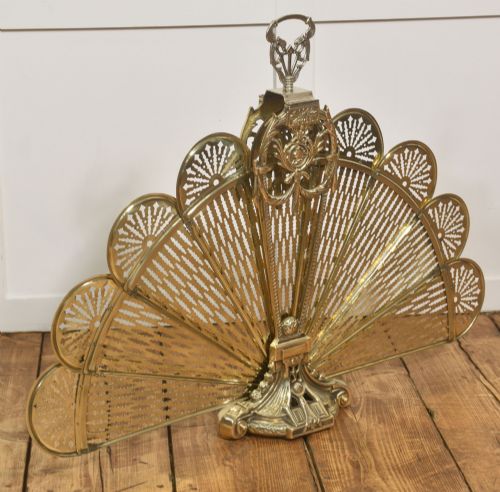
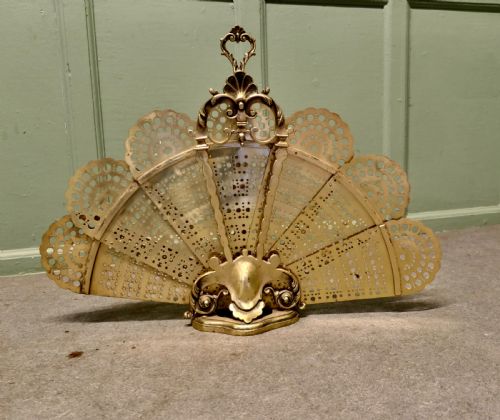
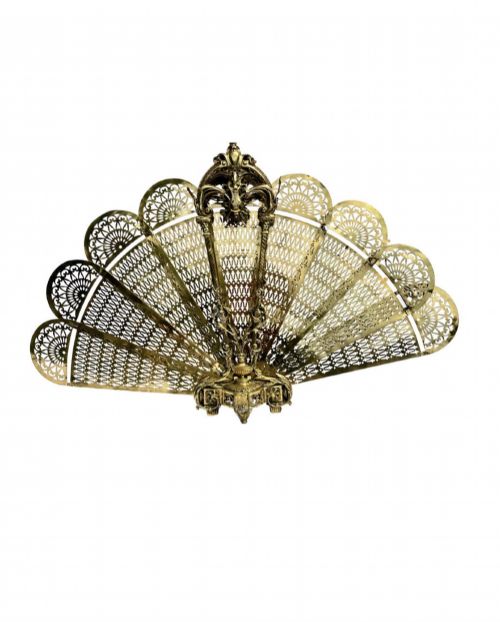
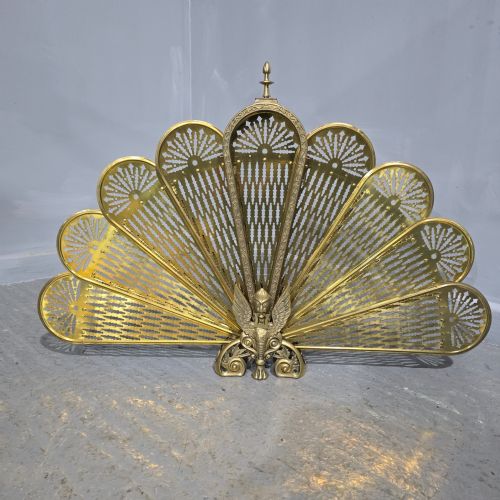
Detailing was achieved through hand-piercing patterns such as flowers and geometric lattices into the metal plate. Folding fire screens incorporated articulated brass leaves that fanned out into peacock tail designs, secured by small rivets and hinges.
Several folding brass fire screens mimic the glorious fanned tail of a peacock to hide an empty summer grate.
What varies in quality
Quality in these hearth furnishings is defined by the weight of the metal and the crispness of the pierced decoration. Finer examples utilise heavier gauge brass and steel that resist warping from hearth heat, whereas lighter pieces rely solely on thin sheet metal.
The artistry of the piercing and the finish of the metal set the better items apart. Superior pieces feature sharply executed hand-cut patterns and well-integrated iron or wire mesh components rather than crude assembly.
The Pierced Brass Fire Guard Glossary
- Kerb fender
- A low metal barrier placed around the perimeter of the hearth to contain coal and sparks. These often feature pierced brass decoration along the front rail.
- Fire screen
- An upright screen placed before the fireplace when not in use to hide the grate or block drafts. Designs include folding peacock fan shapes and ornate glazed or metal panels.
- Gilt bronze
- Copper alloy treated with a gold wash or mercury gilding to give a rich metallic sheen. This finish appears on decorative French fire screens of the period.
- Art Nouveau
- A style of design characterised by flowing, organic lines and botanical motifs. It appears on late nineteenth-century brass and steel fireplace accessories.
Pierced Brass Fire Guard: Frequently Asked Questions
How do I clean a brass fire guard?
Dust the metal regularly with a soft dry cloth to prevent soot accumulation. Avoid harsh abrasive cleaners that strip the historic patination from the brass.
For stubborn tarnish, use a mild proprietary brass cleaner applied sparingly with a cloth. Buff gently to maintain the warm metallic lustre without damaging any pierced details.
What is the difference between a fender and a guard?
A fender sits flat on the floor around the hearth boundary to keep fuel and embers contained within the fireplace area. They are typically low and rigid.
A guard or screen stands upright to block radiant heat and flying sparks from entering the room. Many nursery guards and folding screens serve this specific protective purpose.
Can I use an antique guard with a modern fire?
These pieces were originally built to withstand the heat of coal and wood fires in period grates. Their construction of brass and iron handles standard hearth temperatures.
Ensure the dimensions match your fireplace opening and that stable placement is achieved. Freestanding folding screens should be positioned securely to prevent tipping.
How do I date a brass fire guard?
Dating relies on stylistic markers such as Regency geometric lines, Victorian floral piercing, or Art Nouveau whiplash curves. The choice of accompanying materials also offers clues.
Heavier cast brass elements and polished steel combinations often point towards the middle and late nineteenth century. Simpler folded sheet designs frequently date to the early twentieth century.