




Pierced Brass Finial
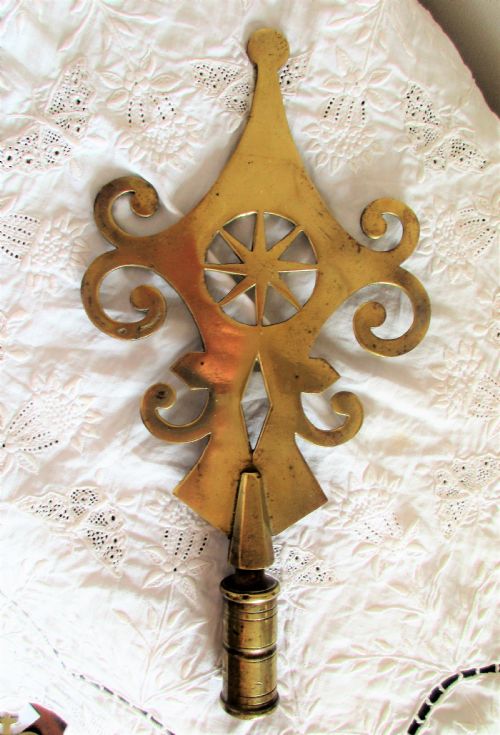
These pierced brass finial examples are decorative metal fittings that finish fire tools and fenders, prized by collectors for their intricate pierced work and warm brass lustre.
Pierced Brass Finial
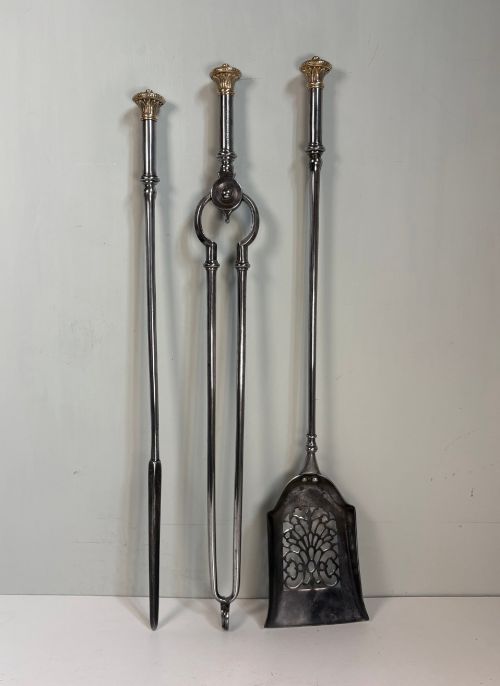
When you search for a pierced brass finial, you are looking at decorative metalwork that caps fireplace equipment, fire tools, and fenders across the Georgian, Victorian, and nineteenth-century periods. These fittings provide a deliberate decorative flourish to utilitarian hearth furniture, completing the upper terminals of pokers, tongs, and fender rails.
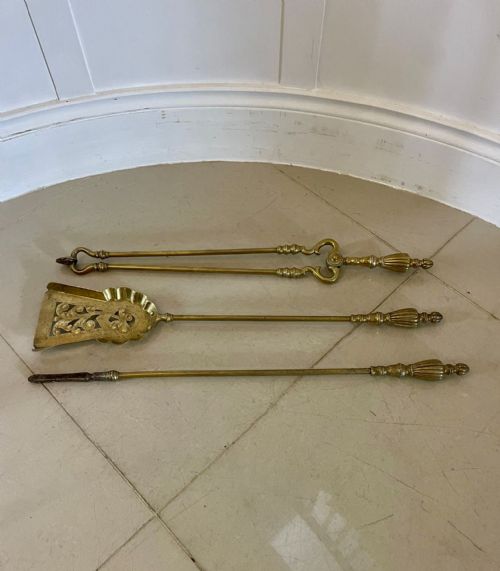
On this page, you are most likely to meet these elements as part of complete fire sets, companion sets, or curb fenders originating from English workshops. They appear alongside polished steel, cast iron, and broader brass assemblies, showing how metalworkers embellished domestic heating equipment.
How they were made
Makers utilised cast and sheet brass, working the metal by hand to achieve pierced patterns that allowed light and shadow to play across the surface. Artisans combined these brass elements with sturdy iron and steel shafts, particularly in fire tools and grates where structural strength was essential for daily hearth use.
The piercing technique involved carefully cutting or casting openwork designs into the brass components, creating intricate apertures that distinguished purely functional hardware from decorative pieces. Polished finishes were applied to the brass to catch the firelight, contrasting with the dark iron or polished steel of the companion pieces.
Object forms include fireplace fenders, fire tools, incense burners, and friendly society pole heads.
What varies in quality
The distinction between ordinary and superior examples lies in the crispness of the piercing and the depth of the casting detail. Finer pieces show sharp, clean apertures and carefully filed edges that demonstrate deliberate craftsmanship rather than hurried mass production.
Weight and metal composition also mark the range, with heavier brass components offering a more substantial feel and better structural integrity. The integration between the brass terminal and the iron or steel body reveals the care taken during assembly.
The Pierced Brass Finial Glossary
- Finial
- The decorative terminal ornament that caps the top of a fire tool, pole head, or fender upright. It provides a visual focal point to the upper extremity of the object.
- Pierced brass
- Sheet or cast brass that has been perforated with openwork patterns. This technique lightened the visual weight of the metal and created ornamental motifs.
- Curb fender
- A low metal barrier placed in front of a fireplace to retain embers and protect the hearth rug. These often incorporate brass rails and decorative terminals.
- Companion set
- A matched collection of fireplace tools, typically including tongs, a poker, and a shovel, designed to hang together on a stand or rest beside the grate.
Pierced Brass Finial: Frequently Asked Questions
What is a pierced brass finial used for?
These decorative metal terminals serve as the crowning ornamentation on fireplace tools, fenders, and pole heads, adding visual interest to practical hearth equipment.
They draw the eye upward and complete the design scheme of nineteenth-century and earlier fireside furnishings.
How do I date an old brass finial?
Dating relies on examining the manufacturing techniques, the weight of the brass, and the surrounding hardware such as steel fenders or fire tools.
Georgian pieces tend to show restrained classical proportions, while Victorian examples often display more robust casting and intricate pierced designs.
Are these finials found on fire tools?
Many examples are integrated directly into the upper handles of antique fire irons, companion sets, and pokers.
Makers used them to ensure that even utilitarian tools possessed a decorative element when placed in a formal room.
How should I clean antique brass?
Maintenance requires gentle dusting and occasional cleaning with a non-abrasive metal polish to preserve the historical patina.
Aggressive cleaning can remove the surface character accumulated over centuries of domestic use.