




Antique Ceremonial Brass
Antique ceremonial brass brings together ritual objects from diverse cultures, offering rich historical craftsmanship and striking display pieces for your home.
Antique Ceremonial Brass
How they were made
Makers shaped these objects primarily from brass, copper, and bronze, often combining iron and steel for blades and mountings. Artisans utilised casting, hammering, and engraving techniques to build complex surface decoration.
Selected pieces incorporate secondary materials such as velvet, leather, and wood to provide grips, linings, or structural support. The interplay of polished metal and textured fabric defines the physical presence of many items.
Listings demonstrate materials including brass, bronze, copper, steel, and iron, alongside textiles like velvet and leather.
What varies in quality
Quality rests in the crispness of the casting and the depth of the hand-engraved detail across the metal surface. Pieces displaying purposeful design and steady execution stand apart from simpler production items.
The integrity of secondary materials, such as original leather sheaths or velvet mounts, influences the standing of an artefact. Preservation of the original surface patina marks the distinction between ordinary and superior examples.
The Antique Ceremonial Brass Glossary
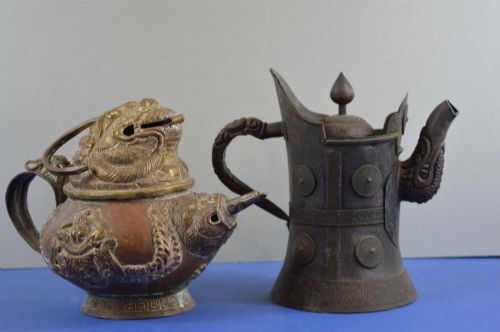
- Ewer
- A large jug with a slender shape, often used for pouring water during formal ceremonies or ritual washings.
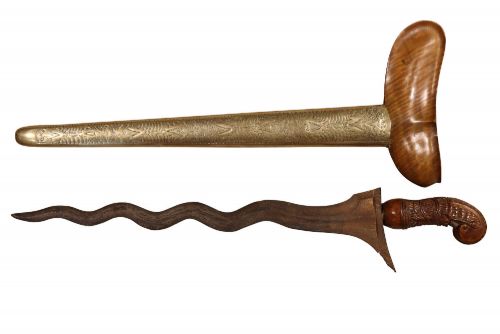
- Kris
- An asymmetric dagger with distinctive blade patterns, originating from Southeast Asia and associated with ceremonial dress.
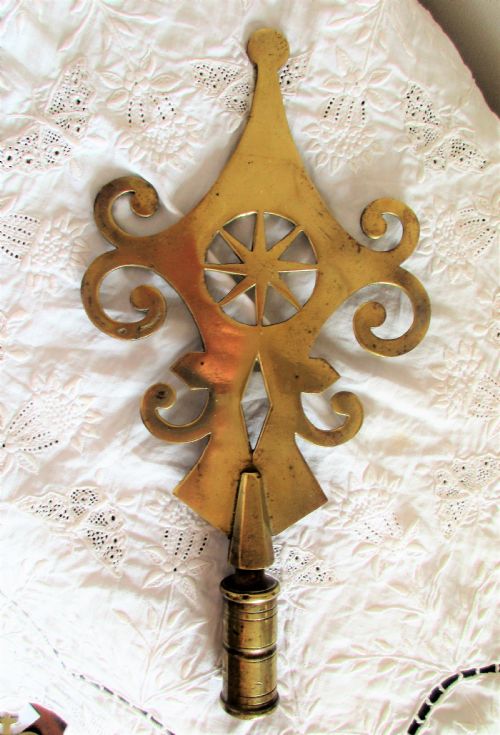
- Pole head
- A decorative metal top mounted on a wooden staff, carried during processions by Victorian friendly societies and fraternal lodges.
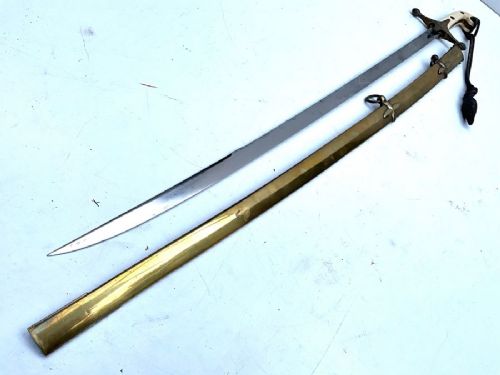
- Mameluke sword
- A curved military sabre modeled on traditional Middle Eastern arms, adopted by Western officers during the nineteenth century.
Antique Ceremonial Brass: Frequently Asked Questions
What is antique ceremonial brass?
Antique ceremonial brass comprises metal objects created for ritual, military, or civic use during the nineteenth and early twentieth centuries. These items range from temple ewers to lodge pole heads.
They reflect the traditions and craftsmanship of diverse global cultures, utilising brass alongside bronze, copper, and steel.
How were ceremonial swords used?
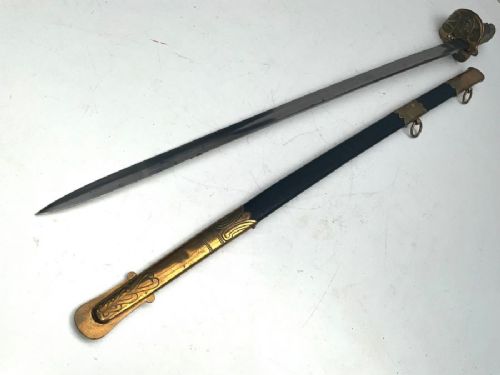
Ceremonial swords served as symbols of rank, authority, and membership rather than standard combat weapons. Officers and fraternal members wore them during parades, formal inspections, and lodge rituals.
Their designs frequently incorporate ornate hilts, engraved blades, and specialised metal scabbards suited for display.
How do I date brass antiques?
Dating relies on stylistic markers, manufacturing techniques, and historical context recorded in the specific design of the object. Nineteenth-century pieces often show distinct casting methods and decorative motifs tied to Victorian or colonial periods.
Comparing construction details with documented examples helps establish the likely decade or era of manufacture.
How do I clean ceremonial brass?
Cleaning antique brass requires gentle dusting and minimal intervention to preserve the historical surface patina. Harsh chemical polishes strip away the aged tones that collectors value.
Consulting a conservator ensures the appropriate care method for pieces combined with delicate textiles like velvet or leather.