

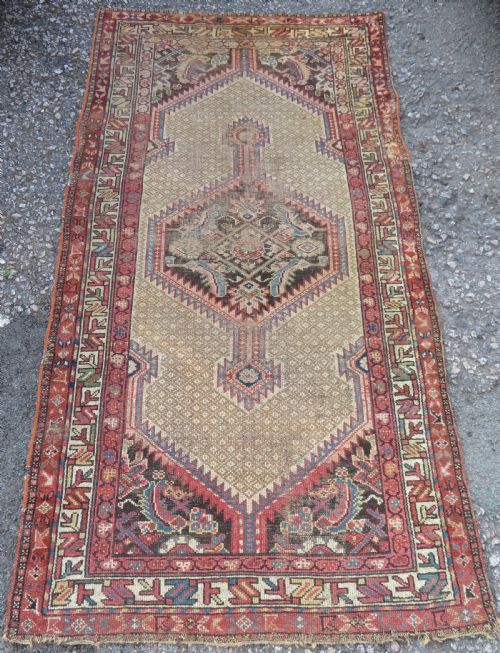


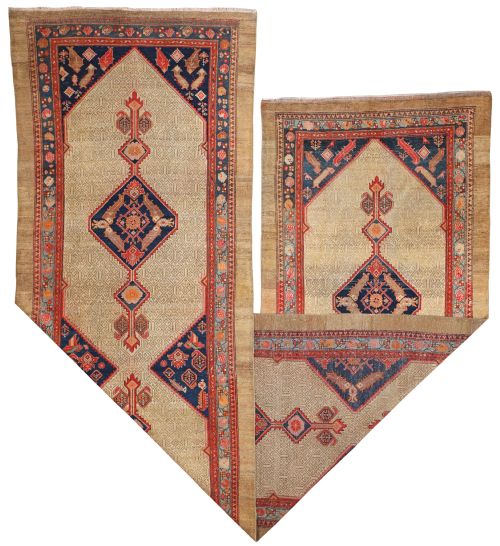
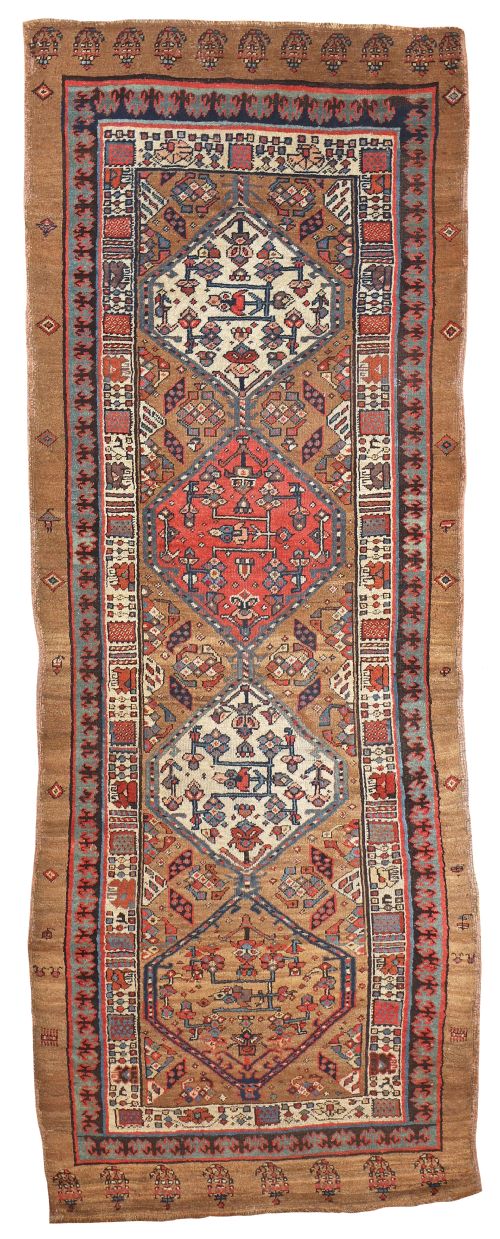


Persian Sarab Rug
A Persian Sarab rug brings the quiet geometry of North West Persia into a hallway, offering hand-knotted durability and centuries of village weaving tradition.
Persian Sarab Rug
A Persian Sarab rug originates from the North West region of Persia, created by village weavers working in traditional styles. These pieces function primarily as runners and rugs, designed to bring warmth and structure to hallways and country house interiors.
Buyers browsing this selection will most frequently encounter long hallway runners alongside smaller village rugs. Dating spans from the late nineteenth century into the early decades of the twentieth century, specifically covering periods around eighteen seventy through to nineteen twenty.
How They Were Made
Weavers constructed these textiles using natural wool and cotton foundations, often incorporating undyed camel hair into the pile for natural warmth and varied tone. The combination of these traditional materials yields a sturdy structure suited to heavy foot traffic in domestic spaces.
The hand-knotted technique requires careful placement of each knot by village artisans working from memory or traditional design patterns. This methodical assembly ensures the rugs maintain their integrity across decades of use.
Persian Sarab Rug Retail Price Guide 2026
Typical asking prices for persian sarab rug among the pieces listed under this phrase on Sellingantiques today, from the lower quarter to the upper quarter. They describe what is for sale here now, not the wider market.
Some weavers quietly smuggled natural camel hair into the pile just so the rug could boast a softer tread.
What Varies in Quality
Quality in these textiles rests upon the fineness of the knotting and the crispness of the traditional design execution. Finer knots permit more intricate geometric detail within the central field and borders.
The choice of wool and the inclusion of genuine camel hair distinguish superior examples from standard village production. An even pile wear and retained structural edge finish indicate a higher grade of preservation and initial craftsmanship.
The Persian Sarab Rug Glossary
- Runner
- A long, narrow carpet format specifically designed for corridors, hallways, and staircases. These pieces measure significantly longer than they are wide.
- Camel Hair
- The natural fibre obtained from camels, utilised in its undyed state to provide durable brown or golden tones within the pile. This material adds distinct texture and resilience to village weaves.
- Village Rug
- A textile produced in a domestic or community setting rather than a formal city workshop. These pieces reflect local tribal aesthetics and traditional motifs.
- North West Persia
- The geographical provenance encompassing traditional weaving centres such as Sarab. This region is renowned for distinctive geometric runners and village carpets.
Persian Sarab Rug: Frequently Asked Questions
What materials are used in these rugs?
Weavers utilised traditional materials including wool, cotton, and occasionally undyed camel hair.
These natural fibres combine to create a resilient pile and a firm foundation that withstands daily wear.
How do I style a hallway runner?
A narrow village runner fits naturally into corridors, passageways, and narrow gallery spaces.
Their elongated proportions add linear structure and warmth to timber or stone flooring.
How can I tell the age of a runner?
Dating relies on observing structural characteristics, material wear, and traditional design patterns recorded across late nineteenth and early twentieth-century examples.
Items from this era typically span from eighteen seventy to nineteen twenty, reflecting distinct village weaving periods.