




Persian Salt Bag Textile
These persian salt bag textile pieces are authentic tribal woven pouches made by nomadic groups, offering rich history and tactile warmth for a collector's interior.
Persian Salt Bag Textile
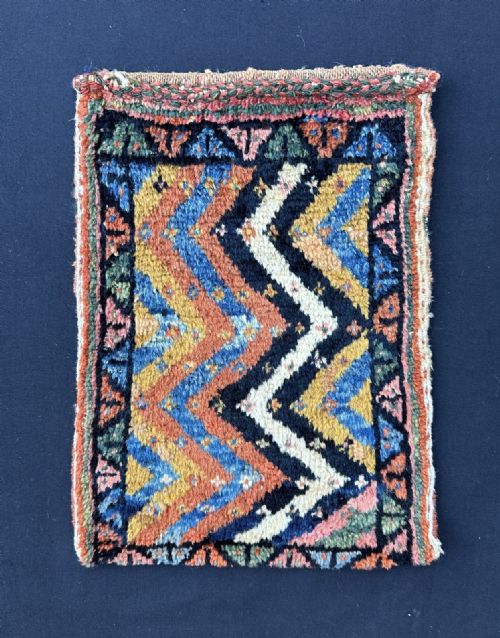
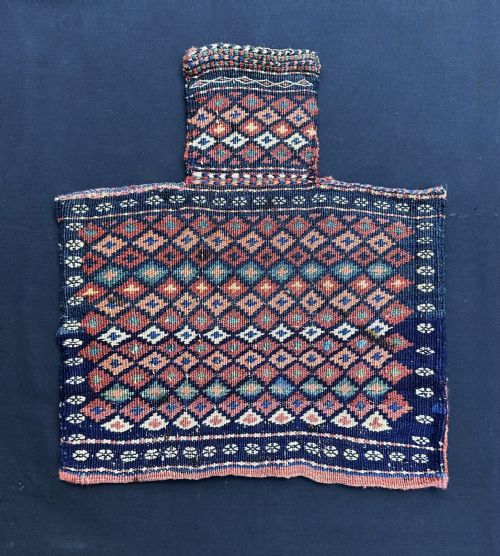
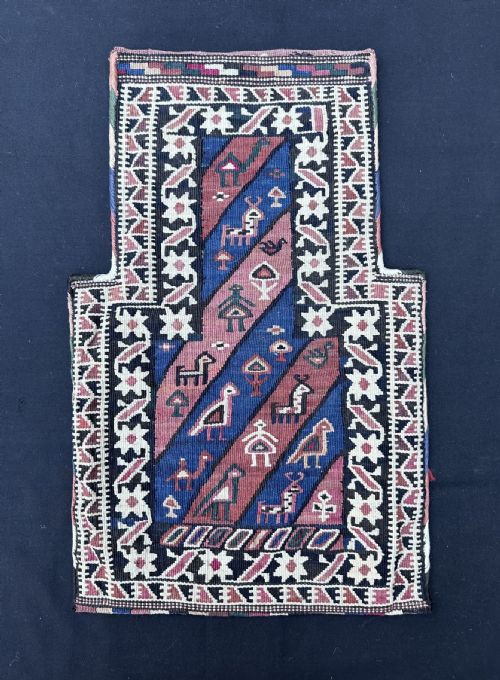
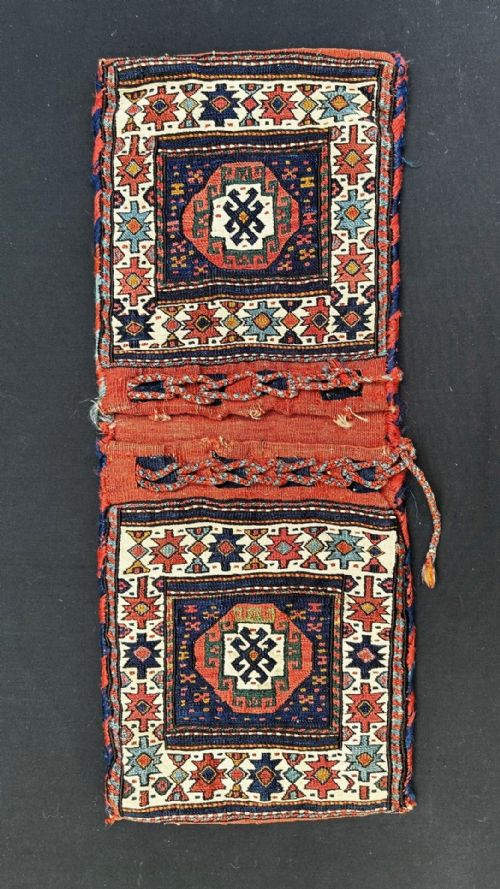
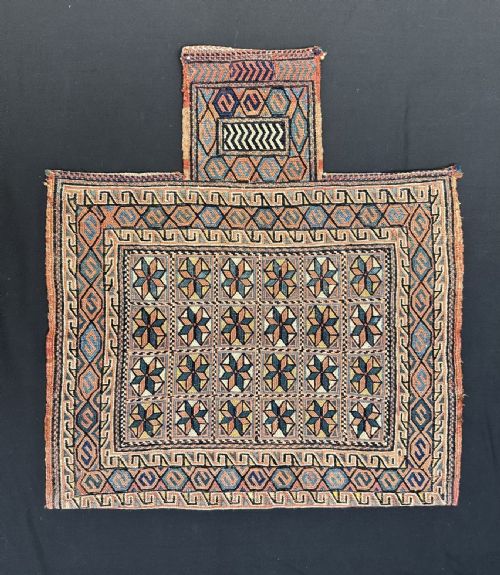
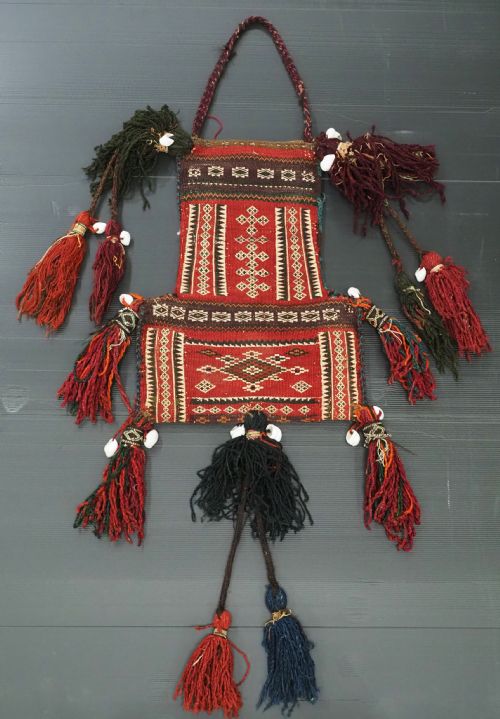
A persian salt bag textile is a utilitarian woven pouch created by nomadic and tribal groups across Persia and neighbouring regions to store and transport coarse rock salt for livestock. The forms seen here include traditional salt bags, known also as namakdan, alongside related utilitarian containers such as spoon bags, spindle bags, and miniature saddle bags. These woven objects originate from distinct tribal confederacies and nomadic groups including the Afshar, Qashqa'i, Baluch, Shahsevan, Lori-Bakhtiari, and Kordi tribes.
Buyers will most frequently encounter genuine salt bags attributed to southern, western, and northeastern Persian provinces, dating from the late nineteenth century to the early twentieth century. Each piece reflects the specific weaving traditions and regional aesthetics of the tribe that produced it, ranging from the southern workshops of Kerman and Fars to the northern reaches of Khorassan and Azerbaijan. While some examples remain intact with their narrow necks and flap closures, others survive as fragments of once-larger tribal weaving traditions.
What varies in quality
Quality in a persian salt bag textile rests primarily on the tightness of the weave, the clarity and complexity of the tribal motifs, and the richness of the natural dye palette. Finer knotting and precise geometric execution distinguish superior nomadic weaving from simpler utilitarian work.
The condition of the wool pile, the structural integrity of the flatwoven or soumak areas, and the survival of original side cords or closures determine the desirability and preservation state of the piece.
Persian Salt Bag Textile Retail Price Guide 2026
Typical asking prices for persian salt bag textile among the pieces listed under this phrase on Sellingantiques today, from the lower quarter to the upper quarter. They describe what is for sale here now, not the wider market.
Several nomadic salt bags still retain their original cowrie shells, once attached to ward off the evil eye from the family's salt supply.
The Persian Salt Bag Textile Glossary
- Soumak
- A flatweaving technique where pattern threads are wrapped over and under warp threads, creating a textured surface resembling braids without producing a cut pile. This method provides extra durability to utility bags.
- Namakdan
- The traditional Persian term for a salt bag, typically featuring a narrow neck designed to prevent rock salt from spilling during transport by nomads. These vessels were essential equipment for pastoral households.
- Pile
- The vertical tufts of wool knotted onto the warp and weft threads to form a plush surface on a textile. This provides the soft texture characteristic of many nomadic rugs and bags.
- Warp
- The stationary lengthwise threads stretched on a loom that form the structural foundation of the textile. Weft threads are interlaced across these warp strands to secure the weave.
Persian Salt Bag Textile: Frequently Asked Questions
What were salt bags used for?
Nomadic tribes utilised these woven pouches to store and transport coarse block salt required for their herds and domestic cooking.
The narrow necks and secure shapes prevented the salt from spilling during seasonal migrations across rugged terrain.
How do I identify tribal origins?
Attribution relies on specific geometric motifs, colour palettes, and structural techniques characteristic of distinct groups such as the Afshar, Qashqa'i, or Baluch.
Examining the weave structure and material choices, including the presence of goat hair or soumak work, helps narrow down the regional source.
Can I display these on walls?
Many collectors mount these flatwoven and pile textiles on walls to appreciate the complex tribal iconography and rich natural dyes.
Proper mounting distributes the weight evenly across the backing to prevent strain on the historical wool and cotton fibres.
How should I clean my textile?
Gentle surface dust removal using a soft brush or low-suction vacuum with a mesh screen preserves the fragile wool and natural dye materials.
Professional textile conservators should handle any significant washing or structural repairs to avoid damaging the historical fibres.