






Persian Prayer Carpet
A persian prayer carpet brings centuries of nomadic and town craftsmanship into your home through traditional designs and enduring wool, cotton, and silk construction.
Persian Prayer Carpet
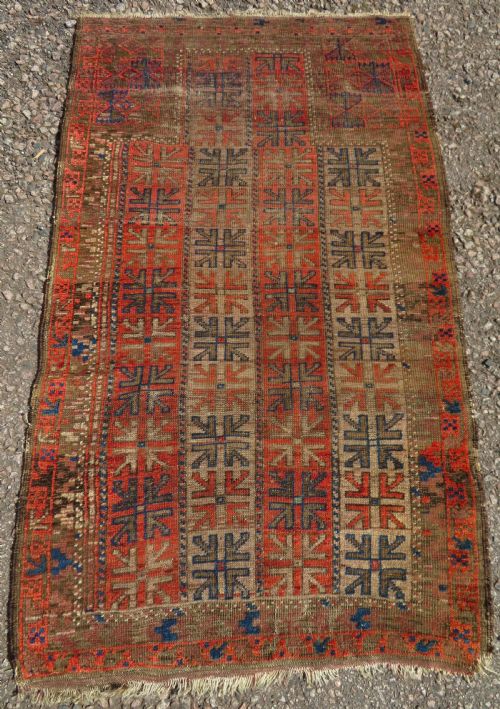
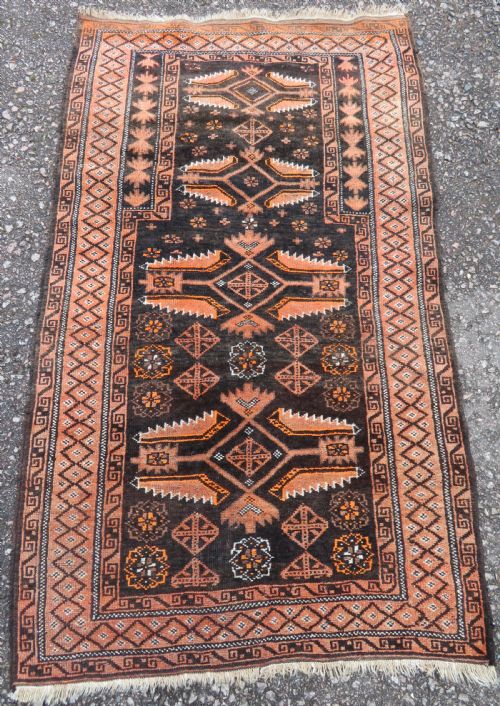
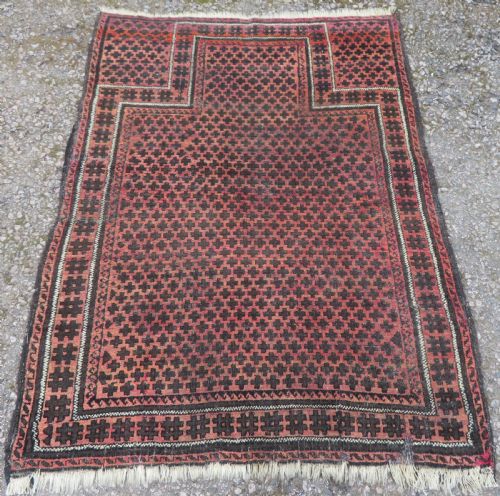
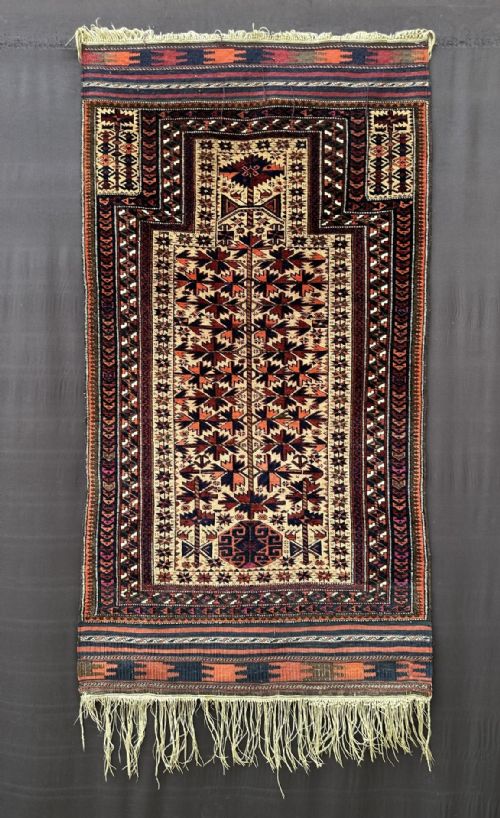
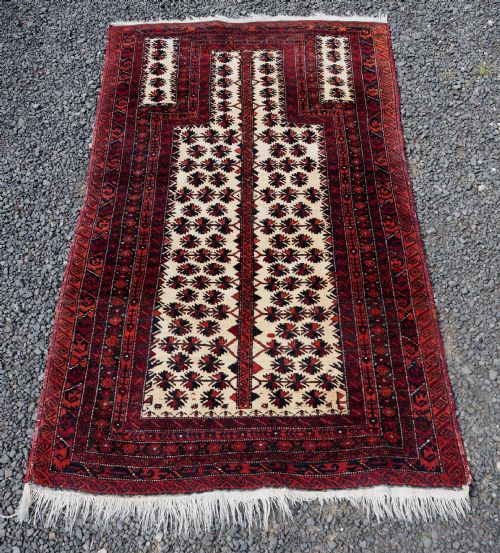
A persian prayer carpet is a textile created for personal devotion, featuring a distinctive mihrab or niche design that points toward Mecca during daily prayers. When exploring these pieces, you will encounter diverse regional interpretations ranging from tribal workshops to urban centres.
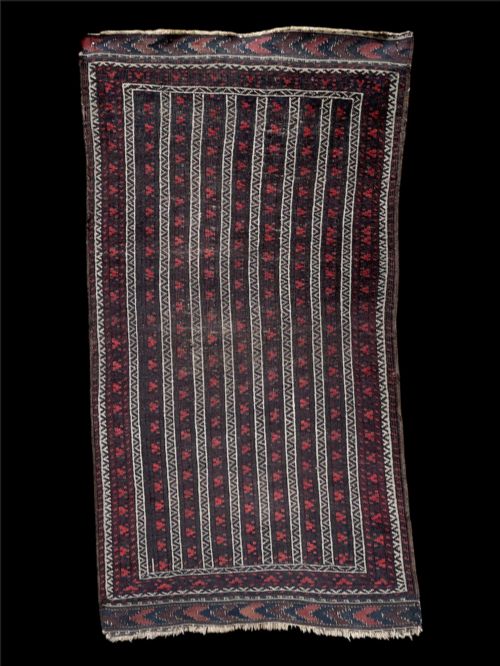
The most common examples on this page are tribal and nomadic works, specifically Baluch, Timuri, and Afghan pieces originating from borderlands and eastern regions. These rugs typically display darker grounds, camel hair foundations, and geometric motifs rather than elaborate city florals.
Town-woven pieces also appear, including finer Kashan, Kerman, and Isfahan formats known for intricate floral vase designs and millefleurs patterns. These city examples offer a distinct contrast to the darker, more rustic tribal weaves found elsewhere in the selection.
How They Were Made
Weavers constructed these textiles primarily using wool piles knotted onto cotton, wool, or sometimes silk foundations, ensuring a dense and durable surface. Camel hair frequently appears in the ground wool or structural elements of tribal rugs, adding a natural warmth and variation to the texture.
Manual hand-knotting techniques governed the creation of every piece, executed on vertical or horizontal loom setups by regional artisans. The dyes employed were largely derived from natural sources, producing deep rich colours that mellow gracefully over decades of light and use.
Persian Prayer Carpet Retail Price Guide 2026
Typical asking prices for persian prayer carpet among the pieces listed under this phrase on Sellingantiques today, from the lower quarter to the upper quarter. They describe what is for sale here now, not the wider market.
Some nineteenth-century weavers slipped small intentional irregularities into their geometric borders to ward off the evil eye.
What Varies in Quality
Knot density and structural integrity dictate the foundational tier of any woven piece, separating tightly packed urban looms from looser nomadic formats. Finer knotting permits sharper definition in intricate floral or geometric borders.
Material selection and dye saturation drive the upper end of the range, where premium wools, silk elements, and resilient camel hair maintain their structural integrity. The clarity and depth of the natural colour palette determine the visual harmony of the finished niche.
The Persian Prayer Carpet Glossary
- Mihrab
- The arched niche design at the head of a prayer rug, symbolising the direction of prayer. This architectural motif orients the worshipper during daily devotions.
- Baluch
- A generic term applied to rugs woven by various nomadic and semi-nomadic tribes inhabiting the borderlands of Persia and Afghanistan. These textiles typically feature geometric patterns and dark, saturated wool grounds.
- Millefleurs
- A dense overall pattern composed of countless small flowers. This French term is commonly used to describe intricate floral prayer carpets from centres like Kerman.
- Tree of Life
- A symbolic motif depicting a stylised tree rising from a base, representing the connection between earth and heaven. It is a frequent central feature in tribal prayer formats.
- Camel Hair
- Undyed fibre gathered from camels, utilised in the pile or ground of nomadic rugs for its durability and natural warmth. It ranges from golden tan to deep brown hues.
Persian Prayer Carpet: Frequently Asked Questions
What is a persian prayer carpet?
A persian prayer carpet is a devotional textile defined by a central niche or mihrab shape.
These pieces were woven for personal religious observance by both settled urban workshops and nomadic tribes.
How were these rugs used?
Owners placed the textile on the floor to provide a clean, dedicated space for daily prayers.
The directional mihrab pointed toward Mecca during the ritual.
They also served as portable floor coverings within tents and homes.
How do I live with one?
Place your rug in low-traffic areas or mount it securely on a wall to protect the older textile fibres.
Keep the piece away from direct sunlight to preserve the natural wool and silk dyes over time.