


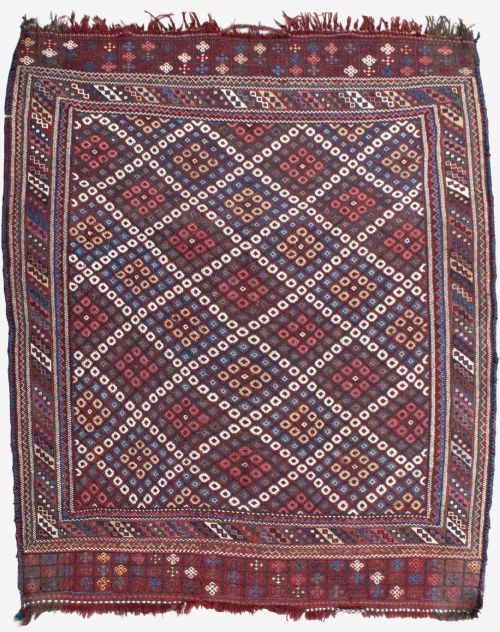


Persian Nomadic Sofreh
A persian nomadic sofreh is a woven tribal cloth made for dining and bread preparation, prized by collectors for its raw utility and graphic design.
Persian Nomadic Sofreh
A persian nomadic sofreh is a flatwoven textile created by tribal groups across Persia for daily domestic use such as spreading meals or kneading dough. Examples found here span from the late nineteenth century to the early twentieth century, originating from regions including Kerman, Khorassan, Luristan, and the Chahar Mahal.
These pieces function primarily as floor spreads for communal eating or food preparation, reflecting the nomadic lifestyle of their makers. Their formats range from square cloths to elongated rectangular runners suited to specific tribal customs.
Materials and Construction
Makers utilised wool and cotton, frequently incorporating camel hair for its natural unspun tones and durability. These fibres were spun by hand and dyed using natural dyes derived from regional plants and minerals.
The construction relies on flatweave and kilim techniques, producing a sturdy textile without a raised surface pile. This method allowed nomadic weavers to create crisp geometric patterns and resilient structures designed to withstand heavy floor use.
Persian Nomadic Sofreh Retail Price Guide 2026
Typical asking prices for persian nomadic sofreh among the pieces listed under this phrase on Sellingantiques today, from the lower quarter to the upper quarter. They describe what is for sale here now, not the wider market.
Many a weary nomad surely wondered why their kitchen floorcloth would one day end up hanging proudly on a gallery wall.
Factors of Quality
Quality in a persian nomadic sofreh rests on the tightness of the weave and the precision of the flatwoven geometric motifs. Tenser packing of the weft yarns produces a firmer, more durable cloth that holds its shape over decades of use.
The depth and clarity of the natural dyes distinguish superior examples, particularly where camel hair and distinct regional palettes are deployed. Strong structural integrity in the selvedges and ends indicates careful workmanship by the tribal weaver.
The Persian Nomadic Sofreh Glossary
- Sofreh
- A woven cloth used traditionally for spreading meals or preparing bread among nomadic groups. It serves both practical and ceremonial functions within tribal daily life.
- Kilim
- A flatweave textile produced by tightly interweaving warp and weft strands to create a smooth surface without pile. This technique allows sharp geometric patterns to emerge clearly on both sides.
- Flatweave
- A general term for rugs and textiles constructed without knots, relying instead on weaving the weft threads directly across the warp. Such pieces are typically lighter and thinner than piled carpets.
- Camel Hair
- Animal fibre utilised in tribal weaving for its natural brown and fawn shades, left un-dyed to provide durable contrast. It adds considerable strength to the textile structure.
Persian Nomadic Sofreh: Frequently Asked Questions
What is a persian nomadic sofreh used for?
These textiles were laid upon the ground to serve as a clean surface for sharing meals or for kneading and shaping bread dough within nomadic households.
They function today primarily as decorative floor coverings or wall hangings, bringing authentic tribal geometry into modern interiors.
How do I care for a flatweave sofreh?
Gentle vacuuming without a rotating brush helps remove dust and debris from the flatweave structure without catching the wool or cotton fibres.
Professional textile cleaning is recommended for heavier soil, as traditional natural dyes require careful handling to prevent running.
Where were these textiles made?
Nomadic and village groups across Persia produced these pieces, with specific origins including Kerman, Khorassan, Luristan, and the western borderlands.
Different tribes such as the Afshar, Baluch, and Luri-Bakhtiari developed distinct regional patterns and colour palettes.
How can I tell the age of a sofreh?
Age is assessed through the character of the wool, the composition of the natural dyes, and traditional tribal design markers typical of the nineteenth and early twentieth centuries.
Structural wear patterns and hand-spun irregularities also offer clear indications of period production methods.