



Persian Mahal Rug
A persian mahal rug brings earthy West Persian character into a room through generous scale and natural dyes.
Persian Mahal Rug
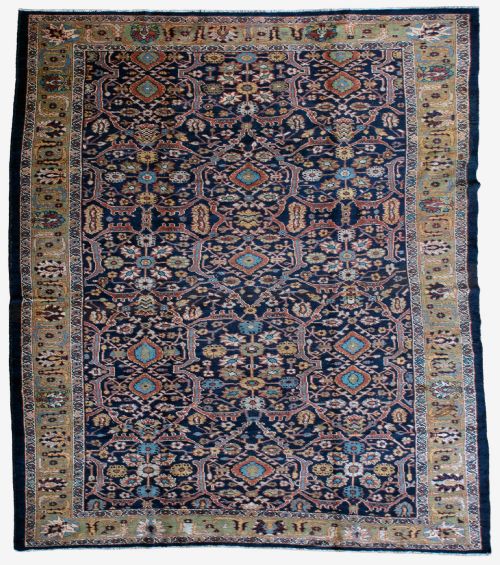
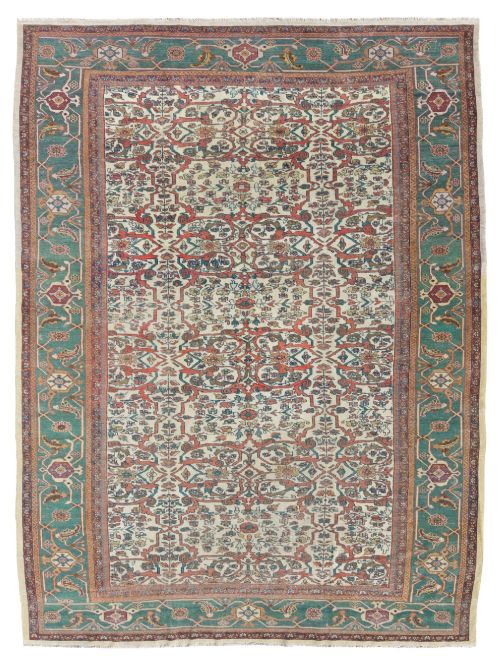
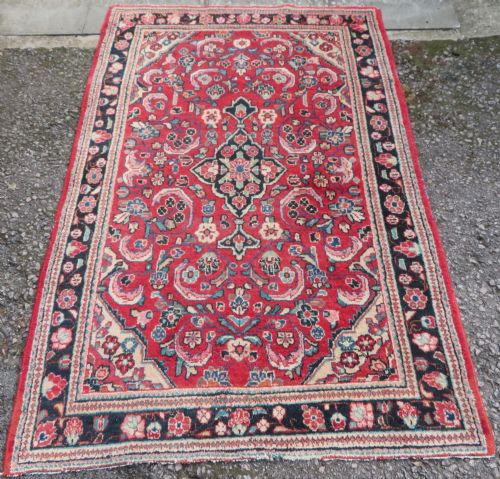
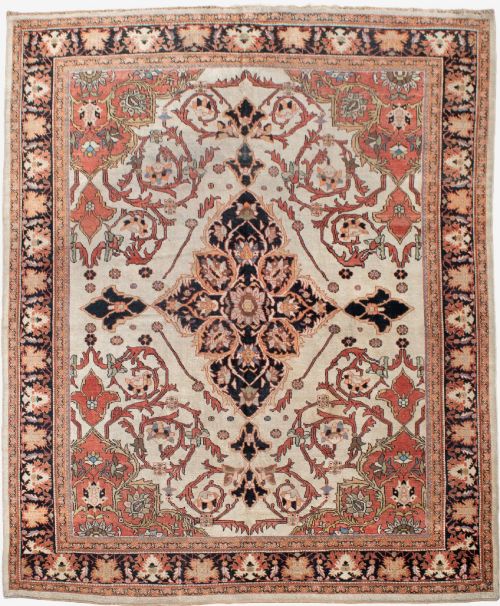
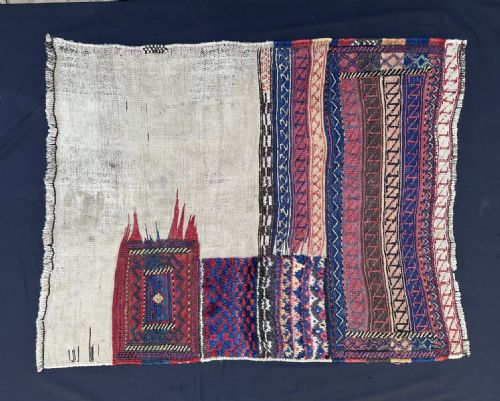
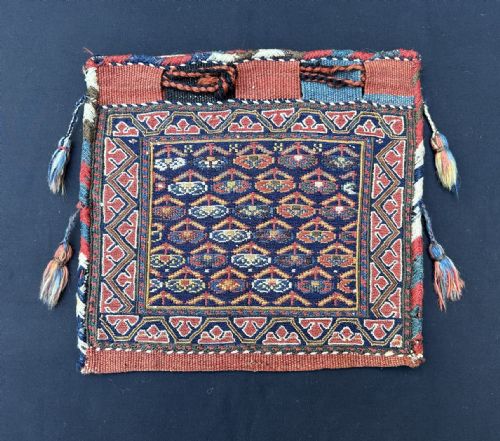
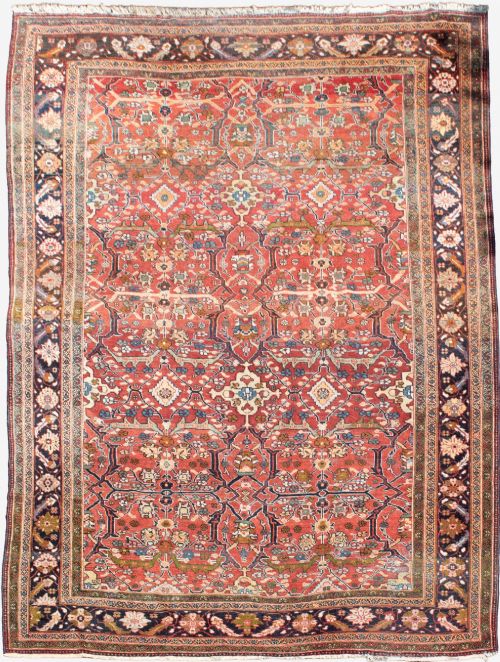
A persian mahal rug originates from the central western region of Persia, created primarily for domestic utility or export by skilled village weavers. These floor coverings span the late nineteenth century through to the early decades of the twentieth century, reflecting traditional design idioms passed down through generations. Buyers will frequently encounter large room-size carpets alongside smaller village rugs and utility textiles such as wheat sacks.
The aesthetic vocabulary encompasses bold all-over shrub motifs, central medallion layouts, and ivory grounds paired with terracotta tones. Pieces often bridge formal commercial production and genuine tribal weaving, particularly those associated with the Chahar Mahal valley and surrounding communities. Every example carries the distinct imprint of regional western Persian workshops and nomadic influences.
How they were made
Weavers constructed these textiles using hand-spun wool for the pile, complemented by cotton foundations for warp and weft threads to ensure structural stability. Goat hair occasionally appears in the outer guard borders or selvages of specific village pieces for added durability. Natural dyes provide the enduring palette, yielding soft colours that age gracefully over decades of wear.
The dyeing process relied on local plant and insect extracts, producing rich terracotta hues, warm ivories, and muted blues without synthetic harshness. Artisans knotted the wool by hand onto sturdy vertical looms, resulting in dense, resilient floor coverings built to withstand heavy daily use in country houses.
Persian Mahal Rug Retail Price Guide 2026
Typical asking prices for persian mahal rug among the pieces listed under this phrase on Sellingantiques today, from the lower quarter to the upper quarter. They describe what is for sale here now, not the wider market.
Some antique grain sacks spent decades holding wheat before finding a second life as cherished floor art.
What varies in quality
The integrity of the wool pile and the depth of the natural dye palette fundamentally distinguish the finer examples from standard commercial output. Superior pieces display a luminous quality in the hand-spun fibres, where subtle variations in dye absorption create visual movement across the surface. Knot density and the crispness of the drawing also indicate the weaver's level of skill.
Condition plays a defining role, particularly the retention of original fringe ends, secure side cordings, and an even pile across large formats. The harmony of the colour combination, especially within ivory ground carpets and complex shrub designs, separates master-woven rugs from simpler village work.
The Persian Mahal Rug Glossary
- Mahal
- A type of Persian carpet woven in the western districts, known for robust village designs and relaxed architectural layouts. They often feature large-scale floral motifs rendered in softer, more expansive proportions than city rugs.
- Tacheh
- A traditional tribal grain or wheat sack woven by Lori-Bakhtiari groups in the Chahar Mahal valley, functioning as a utilitarian container before entering the collector market. These square or rectangular textiles employ characteristic nomadic weaving techniques.
- Ziegler
- A commercial adaptation of traditional Persian carpet designs produced under European direction in nineteenth-century Persia, featuring muted palettes and generous open fields. They catered primarily to Western interior tastes.
- Sultanabad
- A nineteenth-century designation for large-format carpets originating from the same broader West Persian weaving region as Mahals, sharing similar robust structures and room-size scales. The terms often overlap in historic attribution.
- Sofreh
- A flatwoven or piled tribal textile used primarily for meal service, bread preparation, or grain storage within nomadic households. These functional cloths display geometric tribal symbols native to western Persian weavers.
Persian Mahal Rug: Frequently Asked Questions
How do I style a persian mahal rug?
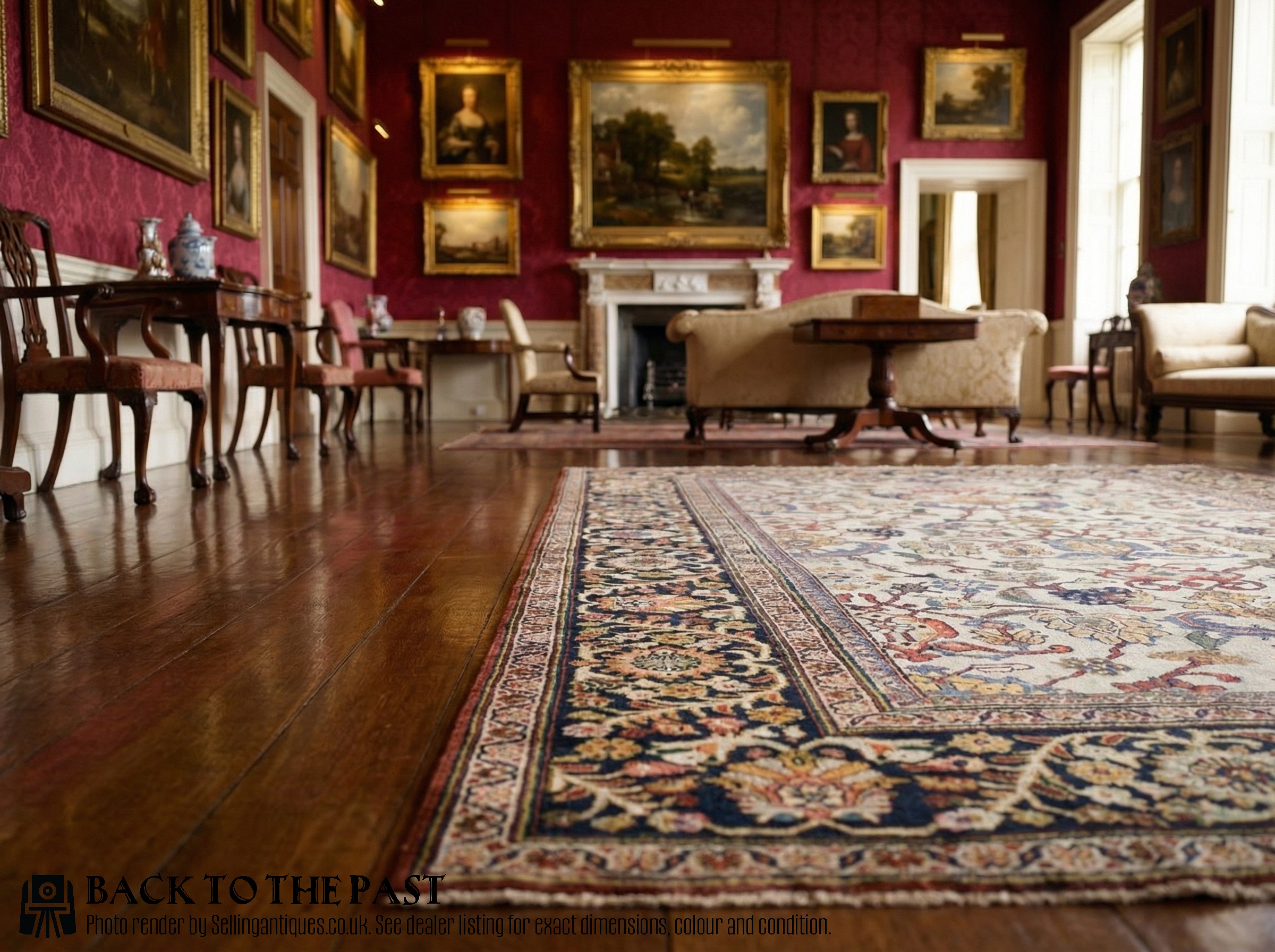
These carpets suit traditional country house interiors just as well as minimalist modern rooms, where their earthy terracotta tones and ivory grounds anchor the furniture. Their generous proportions make them ideal for living spaces, dining rooms, or hallways that benefit from grounding floor art.
Allow the rug to dictate the room's colour scheme by pulling secondary tones from the border designs into cushions or upholstery. Placing natural wood furniture or leather pieces nearby enhances the organic warmth of the hand-spun wool.
What is the difference between a mahal and a sultanabad?
While both designations describe large carpets originating from western Persia during the nineteenth and early twentieth centuries, Sultanabad often points to slightly earlier, more monumental room-size weaving. Mahal rugs frequently display a slightly more relaxed village aesthetic with open fields and generous floral motifs.
In practice, workshops in the same regional centres produced both styles, leading to significant overlap in materials, natural dyes, and overall construction methods.
Are these rugs durable enough for daily use?
Hand-spun wool combined with sturdy cotton foundations makes these vintage floor coverings exceptionally resilient for high-traffic areas in a home. The organic lanolin remaining in traditional wool helps resist natural staining and cushions the fibres against foot traffic.
Placing a quality underlay beneath the carpet prevents slipping, absorbs impact, and extends the working life of the textile by reducing friction against hard flooring.
How can I identify the age of a village rug?
Dating relies on examining the subtle shifts in natural dyes, the specific spin of the wool, and structural indicators like the construction of the selvages and ends. Pieces from the late nineteenth century often show softer abrash transitions in the colour field where dye batches changed.
Village pieces linked to specific nomadic groups in the Chahar Mahal region also carry tribal motifs that evolved in distinct chronological phases between eighteen-eighty and nineteen-thirty.