






Persian Kurdish Carpet
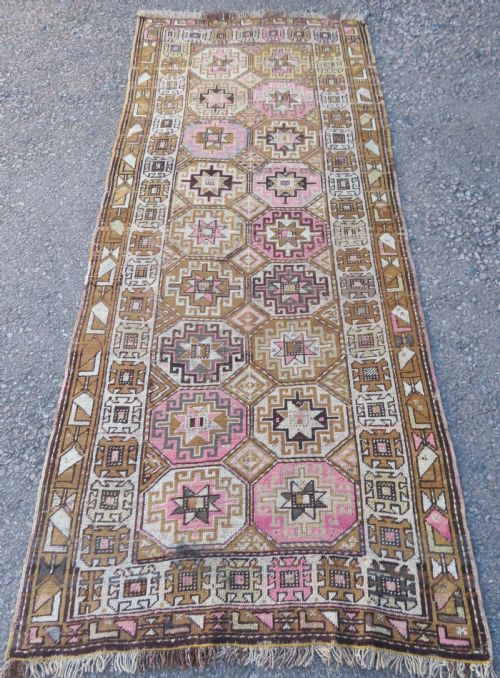
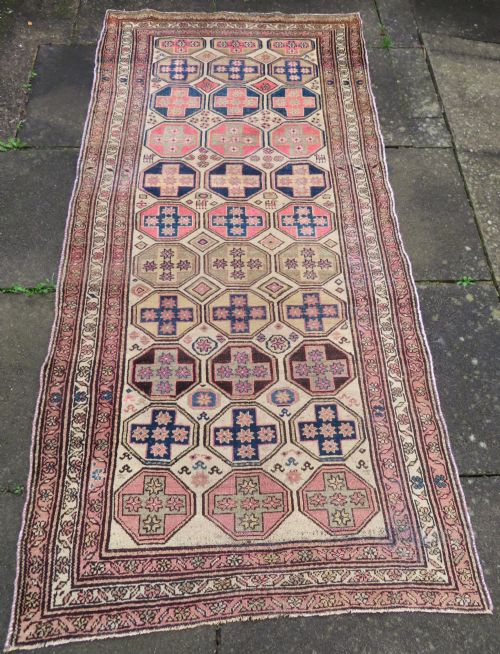
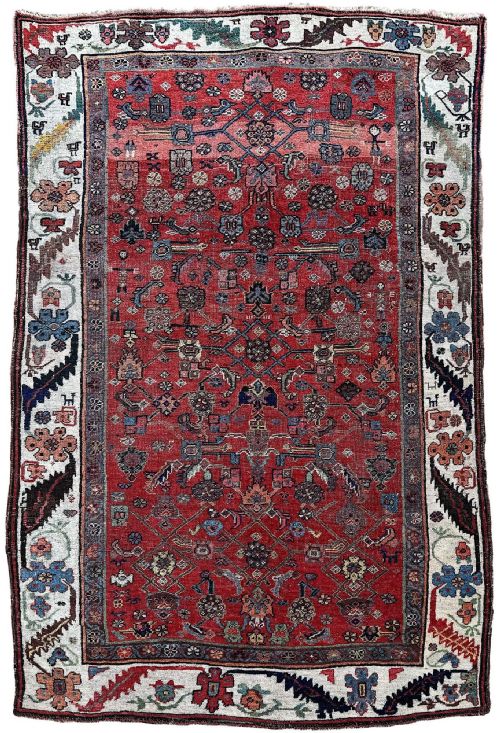
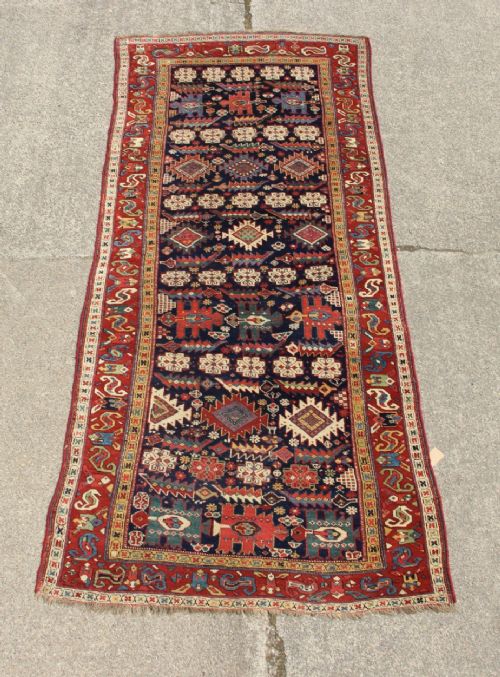
A persian kurdish carpet brings heavy geometric strength and rich natural tones to a floor, woven by nomadic and village makers across the nineteenth and early twentieth centuries.
Persian Kurdish Carpet
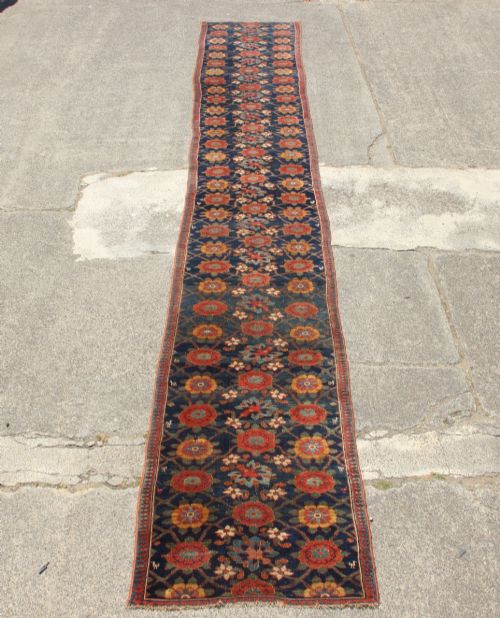
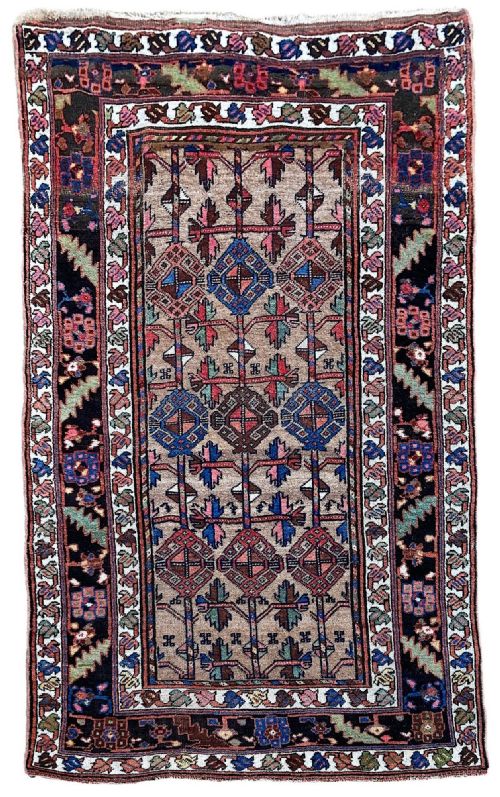
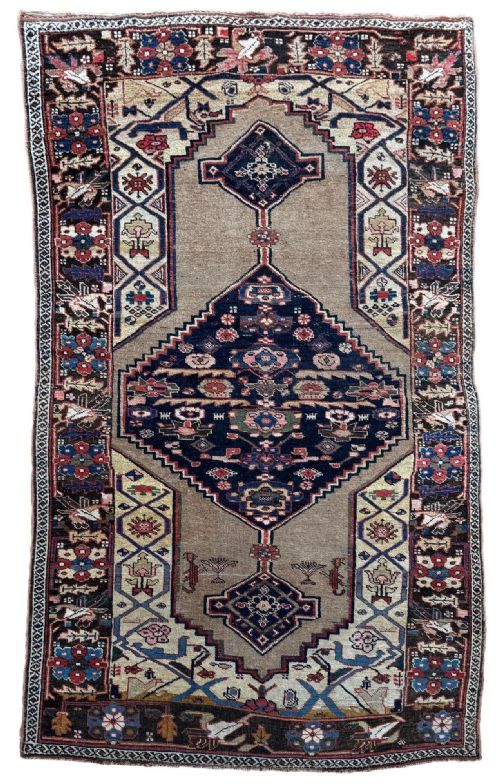
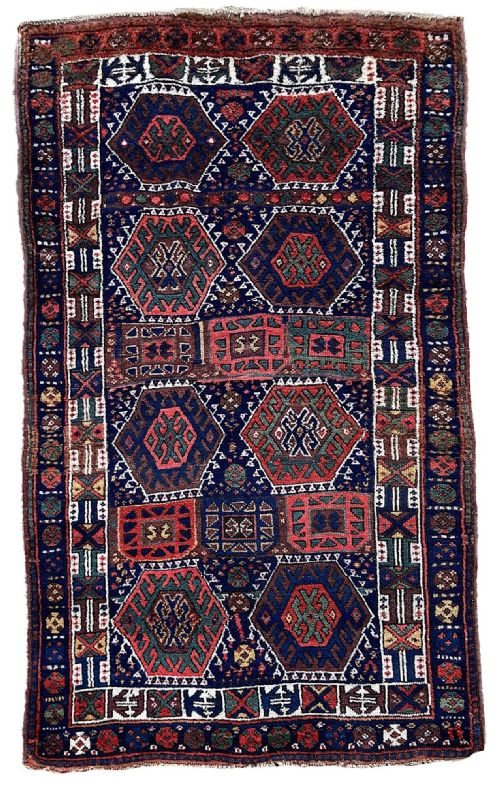
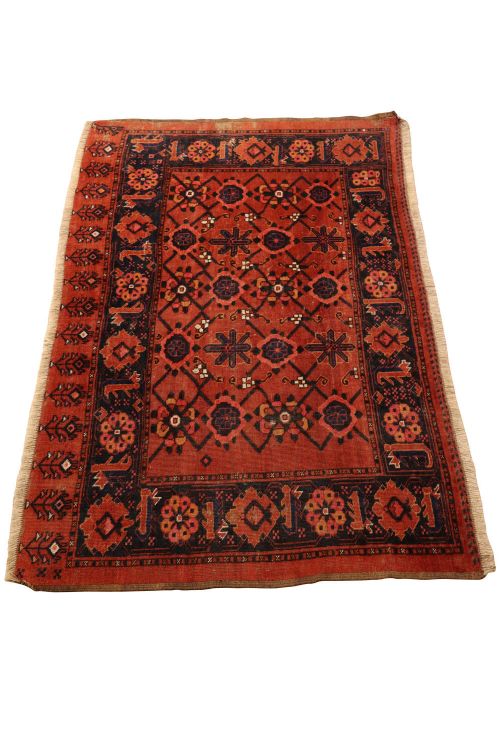
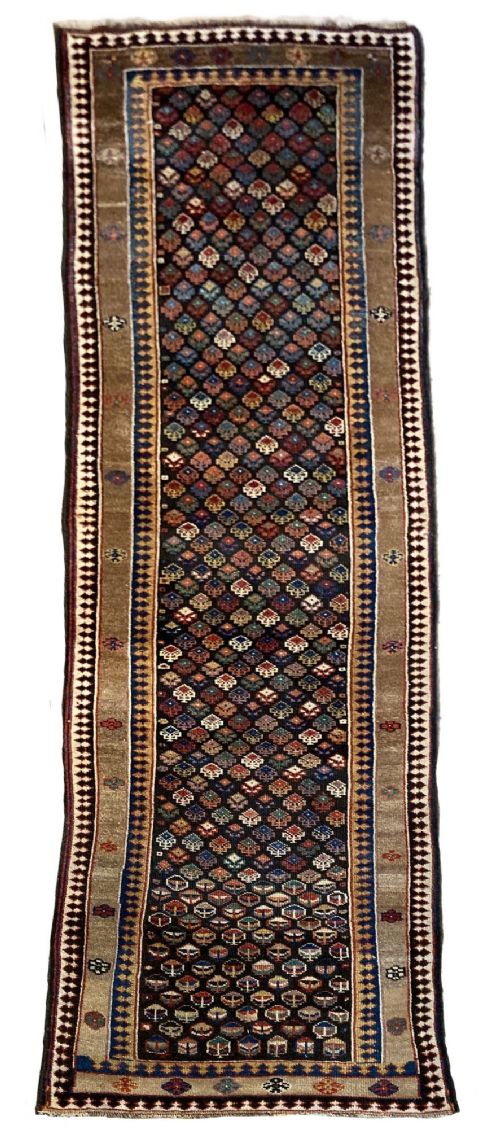
A persian kurdish carpet encompasses robust village and tribal textile forms originating from western Persia, often catalogued as runner rugs, long kelleh carpets, and square or oblong scatter rugs. These textiles emerge from distinct regional groupings including Bidjar, Senneh, Hamadan, and Jaf weaving traditions.
Buyers will encounter formats ranging from compact country house scatter rugs to extensive six-metre hallway runners and room-size carpets dating from the nineteenth century up to the nineteen-thirties.
Materials and Construction
Makers utilised sturdy hand-spun wool for the pile, frequently paired with cotton foundations to provide structural stability and tight knotting across larger formats. Natural dyes generated deep indigo, madder red, and earthy secondary tones that age with considerable depth.
The hand-knotted construction creates a dense, resilient pile capable of withstanding heavy domestic traffic, particularly in narrow runner formats designed for hallways and corridors.
Persian Kurdish Carpet Retail Price Guide 2026
Typical asking prices for persian kurdish carpet among the pieces listed under this phrase on Sellingantiques today, from the lower quarter to the upper quarter. They describe what is for sale here now, not the wider market.
Nomadic weavers occasionally slipped small protective amulets or intentional minor colour shifts into their geometric fields to ward off the evil eye.
Assessing Quality and Execution
The distinction between standard examples and the finest pieces lies in the crispness of the tribal geometry, the intricacy of motifs like the Mina Khani pattern, and the saturation of the natural dyes. Tighter knot density and supple wool handle indicate superior loom work.
Proportion and scale also dictate quality, as exceptionally long runners and large kelleh carpets maintain structural straightness and balanced borders across expansive dimensions.
The Persian Kurdish Carpet Glossary
- Kelleh
- A rectangular carpet format that is longer than a standard room rug but wider than a runner.
- Bidjar
- A Persian weaving centre known for heavy, durable carpets featuring dense knotting and steel-like resilience.
- Senneh
- A town in western Persia renowned for finely woven rugs and carpets featuring intricate geometric and floral designs.
- Jaf
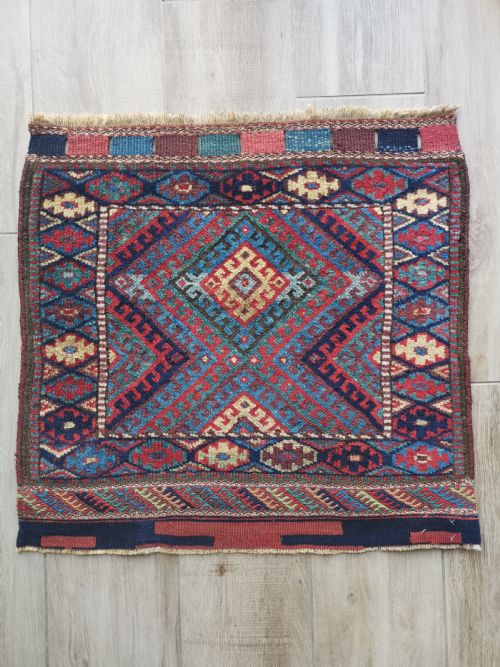
- A Kurdish tribal group producing distinctive small rugs and bagfaces with repeated geometric motifs.
- Mina Khani
- A classic repeating pattern of flower heads connected by curved lattices, frequently seen in Persian tribal weaving.
Persian Kurdish Carpet: Frequently Asked Questions
Where were these carpets made?
These textiles were produced by Kurdish tribal and village weavers across the western regions of Persia, including areas associated with Bidjar, Senneh, and Hamadan.
Different districts developed distinct local motifs, colour palettes, and knotting densities while sharing nomadic design roots.
How do I care for an antique runner?
Place a quality underlay beneath the textile to prevent sliding and reduce friction between the wool pile and the floorboards.
Vacuum gently with the suction attachment, avoiding aggressive beater bars, and consult a specialist for professional washing.
What is a Jaf bagface?
A Jaf bagface is the front panel of a utilitarian storage sack woven by nomadic Kurdish tribes for domestic transport and storage.
These smaller pieces display concentrated geometric patterns and rich natural dyes in a compact format.
Are natural dyes used in these pieces?
Many nineteenth and early twentieth-century examples rely on plant and insect extracts to achieve deep indigo blues, madder reds, and soft yellows.
These traditional colourants produce a harmonious patina that mellows gracefully over decades of exposure.