





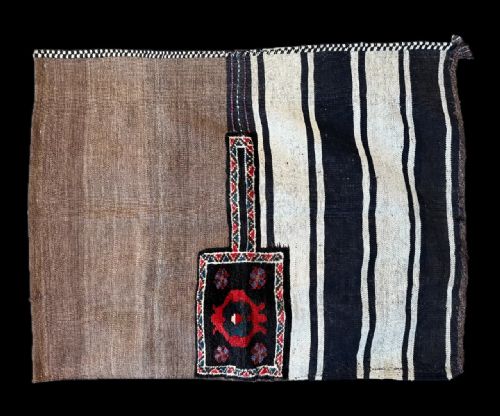


Persian Kilim Bag
A persian kilim bag brings flatweave nomadic craftsmanship into modern rooms, offering durable wool textiles made by tribal groups across Persia.
Persian Kilim Bag
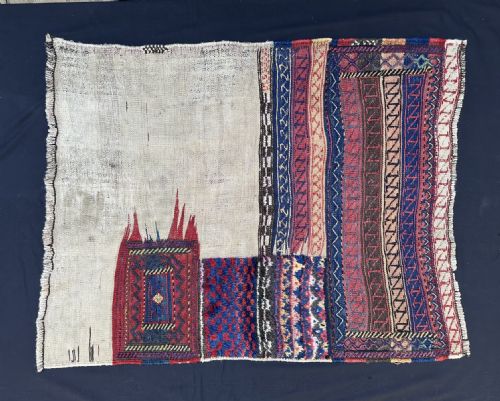
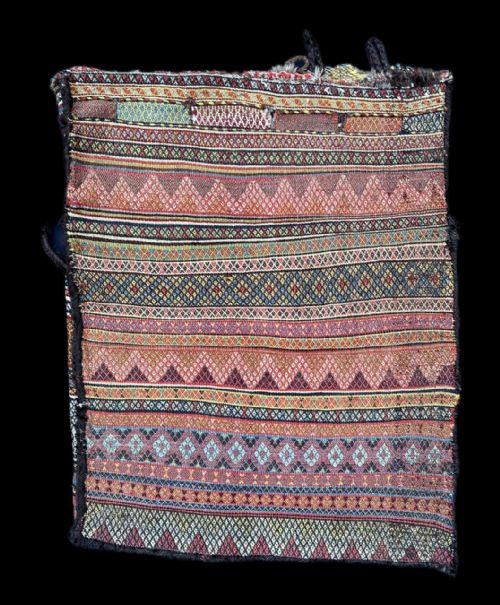
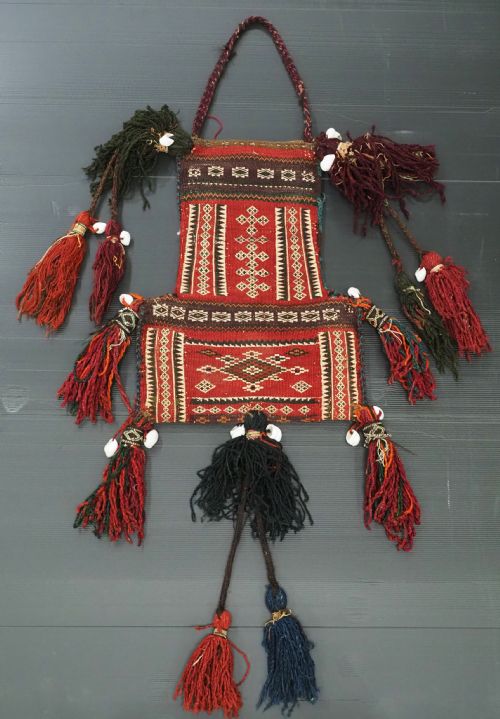
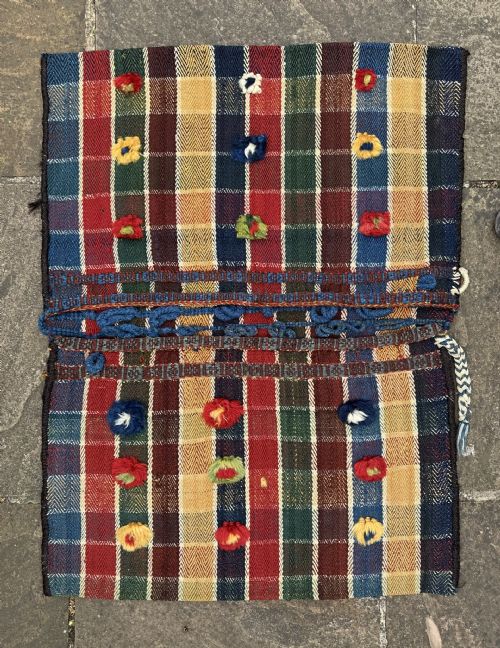
When you search for a persian kilim bag, you examine flatweave utility items created by nomadic and tribal groups across Persia during the nineteenth and early twentieth centuries. These pieces encompass functional storage items such as salt bags, wheat sacks, saddle bags, and bag faces adapted into cushions.
The most common examples on this page are antique bag faces and cushions originating from Western and South-West Persia. These textiles include specific tribal forms like the Luri-Bakhtiari tacheh, Qashqa'i saddle bags, and Shahsavan panels.
How they were made
Weavers constructed a persian kilim bag using hand-spun wool and cotton, frequently incorporating goat hair for structural durability and leather for reinforced edges. Natural dyes provided the deep colour palette characteristic of these regional tribal textiles.
Makers employed slit-weave flat-technique methods without pile, occasionally adding cowrie shells for decorative enhancement. The resulting fabric served demanding daily storage functions while displaying intricate geometric and banded patterns.
Persian Kilim Bag Retail Price Guide 2026
Typical asking prices for persian kilim bag among the pieces listed under this phrase on Sellingantiques today, from the lower quarter to the upper quarter. They describe what is for sale here now, not the wider market.
Listings on this site span the nineteenth century through the early twentieth century, featuring wool, cotton, goat hair, and leather.
What varies in quality
The distinction between average and superior examples rests on the fineness of the flatweave and the complexity of the tribal design. Pieces retaining their original backs and complete structural integrity demonstrate higher craftsmanship than isolated bag faces.
Saturation and nuance in natural dye work separate exceptional weaving from standard production. The crispness of geometric motifs and the quality of hand-spun wool fibres dictate the overall character of each textile.
The Persian Kilim Bag Glossary
- Kilim
- A flatwoven carpet or rug made in countries of the former Persian Empire. These textiles have no pile and rely entirely on the interlacing of warp and weft threads.
- Tacheh
- A traditional Persian wheat sack or storage bag produced by nomadic tribes. They often feature bold geometric patterning suited to utilitarian agricultural transport.
- Namakdan
- A specialised salt bag woven by nomadic groups for domestic use. These pieces typically display narrow necks and tapered bodies.
- Warp
- The foundational vertical threads stretched on a loom before weaving begins. The weft threads pass horizontally through these structural elements.
Persian Kilim Bag: Frequently Asked Questions
What is a persian kilim bag used for?
These textiles originally served nomadic households as functional storage for salt, wheat, or personal possessions carried on pack animals. Today, surviving examples and converted bag faces function primarily as decorative cushions and wall hangings in domestic interiors.
Their sturdy flatweave construction makes them resilient additions to modern seating arrangements. Collectors also display them flat or mounted to appreciate their historical tribal artistry.
How do I identify a tribal origin?
Attribution relies on specific structural traits, dye palettes, and geometric motifs associated with particular confederacies. Groups such as the Qashqa'i, Shahsavan, and Bakhtiari utilised distinct visual vocabularies and weaving techniques.
Examining the materials, such as the inclusion of goat hair or specific wool preparation, helps confirm the regional source. Regional names recorded in historical titles provide direct reference points for comparison.
Are these bags made with natural dyes?
Many nineteenth and early twentieth-century examples utilise traditional natural dye sources derived from plants and insects. These colorants yield rich, varied tones that mellow gracefully over decades of use.
The presence of hand-spun wool further enhances how these dyes absorb light and develop subtle variations across the surface.
How should I care for a textile cushion?
Maintenance requires gentle handling to protect fragile antique wool and cotton fibres from excessive wear. Regular light vacuuming with a low suction attachment prevents dust accumulation without damaging the flatweave structure.
Professional textile conservators should handle any significant cleaning or structural repairs. Direct sunlight should be avoided to prevent natural dye fading.