

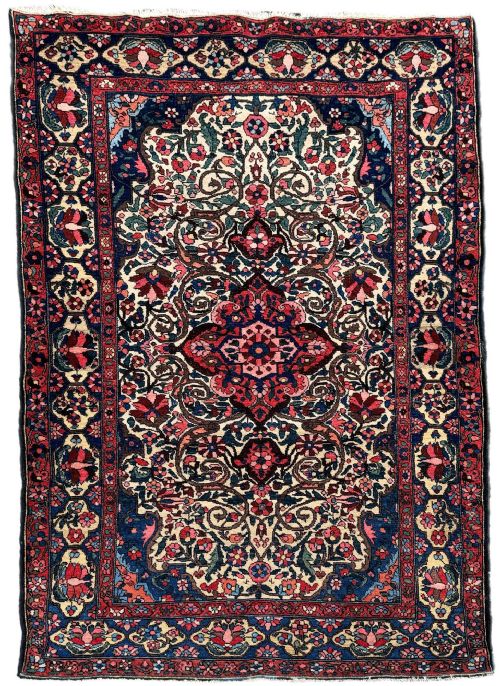
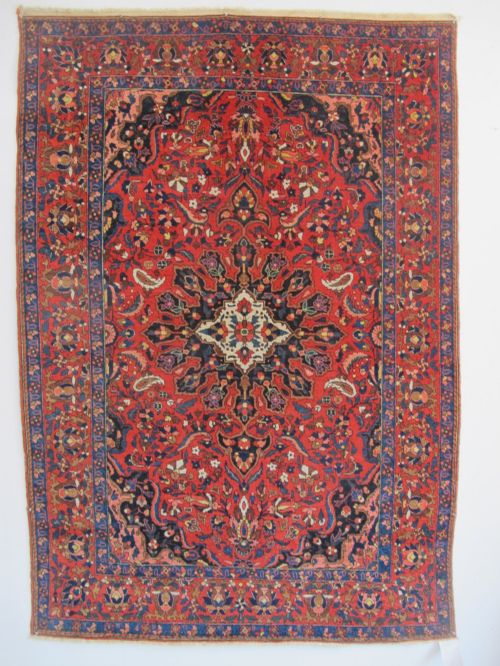
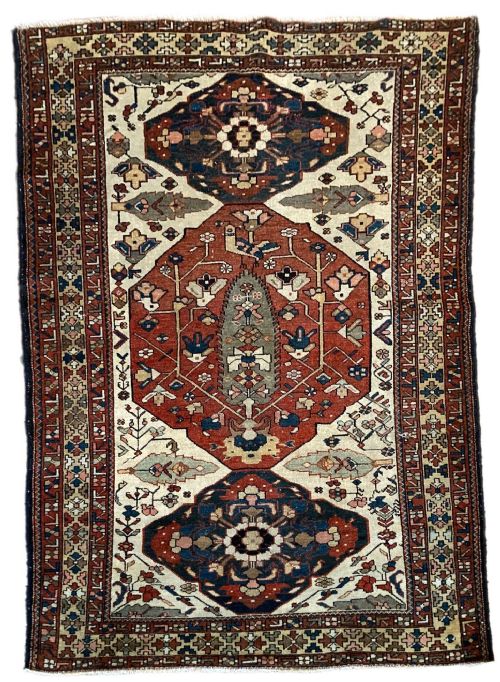


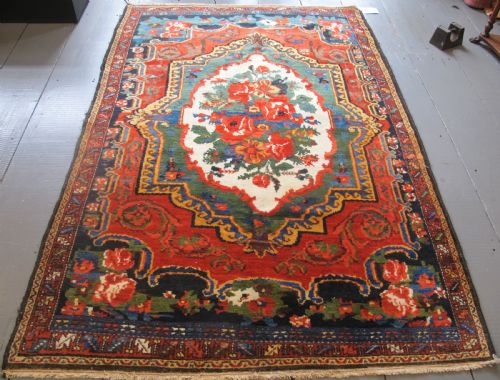
Persian Bakhtiar Carpet
These heavy persian bakhtiar carpet examples bring robust tribal character and intricate pattern to a room.
Persian Bakhtiar Carpet
A persian bakhtiar carpet offers traditional West Persian floor coverings originating from tribal and village weavers. These pieces appear as rugs, area rugs, runners, and larger carpets designed for domestic settings.
Most examples found here date from the late nineteenth century through the early decades of the twentieth century, specifically spanning the eighteen nineties to nineteen twenty. Buyers encounter various formats, from compact area rugs to large carpets and long runner rugs.
How they were made
Construction relies upon a foundation of durable cotton supporting a dense pile of handwoven wool. This combination gives the traditional Persian and tribal pieces their substantial weight and hard wearing character.
Weavers knot the wool by hand onto the cotton warp and weft threads to create firm structures designed to withstand heavy daily use.
Listings feature four distinct decades of production: eighteen ninety, nineteen hundred, nineteen ten, and nineteen twenty.
What varies in quality
Quality rests in the tightness of the weave and the clarity of the traditional Persian design motifs. Finer examples display precise knotting and well preserved wool piles across the surface of the carpet.
Condition and scale also distinguish individual rugs, where larger carpets and runners maintain structural integrity differently depending on their age and historical provenance.
The Persian Bakhtiar Carpet Glossary
- Pile
- The vertical tufts of wool that form the soft upper surface of the carpet. This layer takes the weight of footsteps and displays the woven design.
- Warp
- The longitudinal threads stretched tightly on the loom that carry the structural load of the rug. Cotton forms the basis for these foundational elements.
- Weft
- The horizontal threads passed across the warp strands to lock the rows of knots in place. Together with the warp, they create the firm backing of the textile.
- Runner
- A long and narrow format of carpet suited for hallways and corridors. These pieces share the same materials and traditional Persian weaving methods as standard rugs.
Persian Bakhtiar Carpet: Frequently Asked Questions
How old are these carpets?
The pieces seen here generally date from the late nineteenth century up to the nineteen twenties.
Specific production years span eighteen ninety through to nineteen twenty, reflecting traditional weaving periods.
What materials are used?
Construction combines wool and cotton in a traditional handwoven format.
Wool forms the upper pile while cotton provides the underlying structural foundation.
Are runners available?
Long and narrow formats appear among the selection as runner rugs.
These share the identical wool and cotton construction seen in standard area rugs.