



Perpetual Office Calendar
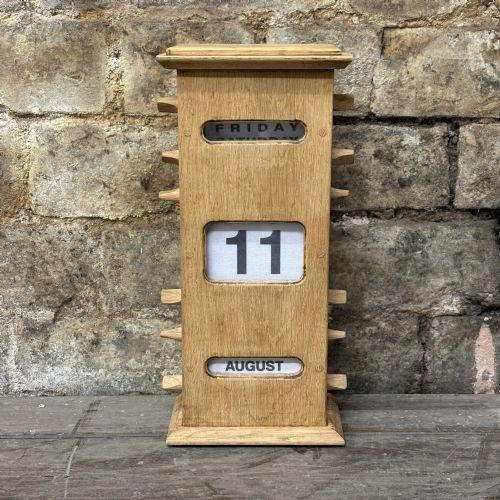
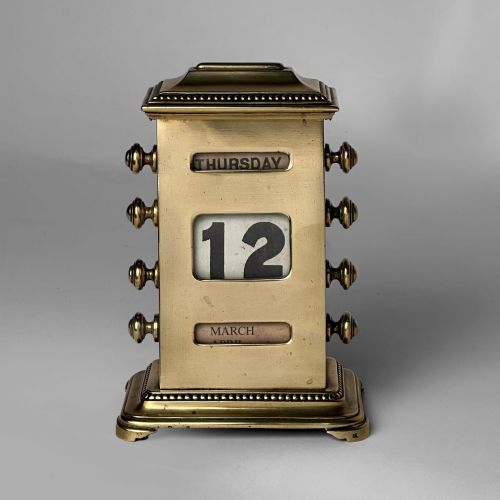
A perpetual office calendar sits ready on the desk to mark the passage of time without ever needing replacement.
Perpetual Office Calendar
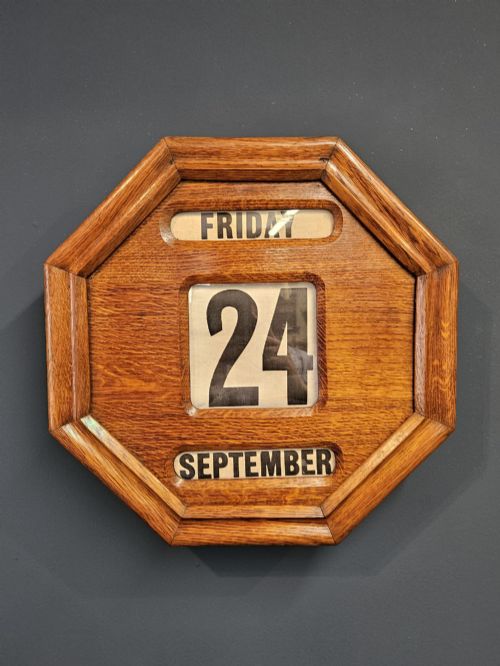
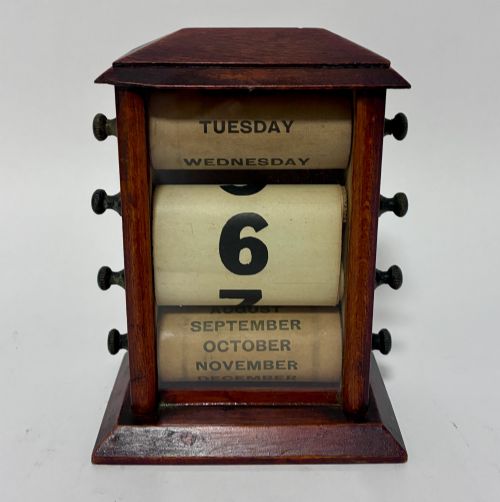
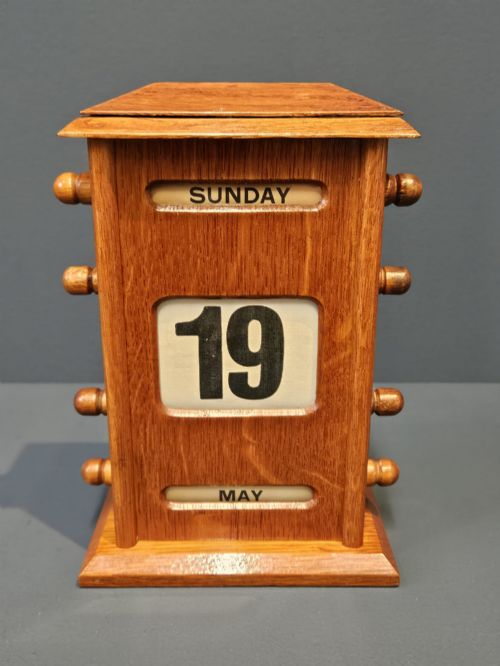
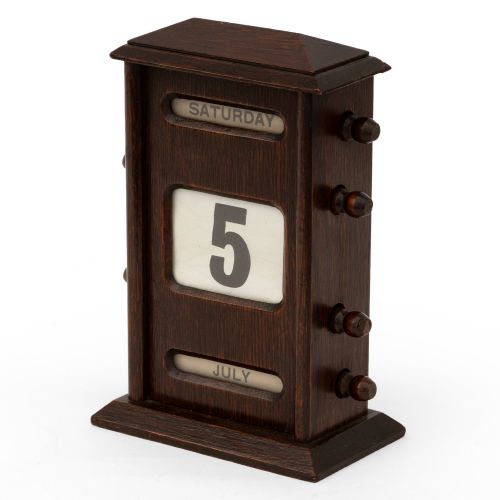
A perpetual office calendar provides a continuous method for tracking dates through adjustable panels or cards rather than a single annual page. These items appear across several distinct periods, including the Victorian, Edwardian, and Art Deco eras, reflecting shifting tastes in workspace design. The most common form encountered here is the oak desk calendar, often fitted with rotating drums or sliding cards.
Beyond the standard wooden block, these pieces emerge as wall mounted calendars and combination desk accessories that double as clips. Materials range from traditional hardwoods to modern synthetics, capturing the evolution of office equipment from the late nineteenth century into the nineteen-thirties. Buyers seek these functional items to bring period character and mechanical interest to a working environment.
How they were made
Makers fashioned these calendars using robust timbers like oak and mahogany, often pairing the wood with cast brass mounts, hinges, and bezels. The joinery on desk models is straightforward, designed to withstand daily interaction with the moving date indicators. Paper and linen serve as the primary substrates for the printed numbers and months, sometimes protected behind glass plates.
Later twentieth-century examples incorporate early plastics such as Bakelite, introducing smooth surfaces and geometric streamlining characteristic of the Art Deco style. Metalwork involves brass and silver, frequently stamped or cast to form intricate frames and desk clips. These varied materials combine to create tactile objects that rely on simple mechanical principles for their operation.
Perpetual Office Calendar Retail Price Guide 2026
Typical asking prices for perpetual office calendar among the pieces listed under this phrase on Sellingantiques today, from the lower quarter to the upper quarter. They describe what is for sale here now, not the wider market.
Listings feature items spanning the Victorian, Edwardian, and Art Deco periods, utilising timber, brass, Bakelite, and paper.
What varies in quality
Quality reveals itself in the choice of materials and the precision of the mechanics that drive the date changes. Finer pieces employ substantial hardwoods, solid brass fittings, and crisp typography on the paper or linen strips. Lesser examples rely on thinner veneers and simpler stamped metal components that lack the weight of better office furnishings.
The degree of decorative detail further distinguishes the range, moving from plain utility pieces to sophisticated designs featuring tortoiseshell inlay or specialised casting. Maker attribution also plays a role, as signed metalwork by established foundries demonstrates a higher standard of production than anonymous workshop output.
William Tonks of Birmingham
The Perpetual Office Calendar Glossary
- Perpetual calendar
- A device designed to show the day and date indefinitely by means of manually adjusted indicators. It requires no yearly replacement because the components are arranged to suit any month combination.
- Desk accessories
- Functional items kept on a writing table to assist with daily administrative tasks. These objects often share materials and design motifs with matching inkwells and blotters.
- Bakelite
- An early synthetic phenol formaldehyde resin developed in the early twentieth century. It allowed manufacturers to mould smooth, durable housings for calendars and other desk items.
- Bezel
- A metal rim holding the glass pane in place over a dial or card display. It protects the printed paper elements from dust and wear during everyday office use.
Perpetual Office Calendar: Frequently Asked Questions
How do perpetual calendars work?
These devices rely on rotating drums, sliding panels, or movable cards to display the correct day, date, and month. Users manually adjust the settings as time progresses.
Because the mechanism uses interchangeable combinations rather than a single printed page, the calendar functions across any year without adjustment for leap years unless specifically geared.
Where were they placed?
Most examples are desk accessories intended for placement on writing tables, ledger desks, and partner desks in professional offices. They sat within arm's reach for daily consultation.
Wall-mounted versions were also produced, featuring hanging loops or brackets to secure them to office partitions and study walls where desk space remained limited.
How do I date a calendar?
Dating relies on the prevailing design styles, materials, and construction techniques visible in the piece. Victorian and Edwardian examples typically feature heavy oak or mahogany with brass mounts.
Later pieces from the nineteen-thirties often display Art Deco streamlining, geometric forms, or the use of early plastics such as Bakelite.
Can I use them today?
These items remain fully functional for modern use provided the internal paper strips or rotating number drums are intact and legible. They serve as practical desktop tools.
Living with a vintage calendar simply requires manual daily advancement, turning an ordinary routine into a tactile interaction with period craftsmanship.