


Period Winged Chair
A period winged chair offers deep comfort and draught-excluding wings, making it a timeless fireside seat for any traditional room.
Period Winged Chair
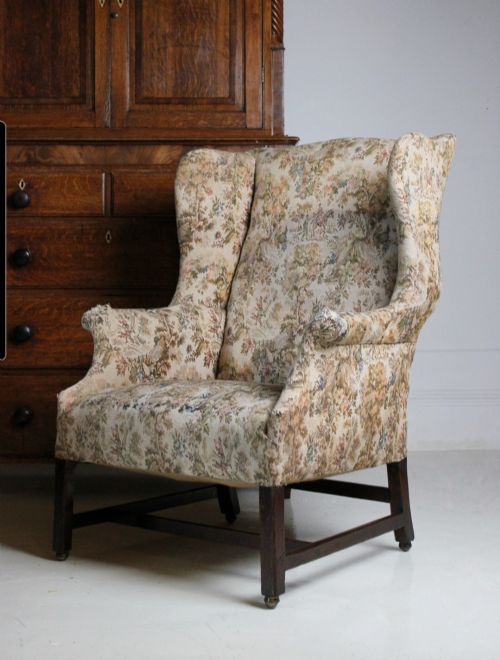
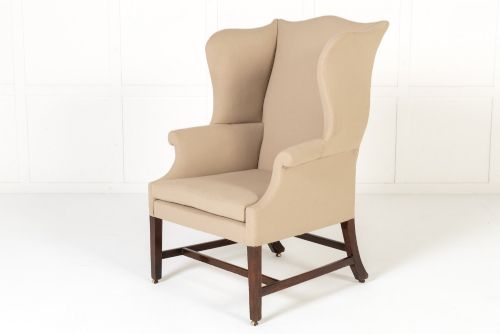
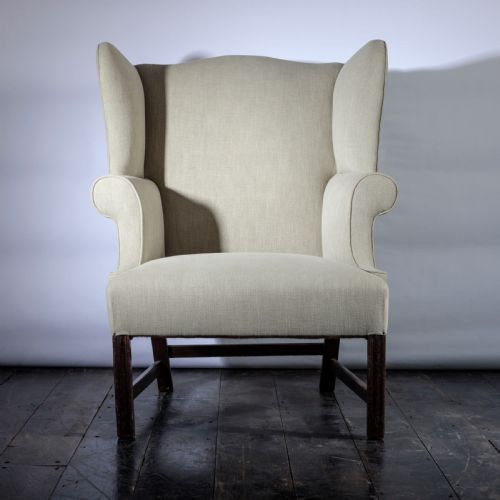
A period winged chair provides a high back and side panels designed to trap heat and keep out cold draughts from centuries-old rooms. These armchairs span several centuries, including 17th century vernacular pieces, 18th century George III designs, and later Edwardian and 19th century interpretations.
The form typically involves sturdy wooden frames upholstered in materials ranging from leather and calico to damask fabric and velvet. Buyers encounter various styles from English country house armchairs to Queen Anne revival pieces and barrel back formats.
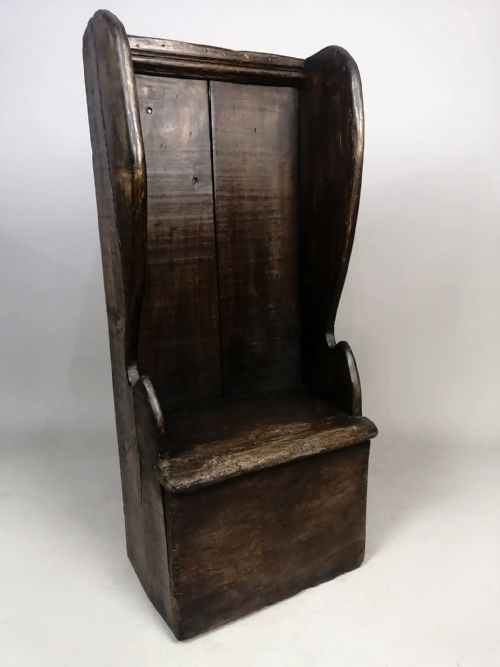
Early iterations include fruitwood child's lambing chairs, whilst later examples feature deep buttoned backs and bergère styles. Each piece serves as a substantial armchair intended for fireside placement.
How they were made
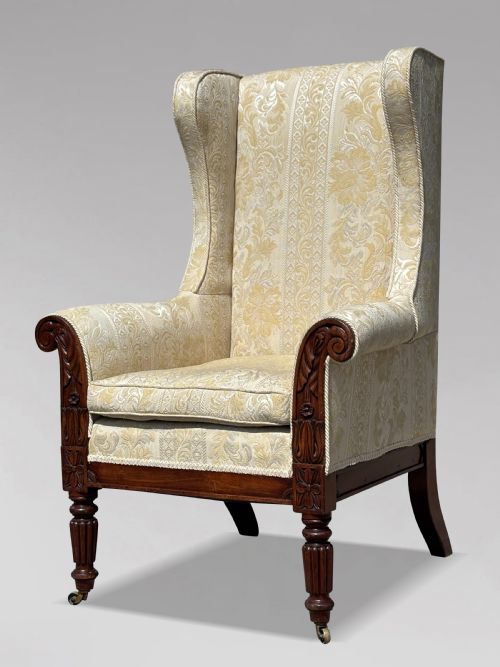
Makers constructed the structural frames of a period winged chair using hardwoods such as mahogany, walnut, fruitwood, oak, and general timber. Joinery methods varied by century, supporting the upholstered components and heavy wooden arms.
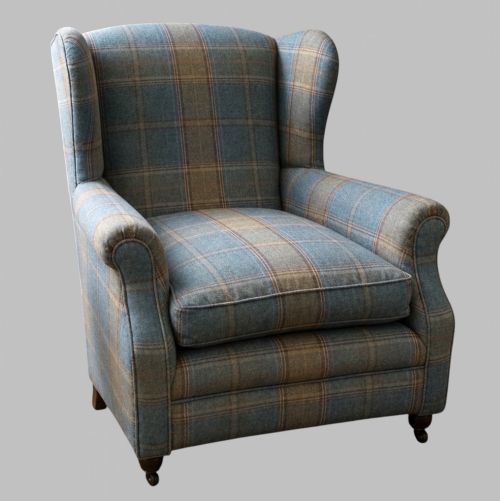
Upholstery techniques involved stuffing and covering the frame with traditional textiles like linen, calico, damask, velvet, and leather, sometimes secured with brass detailing. Later restorations and modern revivals often utilise contemporary fabrics like recycled cotton or wool plaid whilst retaining the historic silhouette.
The inventory records pieces from the 17th, 18th, 19th, and early 20th centuries, including William IV and George III periods.
What varies in quality
The grade of timber used for the underframe and legs sets baseline standards, with dense mahogany or walnut differing from simpler fruitwoods and general wood. Carving detail on the exposed frame components indicates the level of craftsmanship invested during production.
Proportion and the sweep of the wings determine visual success, alongside the integrity of the internal stuffing and the choice of covering fabric, whether historic red damask, brown leather, or recent upholstery.
George Montague Ellwood
The Period Winged Chair Glossary
- Wingback
- An armchair featuring protective side panels attached to the arms and framing the upper back. This design originally shielded sitters from chimney draughts.
- Bergère
- An enclosed armchair with stuffed upholstery and exposed wooden framing. The style often incorporates cane work or padded armrests.
- Lambing chair
- An early vernacular seating form featuring a high solid or hooded wooden back and enclosed sides. These pieces often included a small drawer beneath the seat.
- Barrel back
- A seating design where the back rail curves continuously into the arms in a circular sweep. This form envelops the sitter completely.
- Damask
- A reversible figured fabric traditionally woven with patterns visible on both sides. It frequently appears as a rich red upholstery covering on formal chairs.
Period Winged Chair: Frequently Asked Questions
What is a period winged chair?
A period winged chair is a traditional fireside armchair distinguished by protective side panels on the upper back designed to block draughts. These seating pieces date from the 17th century through to the Edwardian era and 1920s revivals.
They appear in various woods like mahogany and walnut, carrying upholstery that ranges from leather to damask and plaid.
How do I date a winged chair?
Dating relies on examining the timber species, leg shapes, stretcher arrangements, and structural joinery beneath the upholstery. 17th century examples often show vernacular fruitwood or oak construction, whilst Georgian pieces utilise fine mahogany.
Later Edwardian and 19th century versions frequently display revival characteristics or factory-turned components.
Where should I place a wingback chair?
These armchairs suit living rooms, studies, and bedrooms, particularly positioned near a fireplace or in a quiet reading corner. Their high backs and wings create an intimate seating zone.
They function well as standalone statement pieces paired with side tables or reading lamps.
What is a lambing chair?
A lambing chair is an early vernacular seat featuring a high wooden back and enclosed sides designed to shelter the occupant from cold air. Some early examples include a drawer built into the base.
They represent a precursor to the upholstered wing chair.