

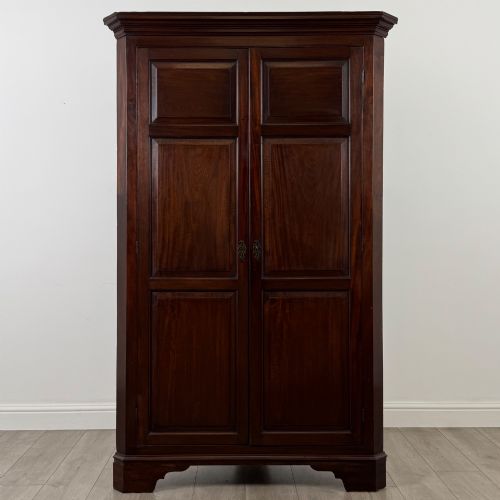
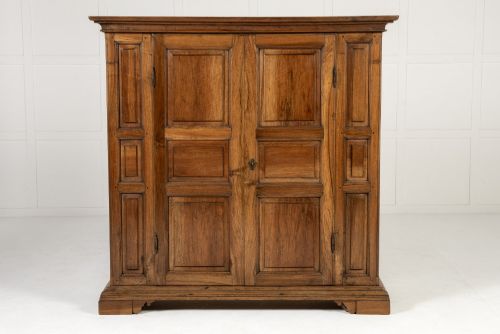
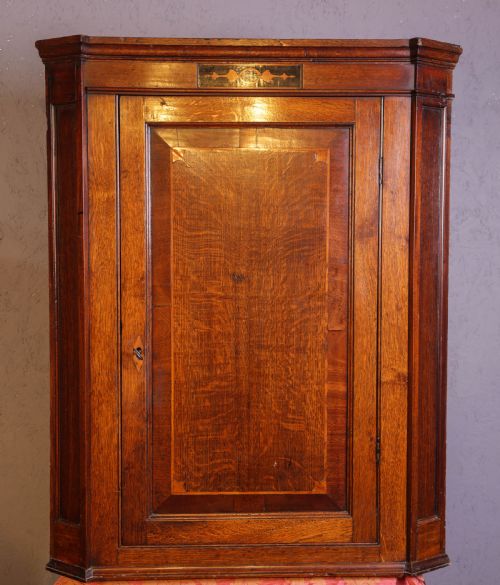


Period Wardrobe Cabinet
These period wardrobe cabinet pieces combine traditional storage with rich timber character, offering timeless utility for modern interiors.
Period Wardrobe Cabinet
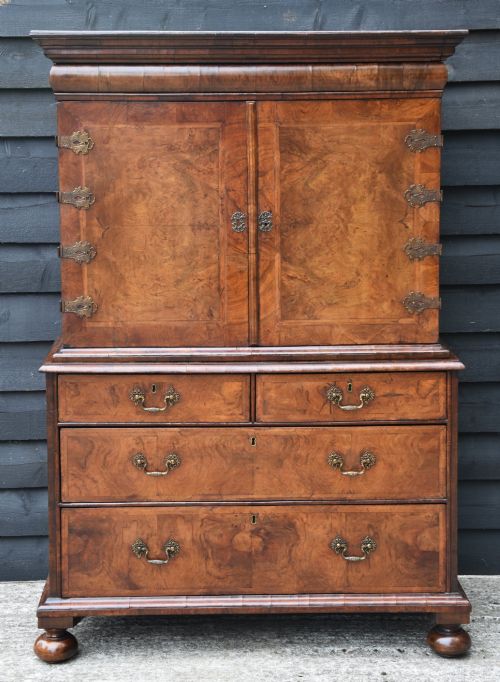
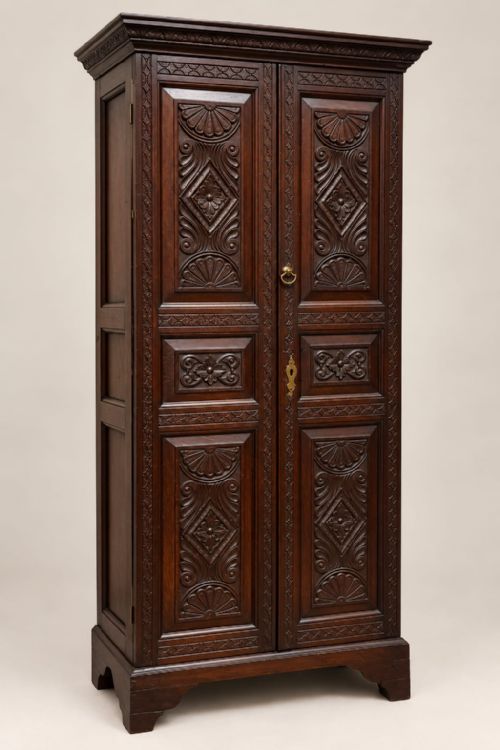
When you search for a period wardrobe cabinet, you encounter substantial storage furniture spanning the seventeenth, eighteenth, and nineteenth centuries. These pieces encompass wardrobes, linen presses, housekeeper's cupboards, and corner cabinets created during the Georgian, Regency, and Charles II eras.
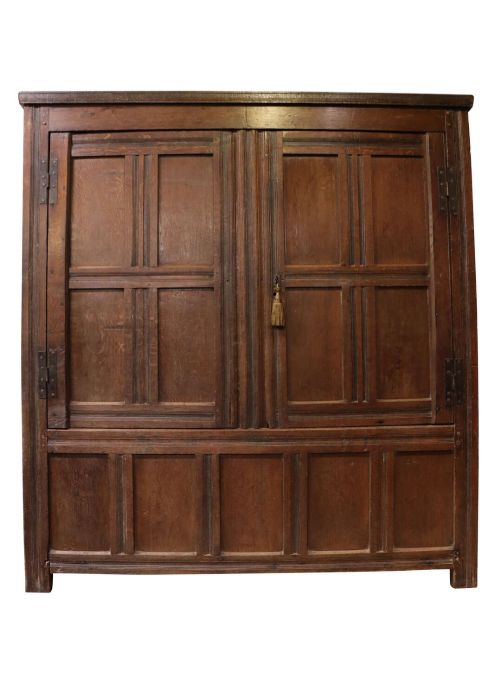
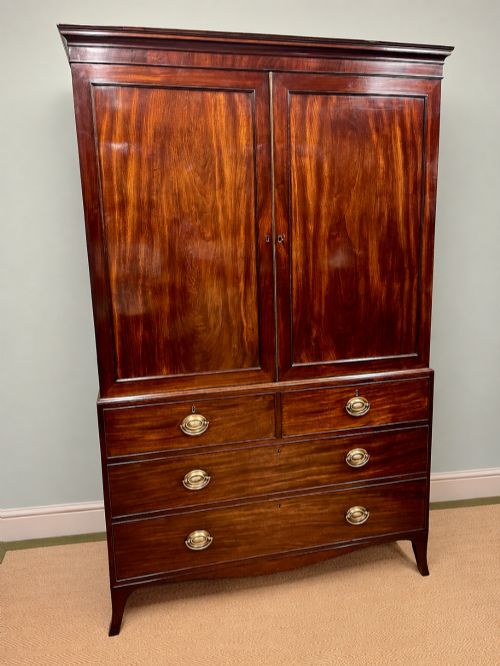
The version you are most likely to meet on this page is the mahogany linen press or double wardrobe from the Georgian or Regency periods. Oak examples also appear frequently, often originating from earlier seventeenth and eighteenth century workshops.
Forms range from tall hanging wardrobes and compact corner cupboards to lower three-quarter height pieces and fitted cabinets on chests. Each item reflects the domestic storage needs of its specific period, from country houses to grand town residences.
Materials and construction
Makers relied heavily on solid hardwoods like oak and mahogany, often utilising flame mahogany veneer and satinwood for decorative surfaces on finer pieces. Pine frequently served as a secondary timber for internal construction and drawer linings.
Joinery methods involved traditional panelled construction, particularly in earlier oak examples from the seventeenth century. Later Georgian and Regency pieces integrated sophisticated carcase work, alongside brass hardware and iron fittings.
Period Wardrobe Cabinet Retail Price Guide 2026
Typical asking prices for period wardrobe cabinet among the pieces listed under this phrase on Sellingantiques today, from the lower quarter to the upper quarter. They describe what is for sale here now, not the wider market.
One clever housekeeper's cupboard was later painted green, proving that even utilitarian storage gets a second act.
Distinctions in quality
The standard of timber selection separates simpler utility pieces from grander examples. Rich figure in flame mahogany and crispness in carved details elevate certain cabinets above standard vernacular furniture.
Proportion and architectural detailing also dictate the standing of a piece. Well-executed elements such as swan-neck pediments and original brass hardware demonstrate superior craftsmanship.
The Period Wardrobe Cabinet Glossary
- Linen Press
- A dual-purpose storage piece featuring upper sliding trays or shelves enclosed by doors, positioned above a chest of base drawers. This form originated for storing household linen flat before hanging garments became standard.
- Flame Mahogany
- A veneer cut from the fork of the mahogany tree to produce a dramatic, flickering grain pattern. Cabinet makers utilised this timber on prominent surfaces to create striking visual movement.
- Swan-Neck Pediment
- A broken arch top moulding curving upwards and outwards to end in scroll terminals. Makers incorporated this classical architectural feature on tall eighteenth-century cornices.
- Housekeeper's Cupboard
- A large, utilitarian storage cabinet traditionally kept in the working areas of a country house for linens and dry goods. These pieces are usually constructed from solid oak with robust panelled doors.
Period Wardrobe Cabinet: Frequently Asked Questions
How do I use a linen press today?
Linen presses offer versatile storage for modern homes, with internal sliding trays working well for folded garments, knitwear, or bed linen. The lower chest of drawers provides additional space for smaller items.
Many examples can also be adapted for modern media storage or general household organisation while retaining their traditional exterior presence.
What is the difference between a wardrobe and a press?
A traditional wardrobe is designed primarily for hanging garments vertically on rails or hooks within a tall cabinet space. These often feature full-length doors enclosing the main hanging compartment.
A linen press specifically incorporates internal sliding shelves or trays in the upper section, historically intended for flat-stored linens, sitting above a chest of base drawers.
How do I care for antique mahogany furniture?
Maintain antique mahogany by keeping pieces away from direct heat sources and strong sunlight, which can dry out the timber and fade the polish. Dust regularly with a soft, dry cloth rather than using silicone-based sprays.
Applying a traditional beeswax polish occasionally helps nourish the wood and preserve the natural lustre of the surface.
How can I tell Georgian furniture from Regency?
Georgian pieces, particularly from the George III era, often display classical carved details, dentil mouldings, and rich mahogany grains with substantial proportions. The style is rooted in Palladian and Chippendale influences.
Regency furniture tends to lean towards cleaner architectural lines, sometimes incorporating brass inlay, simpler surfaces, and inspiration from ancient Roman and Greek designs.