


Period Walnut Dining Set
A period walnut dining set brings warmth and rich grain to the room, anchored primarily by sets of Victorian and Georgian dining chairs.
Period Walnut Dining Set
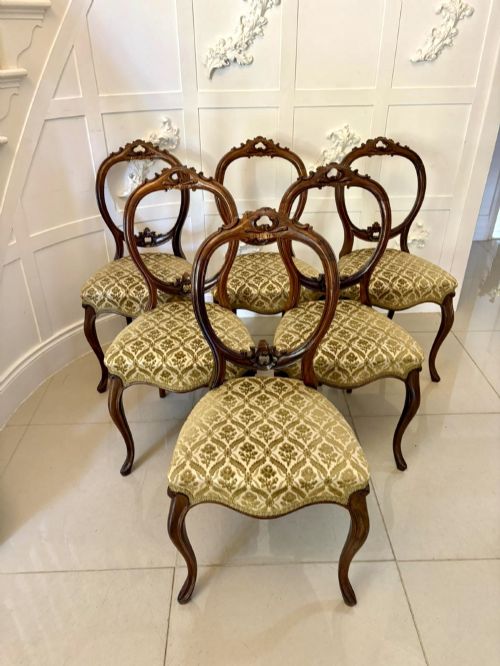
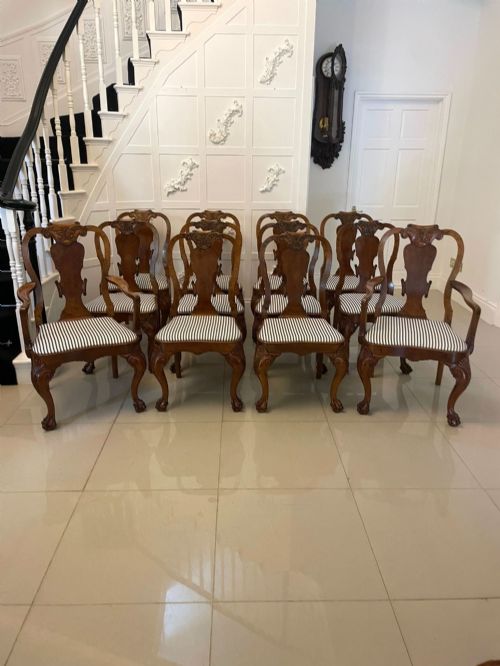
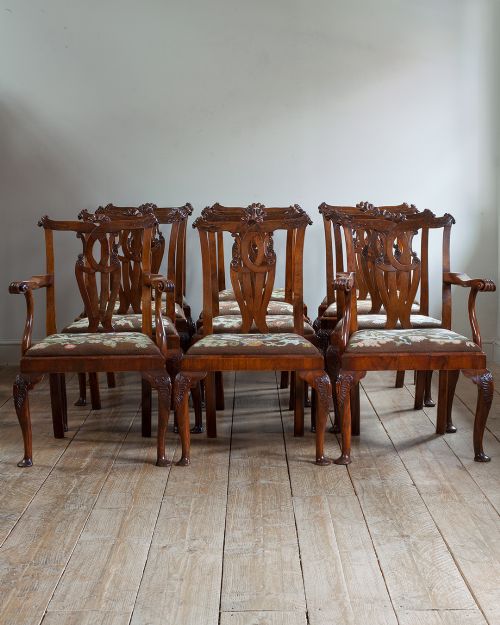
The selections span several centuries and movements, from 18th-century and George II designs through Victorian balloon backs to late Victorian and Edwardian interpretations. Victorian examples frequently appear in the listings, alongside earlier Georgian forms and later Queen Anne style revivals.
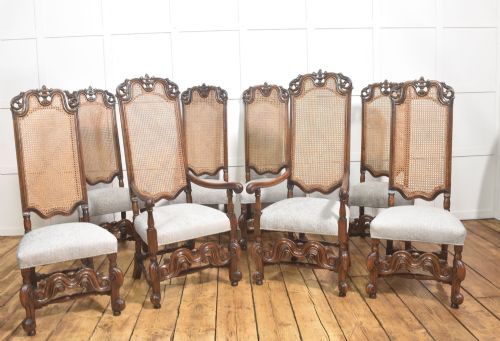
Dining chairs form the core of these listings, often featuring carved details, cabriole legs, or high-backed cane work. These suites reflect the shifting domestic fashions of the 18th, 19th, and early 20th centuries.
How they were made
Makers utilised solid walnut and decorative burr walnut veneers over secondary timbers to achieve rich figuring on the wood surfaces. Joinery relies on traditional techniques suited to supporting weight while maintaining slender frame profiles.
Upholstery forms a major component of many dining chairs, utilising period textiles such as velvet, fabric, and general upholstery fabric. Brass elements occasionally appear as hardware or fittings on specific chair designs.
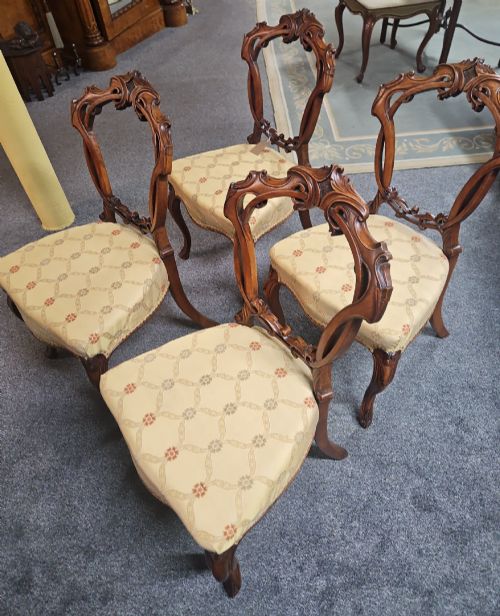
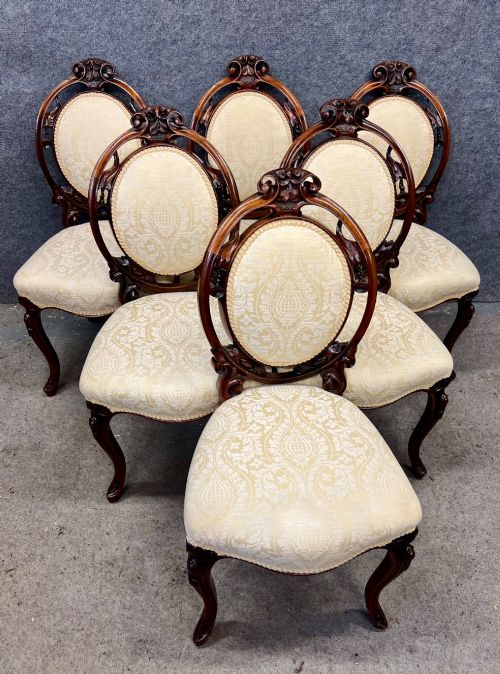
Some chairs boast balloon backs that puff out with Victorian pride, ready to support lengthy dinner table debates.
What varies in quality
The standard of carving and timber selection dictates the distinction between standard and superior sets. Elaborately carved walnut frames and striking burr walnut grain patterns command greater appreciation among collectors.
Uniformity across a large set influences desirability, as matching twelve or fifteen chairs requires careful selection of timber and form. The retention of original upholstery materials and stable frame construction further separates ordinary examples from the finest pieces.
The Period Walnut Dining Set Glossary
- Burr walnut
- A highly figured timber veneer taken from the burl growths of walnut trees. It creates intricate, swirling patterns across chair backs and panels.
- Cabriole leg
- A furniture leg that curves outward and then tapers inward, mimicking an animal's leg. This form appears frequently on Georgian and Victorian walnut dining chairs.
- Balloon back
- A rounded, chair back shape resembling a balloon, popular during the Victorian era. Many walnut dining chairs utilise this distinctive curved silhouette.
- George II
- An 18th-century English architectural and furniture style known for robust proportions and carved ornamentation. Pieces from this era employ red walnut and formal lines.
- Cane work
- Woven plant material utilised for chair seats and high backs. It provides a lightweight, flexible surface texture.
Period Walnut Dining Set: Frequently Asked Questions
What periods do these dining sets come from?
The listings encompass items spanning the 18th century, the Georgian era, and the Victorian period, alongside Edwardian examples.
Later interpretations also include Queen Anne style revivals from the early 20th century.
Are all sets made entirely of solid walnut?
Many chairs utilise solid walnut framing, while others incorporate burr walnut veneers to enhance the visual grain on prominent surfaces.
Secondary timbers often form the internal structures beneath these decorative veneers.
How many chairs typically come in a set?
Sets vary significantly in size, ranging from smaller groupings of four chairs up to extensive suites of ten, twelve, or fifteen chairs.
Sets of six remain particularly common across the Victorian and Georgian offerings.
What upholstery materials are found on the chairs?
Original and replacement coverings include velvet, woven textile, and standard upholstery fabric.
Brass details occasionally accent the construction or upholstery of specific chair styles.