

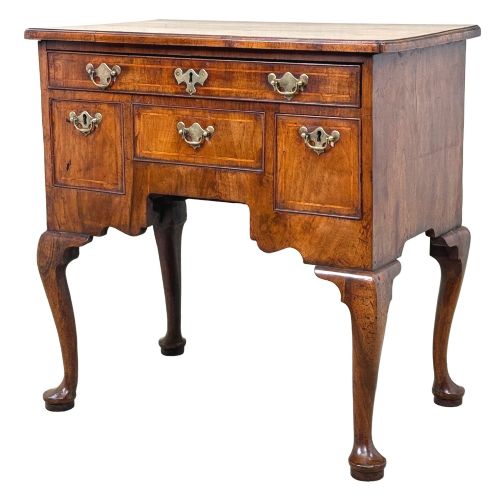
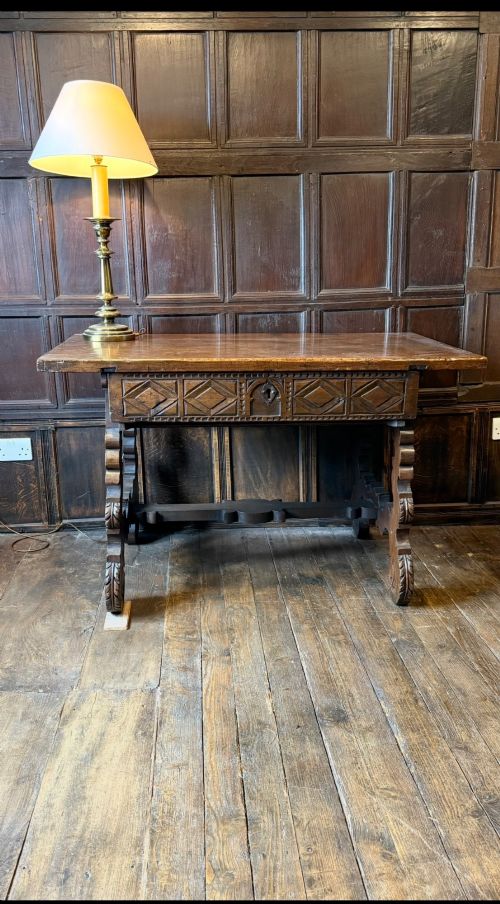
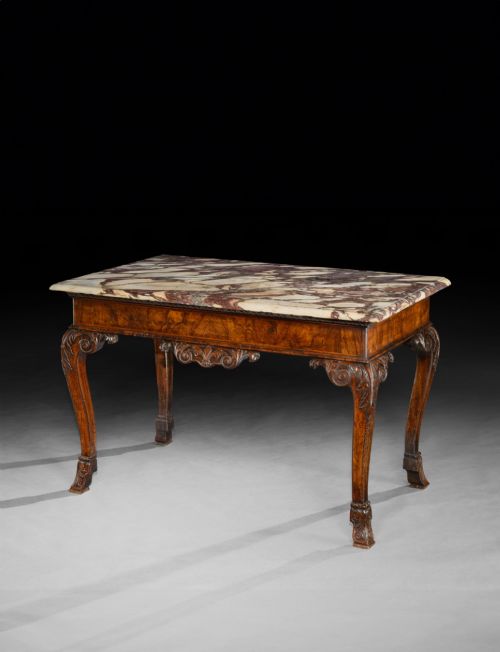
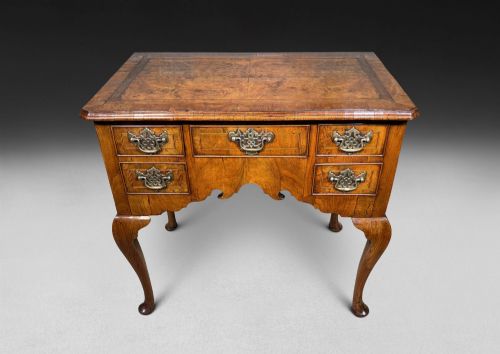


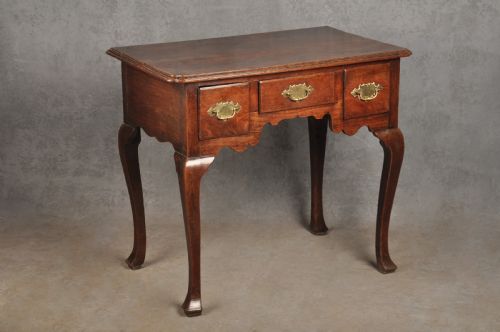


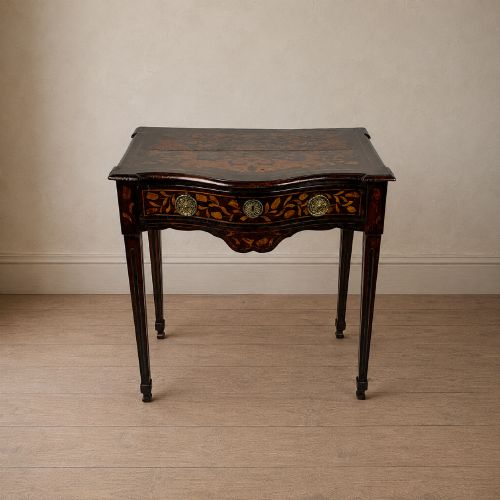
Period Walnut Console
Period walnut console tables and lowboys bring warmth and rich grain to a hallway or drawing room.
Period Walnut Console
A period walnut console encompasses side tables, lowboys, and console tables with or without mirrors, spanning from the seventeenth century through the eighteenth century with later revivals. These tables served practical functions in hallways, dressing rooms, and parlours, often doubling as writing or dressing surfaces.
The versions most commonly met on this page date from the seventeenth and eighteenth centuries, including George II, Queen Anne, and Dutch Baroque designs. Alongside these antique pieces, the selection includes nineteenth-century revivals that echo earlier proportions and decorative schemes.
Materials and construction
The primary timber is walnut, frequently utilised as burr walnut veneer to create dramatic figured patterns across table tops and drawer fronts. Secondary woods such as oak and mahogany appear in the internal drawer construction and framing.
Surface enrichment relies on carved details, parcel gilt highlights, and intricate marquetry inlays. Heavier marble tops also appear on continental console forms, supported by robust timber frames.
Period Walnut Console Retail Price Guide 2026
Typical asking prices for period walnut console among the pieces listed under this phrase on Sellingantiques today, from the lower quarter to the upper quarter. They describe what is for sale here now, not the wider market.
One clever lowboy managed to double as both a gentleman's dressing table and a secret spot for hiding love letters.
Distinguishing quality
Quality rests in the selection of the timber veneer and the crispness of the carving on the legs and aprons. Finer examples display symmetrical grain patterns across the top and well-defined cabriole legs ending in pad or claw-and-ball feet.
The integrity of the original construction, including the dovetailing of drawers and the preservation of the walnut surface patination, separates standard examples from exceptional ones.
The Period Walnut Console Glossary
- Lowboy
- A small low dressing table or side table with drawers, typically supported on four legs. These pieces gained popularity during the seventeenth and eighteenth centuries.
- Burr walnut
- A specialised timber cut from walnut tree growths, yielding highly figured, swirling grain patterns. Cabinet makers prized this veneer for principal display surfaces.
- Parcel gilt
- Partially gilded decoration applied to carved wooden details or mouldings. This technique highlights specific ornamental elements against the dark walnut background.
- Marquetry
- Decorative inlay work using various woods and materials to form pictorial patterns on furniture surfaces. Dutch makers utilised this extensively in the baroque period.
Period Walnut Console: Frequently Asked Questions
Where should I place a console table?
These tables suit hallways, entryways, and drawing rooms where surface space is needed without a large footprint. Their shallow depth allows them to sit neatly against walls behind sofas or beneath mirrors.
Pairing a console with a matching mirror creates a traditional focal point in a reception room. They also function well as side surfaces in dining spaces.
How do I care for walnut furniture?
Walnut benefits from consistent indoor humidity levels and protection from direct sunlight to prevent the timber from drying out. Regular dusting with a soft cloth maintains the finish.
Avoid placing hot items or liquids directly onto the wood surface. Occasional application of appropriate wax preserves the depth of the grain and patination.
What is the difference between a lowboy and a side table?
A lowboy is specifically a low table featuring one or more rows of drawers, originally used for grooming or holding washbasins. Side tables may or may not include drawers and served general utilitarian purposes.
Both forms utilise similar leg styles such as cabriole or turned supports depending on their period of manufacture.
How do I identify a revival piece?
Revival pieces, such as those from the nineteenth century, imitate earlier George I or seventeenth-century styles using older construction methods alongside machine tools. Examining the interior secondary woods and the character of the wear helps determine the exact age.
Stylistic proportions and hardware often reflect the manufacturing preferences of the later period rather than the original era.