




Period Wall Cupboard
A period wall cupboard hangs ready to hold small provisions or display prized ceramics, bringing centuries of practical craftsmanship directly to your kitchen or hall.
Period Wall Cupboard
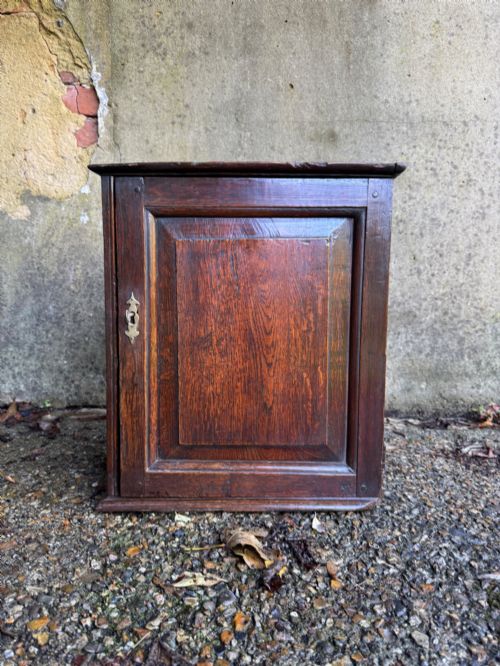
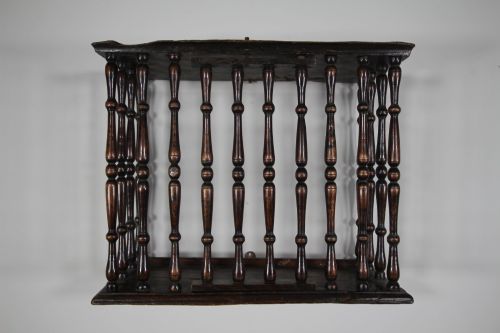
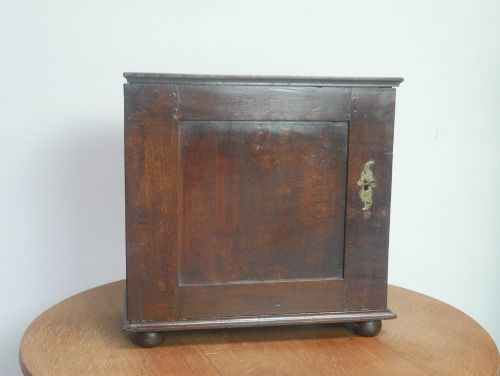
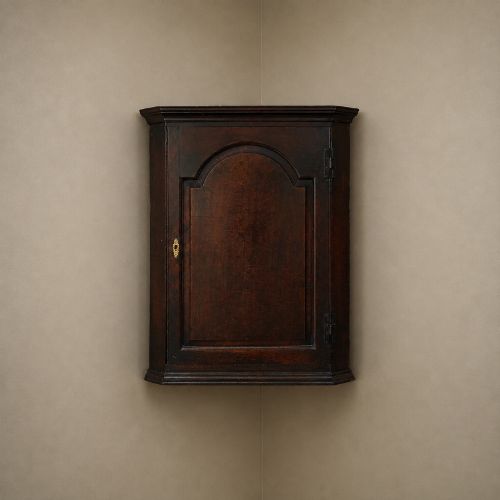
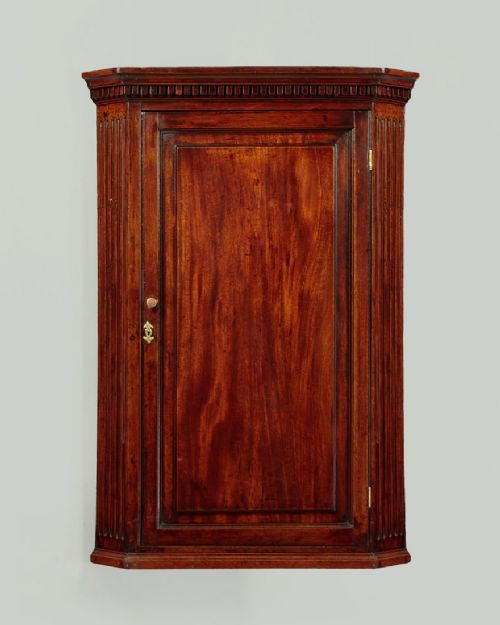
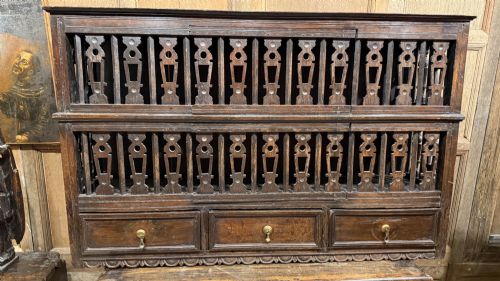
A period wall cupboard serves as a compact storage solution designed to be hung securely above floor level, saving precious ground space in older rooms. Most examples encountered here take the form of corner cabinets and wall-mounted spice cupboards, engineered specifically to fit snug against timber walls.
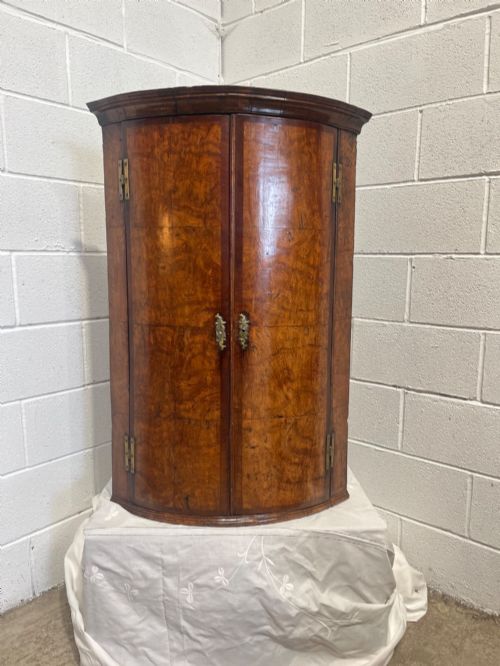
The prevailing output spans from the seventeenth century through to the Victorian era, with a heavy concentration of Georgian oak and mahogany pieces. Makers constructed these units for domestic utility, ranging from small hanging spice boxes to larger bow-fronted display cabinets with glass doors.
How they were made
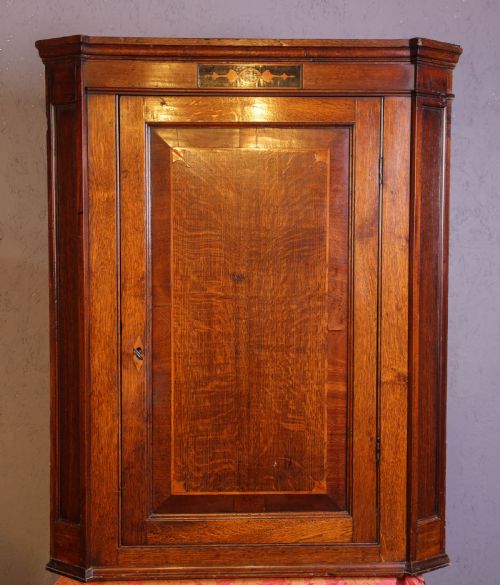
Joiners relied primarily on solid oak and rich mahogany, frequently turning to burr oak, walnut, and satinwood inlay for decorative contrast on panelled doors. Iron hinges, brass escutcheons, and working locks provide the structural hardware that holds each hanging frame together.
Construction techniques involve traditional jointing such as mortise and tenon for the carcase, alongside raised panels fitted into grooved frames to accommodate timber movement over centuries. Wall hanging mechanisms typically incorporate sturdy internal brackets or heavy strap fixings to support the weight of the solid wood.
Listings feature solid oak, mahogany, walnut, and burr oak materials spanning from the seventeenth century to the Victorian era.
What varies in quality
The distinction between standard utility items and finer pieces rests on the choice of timber and the sophistication of the surface moulding. Plain deal or heavily restored carcases sit at one end, while quartersawn oak with dense medullary rays or finely figured mahogany with delicate string inlay occupy the upper tier.
Proportion and hardware integrity also dictate the calibre of a cabinet, as original brass hinges and undisturbed surface patination elevate an ordinary box into a balanced work of vernacular design. The crispness of carved details, such as fielded panels or dental cornices, reveals the hand of a more accomplished cabinetmaker.
The Period Wall Cupboard Glossary
- Bow front
- A convex curved cabinet front that projects outward in a smooth arc. This shape gained popularity during the Georgian period to soften room angles.
- Fielded panel
- A central wood panel with bevelled edges that fit into a surrounding frame. This technique allows the timber to expand and contract without splitting.
- Escutcheon
- A protective brass plate surrounding the keyhole. It prevents the wood from splintering when the key is inserted.
- Medullary rays
- Flake-like figuring visible in quartersawn oak. Collectors prize this natural grain pattern for its aesthetic depth.
Period Wall Cupboard: Frequently Asked Questions
Where should I hang a wall cupboard?
These cabinets suit dining rooms, kitchens, and hallways where floor space is limited and eye-level storage proves useful.
Ensure the wall structure can bear the weight of solid oak or mahogany before mounting.
How do I date a Georgian cupboard?
Examine the timber species, construction joints, and hardware style to establish the approximate period of manufacture.
Early pieces often display hand- cut nails and pegged mortise joints, whereas later Victorian examples show machine tooling.
Can these cabinets hold heavy items?
Internal shelving accommodates small ceramics, spices, or glassware safely when distributed evenly across the boards.
Avoid overloading antique hanging frames with dense modern dishware.
What is the difference between a corner and flat wall cupboard?
Corner units feature angled sides designed to fit directly into room intersections to utilise neglected space.
Flat wall cupboards have straight backs intended for hanging on plane surfaces.