



Period Wall Clock
A period wall clock brings mechanical precision and historic presence to a room, ranging from early brass lantern designs to mid-century military dials.
Period Wall Clock
A period wall clock encompasses timepieces designed to hang directly on domestic or institutional walls across several centuries of British and European craftsmanship. The selection available spans heavy brass lantern clocks from the seventeenth century through to refined Regency drop-dial pieces and twentieth-century military dials.
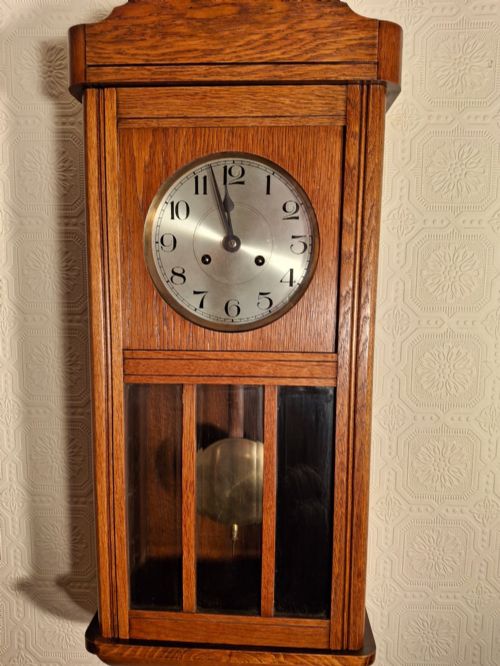
Buyers frequently encounter English fusee drop-dial clocks housed in mahogany or oak cases, alongside ornate eighteenth-century carved wood and gilt cartel clocks. Each form reflects the domestic requirements and technological developments of its specific era.
The materials and styles range from Jacobean brass and iron weight-driven mechanisms to Arts and Crafts golden oak frames and mid-century radio room instruments. This diversity ensures that a wall clock serves as both a functional timepiece and a focal point for historic interiors.
How they were made
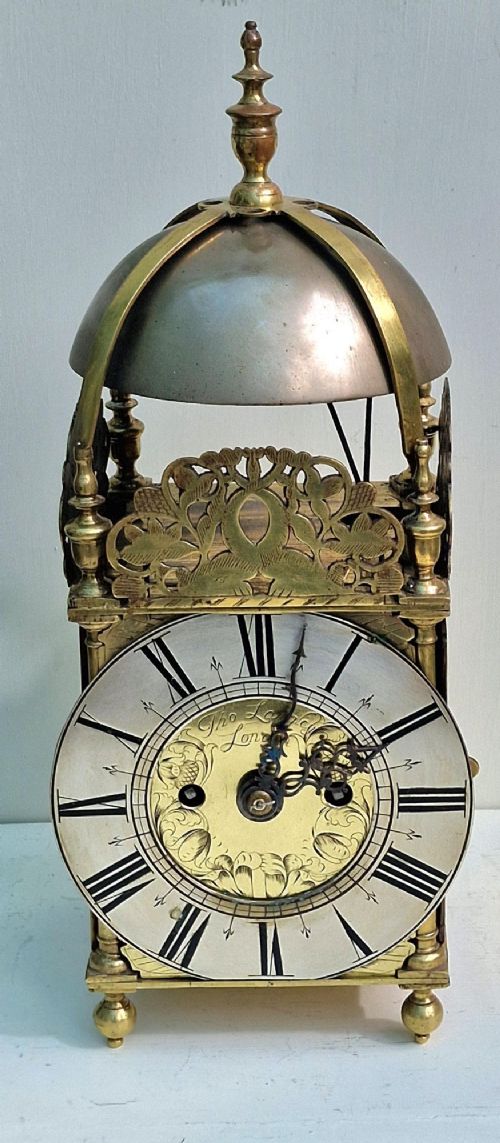
Early seventeenth-century examples rely heavily on brass and iron, constructed with exposed weight-driven movements and distinct vertical frames known as lantern clocks. Makers utilised cast brass for dials and frets, integrating steel components within the inner gear trains.
By the Regency period, makers shifted toward timber cases, employing mahogany and oak to enclose fusee movements that drove wooden or painted metal dials. Giltwood and carved wood became prominent in the creation of cartel clocks, where ornate frames surrounded circular glass-covered faces.
Period Wall Clock Retail Price Guide 2026
Typical asking prices for period wall clock among the pieces listed under this phrase on Sellingantiques today, from the lower quarter to the upper quarter. They describe what is for sale here now, not the wider market.
The timeline spans from seventeenth-century lantern clocks to mid-twentieth-century military dials.
What varies in quality
The distinction between standard and superior pieces rests in the originality of the movement and the crispness of the case carving or metal engraving. Early lantern clocks with signed brass dials by known makers demonstrate a higher grade of workshop output than unsigned domestic variants.
In later wooden models, the integrity of the mahogany or giltwood surfaces and the retention of the original wooden or painted dial determine the overall standing of the piece. Craftsmanship is visible in the precision of the fusee movement and the retention of period-correct components.
Thomas Langley·Samuel Tinham
The Period Wall Clock Glossary
- Lantern clock
- An early type of domestic brass wall clock, usually driven by weights and featuring decorative frets around the dial. These represent some of the earliest portable domestic timekeepers.
- Fusee
- A conical pulley used in clock movements to maintain an even pull as the mainspring unwinds. This mechanism is crucial for accurate timekeeping in Regency drop-dial clocks.
- Cartel clock
- A wall clock housed in an ornamental frame made of carved wood, giltwood, or metal, popular during the eighteenth and nineteenth centuries. They often feature asymmetrical scrollwork and foliage.
- Drop-dial clock
- A wall clock featuring a circular dial mounted above an extended wooden case that encloses the pendulum. This form became a staple of British public and domestic spaces during the nineteenth century.
Period Wall Clock: Frequently Asked Questions
How do I wind an old wall clock?
Winding depends on whether the mechanism uses a key or pulls for weights, requiring a steady hand to avoid over-winding the mainspring.
Consult the specific requirements of the fusee or weight-driven movement before attempting to adjust the hands or tension.
Where should I hang a heavy clock?
Heavy brass lantern clocks and large mahogany fusee pieces require secure fixing directly into masonry or solid wall studs using appropriate steel brackets.
Avoid hanging mechanical timepieces on partition walls where vibrations from daily movement can disrupt the pendulum beat.
How do I tell a Regency clock from a later copy?
Regency models utilise period-specific timber construction, hand-painted or wooden dials, and fusee movements built with traditional hand-cut brass gears.
Examine the back box, fixings, and ageing of the materials to confirm the period of manufacture matches the expected style.
Do these clocks keep accurate time?
Mechanical clocks from the seventeenth to the nineteenth centuries can keep reliable time when properly serviced, though slight daily variations remain normal.
Regular professional maintenance ensures the brass gears and steel pivots operate without excessive wear.