




Period Upholstered Bench
A period upholstered bench brings enduring seating elegance to a hallway or drawing room, uniting timber framing with soft textile covers.

Period Upholstered Bench
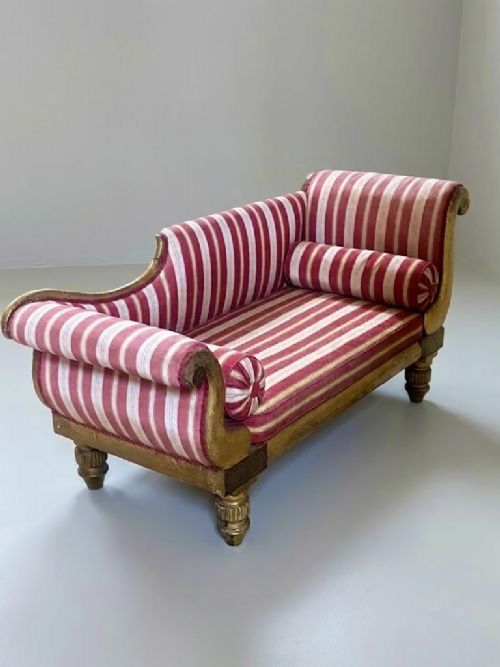
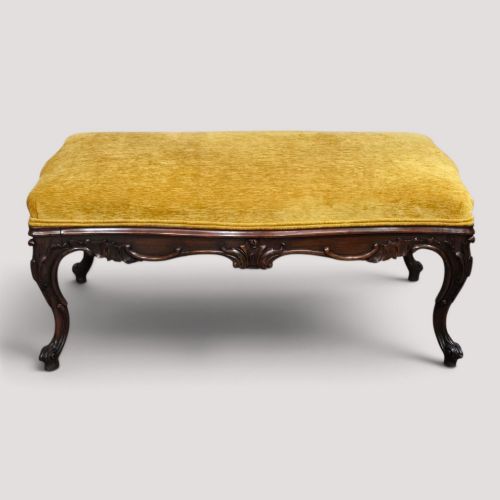
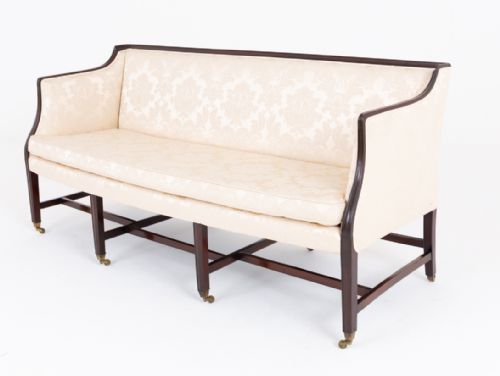
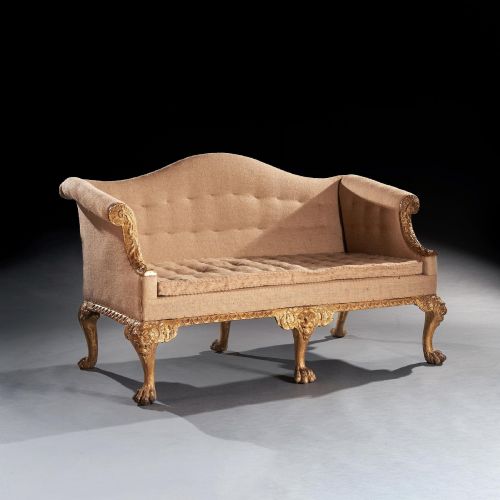
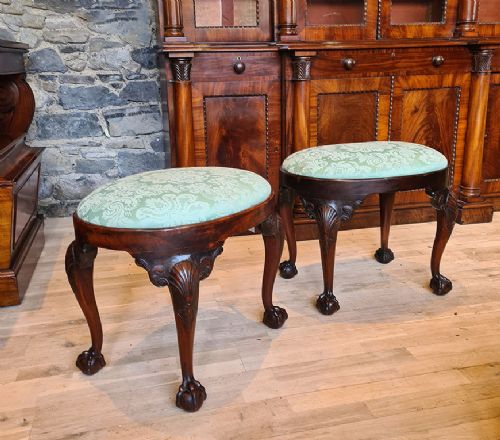
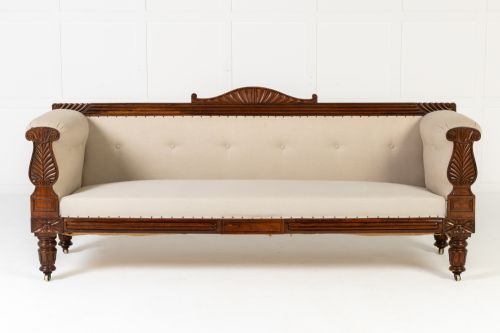
When you search for a period upholstered bench, you encounter a selection of long seats, settees, stools, and sofas spanning the eighteenth and nineteenth centuries. These seating forms range from country house hall pieces in mahogany and walnut to gilded formal settees dressed in silk or antique fabric.
The inventory on this page draws on Georgian, Regency, and Victorian periods, alongside continental European pieces in Gustavian and Louis styles. Common structural formats include double scroll-ended sofas, low stools, and open wooden frames supporting padded upholstery.
Materials and construction
Cabinetmakers built these frames using dense hardwoods like mahogany, walnut, rosewood, and fruitwood, often applying gilt or paint to the timber surfaces. Brass details and carved motifs such as lion mask hairy paw feet frequently accent the structural woodwork.
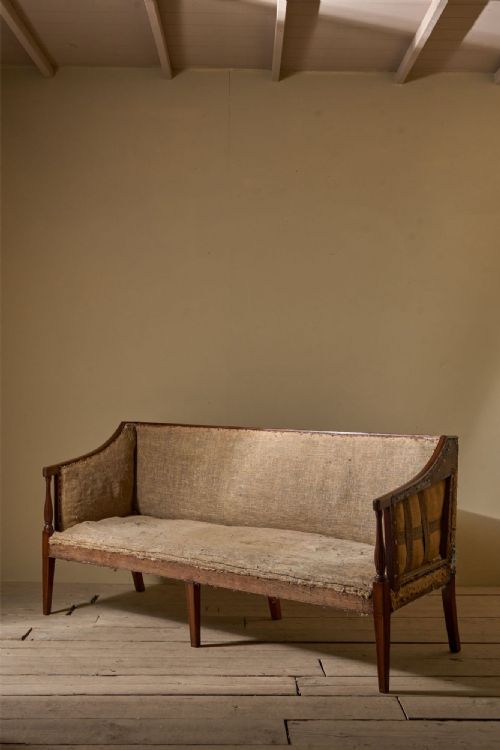
Traditional upholstery techniques applied horsehair or natural stuffing over webbing or hessian foundations, covered with silk, plain fabric, or needlework. Frames relied on precise joinery, with carved details hand-chiseled directly into the solid timber.
The page includes regional European craftsmanship, incorporating English Georgian, French Louis style, and Swedish painted items.
Assessing quality
Quality rests upon the crispness of the timber carving and the architectural proportion of the frame. Pieces featuring deeply sculpted scroll ends or integrated brass mounts display superior workshop competency compared to plain, utilitarian items.
The integrity of the underlying timber frame and the fidelity of the period style dictate the standing of an individual example. Original surface patination on woods like mahogany and walnut elevates the desirability of the piece.
Giles Grendey·I.M. Gillows of Lancaster
The Period Upholstered Bench Glossary
- Giltwood
- Timber coated with a thin layer of gold leaf. This finish appears frequently on formal eighteenth and nineteenth-century salon furniture.
- Hessian
- A coarse woven fabric typically spun from jute or hemp fibres. It serves as traditional foundational webbing beneath upholstery stuffing.
- Canapé
- A decorative French upholstered sofa with an exposed wooden frame. These pieces often feature painted or gilded finishes in Louis styles.
- Scroll end
- A seating arm or terminal curved outward in a tight spiral. This profile characterises many Regency and Georgian couch designs.
- Settee
- A long wooden seat with a back and arms designed for multiple occupants. Earlier examples often incorporate upholstered pads or complete textile coverings.
Period Upholstered Bench: Frequently Asked Questions
How do I style a period bench?
Place a mahogany or rosewood bench in a wide hallway to create an immediate focal point, or position a giltwood settee against a drawing room wall.
Keep surrounding furniture understated to let the timber frame and textile upholstery command attention without visual clutter.
Are these benches comfortable for daily use?
Period seating offers firm support derived from traditional stuffing methods like horsehair rather than modern synthetic foam.
While perfectly suited for sitting, occupants should expect a firmer feel than contemporary lounge furniture provides.
How do I identify a Regency sofa?
Regency pieces often display distinct classical influences, incorporating rosewood or mahogany timbers alongside bold scroll ends and brass inlay.
Look for clean architectural lines and decorative elements drawn from ancient Greek and Roman design repertoires.
Should I reupholster an antique bench?
Reupholstery is acceptable and often necessary when existing fabric has degraded, provided the work respects the traditional construction methods of the frame.
Retain underlying webbing structures and choose period-appropriate textiles such as antique silks or plain weaves to preserve historical character.