




Period Tray on Stand
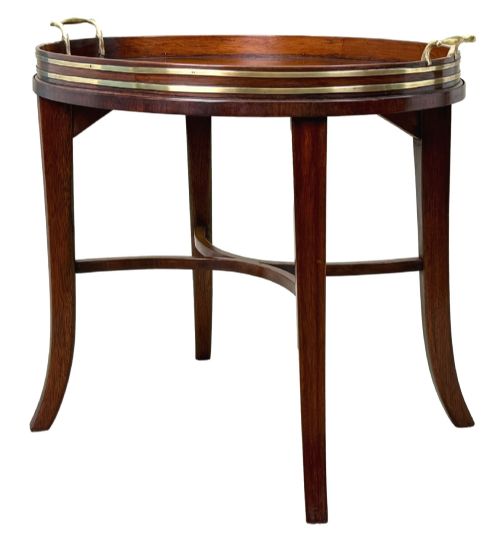
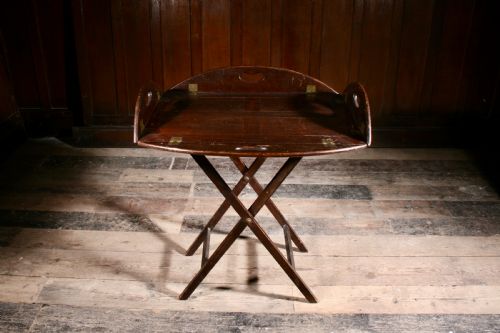
A period tray on stand brings portable hospitality into the sitting room, offering a removable tray resting on a folding or fixed timber base.
Period Tray on Stand
A period tray on stand combines a portable serving surface with a supportive base, designed to hold drinks, china or silver. When you search for a period tray on stand, you encounter pieces primarily from the Georgian, Regency and Victorian eras.
Mahogany remains the dominant wood found across these listings, alongside oak and papier-mâché examples. The surfaces range from plain timber to elaborate Chinoiserie lacquer and brass-bound edges.
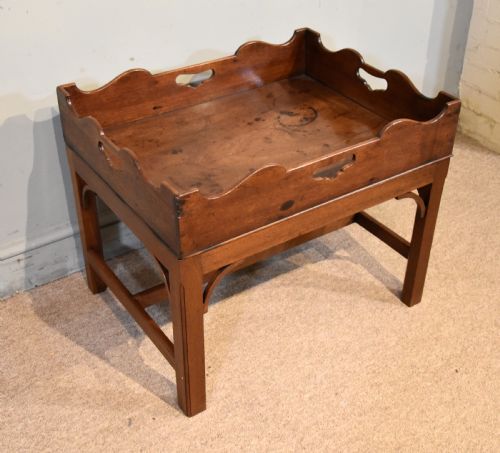
Most examples function as side tables or serving tables, with trays that lift entirely clear of their folding or rigid stands. These items served dining and entertaining needs in larger houses before remaining in continuous domestic use.
How they were made
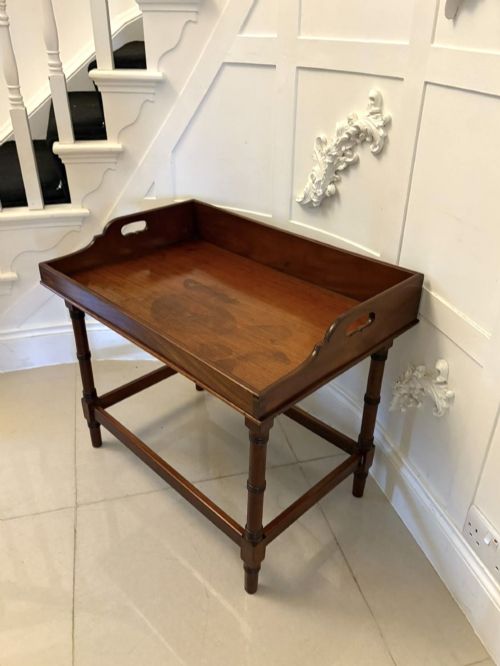
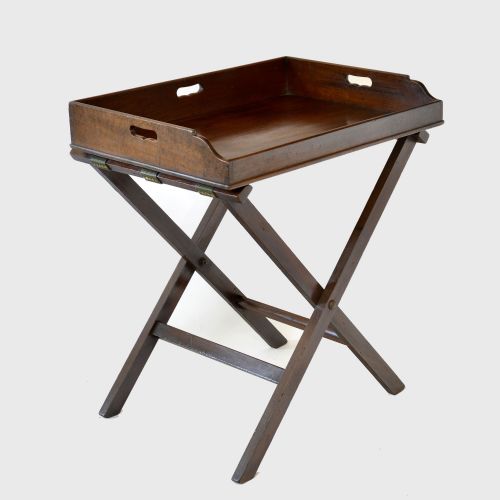
Cabinetmakers utilised solid mahogany and oak for the structural frames and folding X-stands, often employing turned legs and brass hinges to allow the supports to collapse. Timber selection focused on dense grain and rich natural colour that accepted repeated waxing.
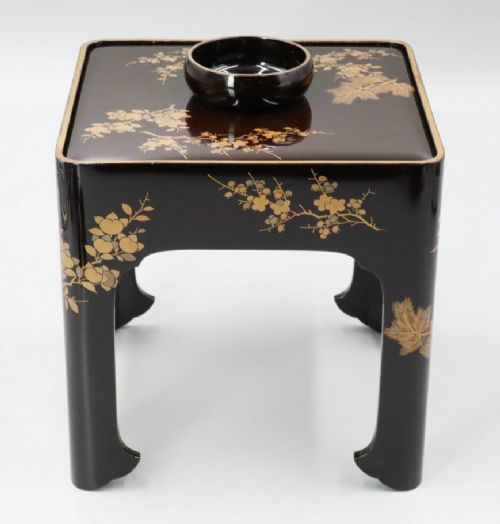
Surface decoration incorporated hand-painted Chinoiserie motifs, gold leaf highlights and applied lacquer over papier-mâché bases. Brass carrying handles and bound edges provided durability to the high-wear perimeters of the trays.
Period Tray on Stand Retail Price Guide 2026
Typical asking prices for period tray on stand among the pieces listed under this phrase on Sellingantiques today, from the lower quarter to the upper quarter. They describe what is for sale here now, not the wider market.
Early nineteenth-century makers occasionally mounted papier-mâché tea trays onto bespoke bamboo-turned folding stands.
What varies in quality
Quality rests in the crispness of the timber carving, the precise fit of the tray into its stand and the preservation of original surfaces. Pieces retain greater merit when the stand and tray belong together from creation rather than being married at a later date.
The integrity of painted lacquer and gold leaf decoration separates standard utility pieces from finer examples intended for formal reception rooms. Subtle details such as dovetailed tray corners and original brass carrying handles indicate higher workshop standards.
The Period Tray on Stand Glossary
- Butler's tray
- A rectangular or oval serving tray featuring hinged sides that fold down for flat storage or lock upright for carrying. These trays lift off their supporting stands entirely.
- Chinoiserie
- European imitation of traditional Chinese artistic styles, seen here in lacquer and painted tray surfaces depicting landscapes and figures. This decorative technique peaked during the Georgian and Regency periods.
- Papier-mâché
- A composite material made from paper pulp or layers of paper bound with glue, pressed and dried to form rigid trays. These surfaces provided smooth grounds for japanned decoration and mother-of-pearl inlay.
- Dumb waiter
- A tiered serving stand featuring multiple revolving or fixed circular trays on a central pillar, used for holding dishes during meals. These pieces appeared alongside tray tables in dining spaces.
- X-stand
- A folding support frame formed by intersecting crossed legs, designed to collapse flat when the tray is removed. This mechanism made serving furniture easily portable.
Period Tray on Stand: Frequently Asked Questions
Are the trays fixed to the stands?
Most trays lift off their stands entirely, designed to be carried independently by side handles before resting back onto the folding or fixed frame.
This portability allowed servants to transport service items directly from the kitchen or pantry into the reception rooms without moving the supporting base.
How do I date a mahogany tray table?
Dating relies upon timber characteristics, leg turning styles, edge profiles and fixing methods found on both the tray and the stand. Georgian examples often display plain or brass-bound gallery edges, while Regency pieces introduce lighter proportions and occasional Chinoiserie finishes.
Examining the underside reveals construction methods, screw types and tool marks that distinguish eighteenth-century workshop practices from later nineteenth-century production.
Can I use these pieces for everyday drinks?
These items suit daily domestic use provided hot vessels and moisture receive appropriate protection from antique wood and lacquer surfaces. Coasters and mats help preserve historic polished timber and painted decoration against rings and spills.
Regular waxing maintains the moisture barrier of the wood while keeping the piece functional within a modern room.