



Period Timber Cupboard
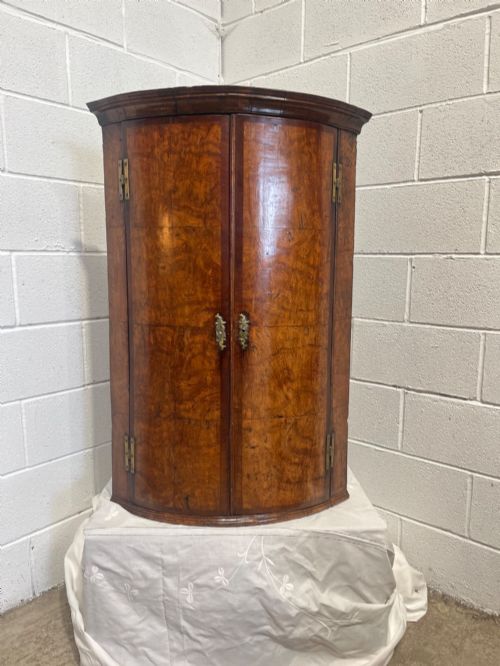
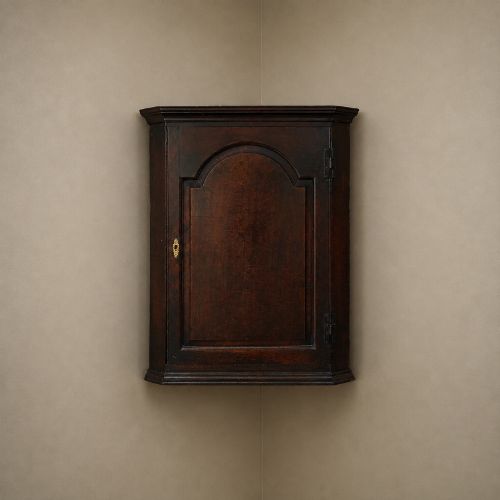
These period timber cupboard examples bring substantial historic character and storage to a room through dense woods and traditional joinery.
Period Timber Cupboard
A period timber cupboard encompasses practical storage furniture fashioned from solid or burl woods across centuries of woodworking tradition. The selection here leans heavily towards oak and mahogany corner units, wall-hanging cabinets, and larger case pieces.
Buyers encounter forms ranging from Georgian hanging corner cupboards to seventeenth-century oak pieces and Regency wardrobes. These items served diverse domestic functions, from corner storage to display and wardrobe organisation.
The regional origins and stylistic influences stretch from British Georgian and William and Mary periods to French provincial work and international pieces such as Japanese Meiji cabinets. Each example reflects the prevailing domestic requirements and cabinet-making standards of its specific era.
Materials and construction methods
Makers utilised durable timbers such as oak, mahogany, and cedarwood, often accentuating surfaces with burr elm, burr oak, and satinwood inlay. These woods provided structural stability alongside varied grain patterns.
Metal components like brass and iron supplied structural reinforcement and functional hardware, including hinges, handles, and escutcheons. Traditional joinery techniques secured the carcase and doors without relying on modern fasteners.
Period Timber Cupboard Retail Price Guide 2026
Typical asking prices for period timber cupboard among the pieces listed under this phrase on Sellingantiques today, from the lower quarter to the upper quarter. They describe what is for sale here now, not the wider market.
Listings feature woods including mahogany, oak, burr oak, burr elm, cedarwood, and brass hardware across Georgian, seventeenth-century, and Regency periods.
Distinctions in quality and execution
Superior execution shows in the selection of figured timbers, such as burr elm or burr oak veneers, matched symmetrically across door panels and drawer fronts. Lesser examples rely on plain boards with minimal attention to grain alignment.
The refinement of internal shelving, drawer linings, and original brass or iron hardware distinguishes superior workshop production from utilitarian pieces. Structural integrity in the door framing and cornices separates enduring cabinet work from simpler builds.
The Period Timber Cupboard Glossary
- Corner cupboard
- A storage unit designed specifically to fit into the internal corner of a room, saving floor space while utilising neglected angles.
- Cabinet on chest
- A tall case furniture form comprising an upper cabinet section mounted upon a lower chest of drawers base.
- Commode
- A decorative low chest of drawers or cabinet, often featuring refined wood veneers and inlays.
- Burr timber
- Wood cut from tree growths containing distorted grain patterns that produce highly decorative swirls when polished.
- Satinwood
- A pale, hard wood utilised for contrasting stringing and geometric inlay work on eighteenth-century case pieces.
Period Timber Cupboard: Frequently Asked Questions
Where should I place a corner cupboard?
These units fit neatly into unused room angles, making them practical for dining rooms or hallways where floor space is limited.
Wall-hanging versions require secure fixing to solid masonry or properly located timber studs to support their weight safely.
How do I care for antique timber furniture?
Keep wooden surfaces away from direct sunlight and sudden temperature shifts to prevent timber shrinkage and veneer lifting.
Apply traditional wax polish sparingly and buff with a soft cloth to maintain the natural sheen of the wood.
What is the difference between oak and mahogany pieces?
Oak pieces generally date from earlier centuries, displaying a heavy, open-grain structure associated with traditional vernacular and seventeenth-century joinery.
Mahogany became prominent during the Georgian and Regency eras, offering a denser, smoother reddish-brown surface suited to finer carved details.
How can I identify a Georgian cupboard?
Georgian pieces often display proportioned cornices, fielded panels, and decorative inlays such as satinwood stringing on mahogany or burr elm.
Hardware placement and internal construction details like hand-cut dovetails on drawer boxes further indicate this eighteenth-century period.