

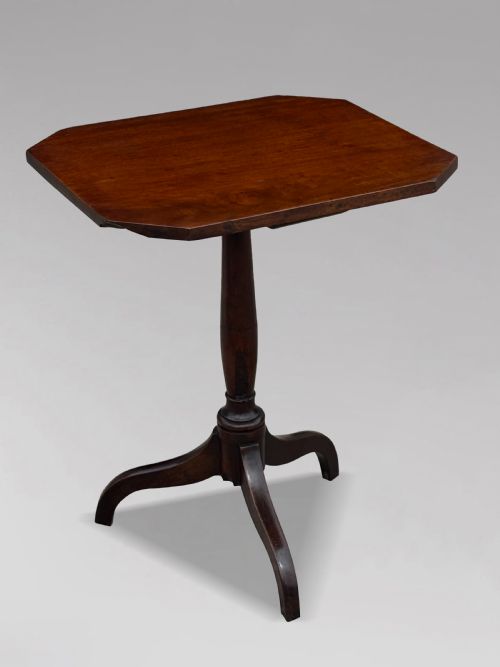
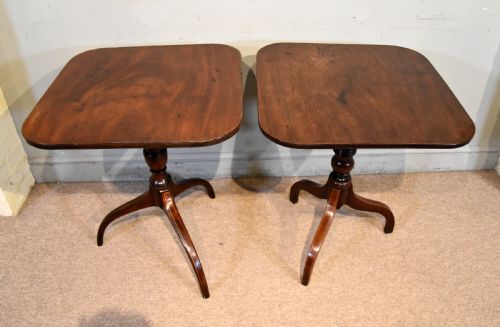

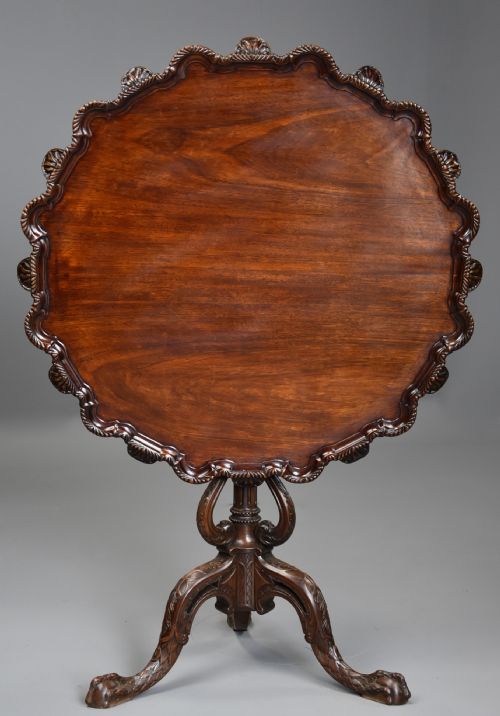
Period Tilt Top
Period tilt top tables are versatile occasional and dining pieces designed to fold flat against a wall when not in use.
Period Tilt Top
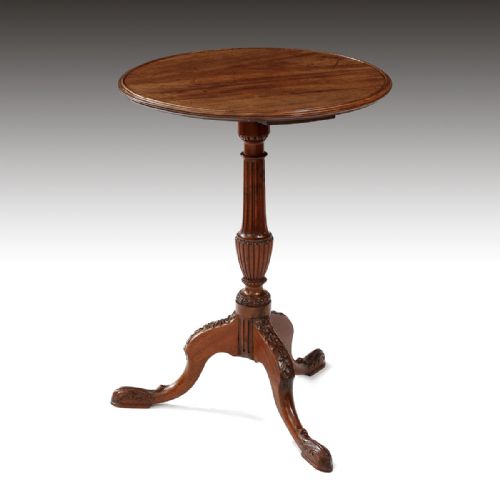
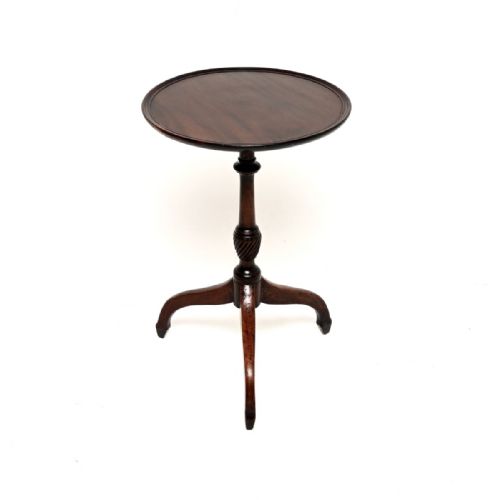
A period tilt top table functions as a flexible surface, shifting from a horizontal display area to a vertical orientation for compact storage. These forms emerge across Georgian, Regency, and Victorian eras as tripod tables, breakfast tables, and occasional tables.
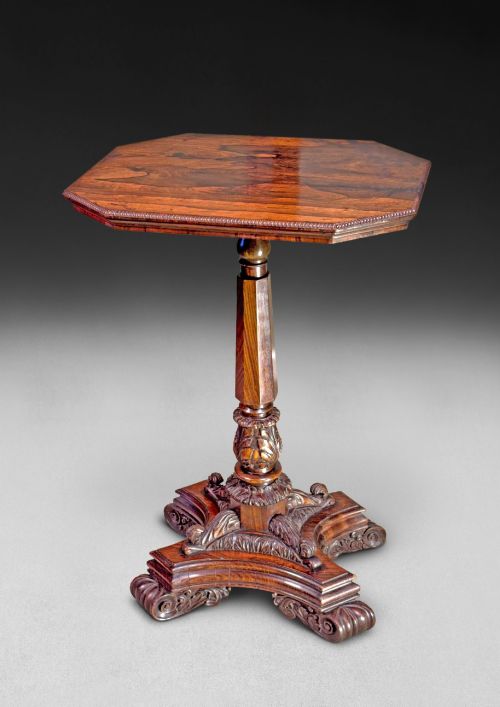
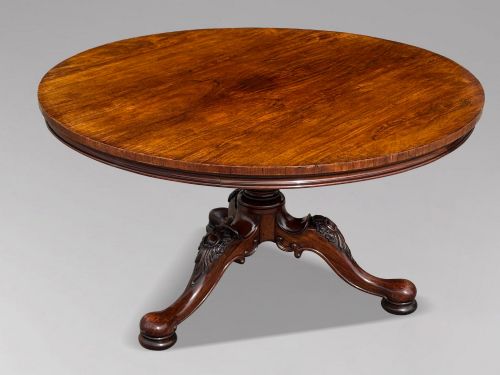
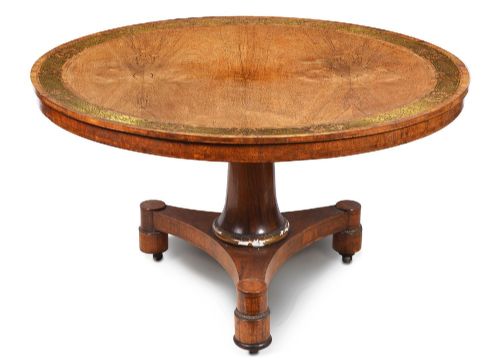
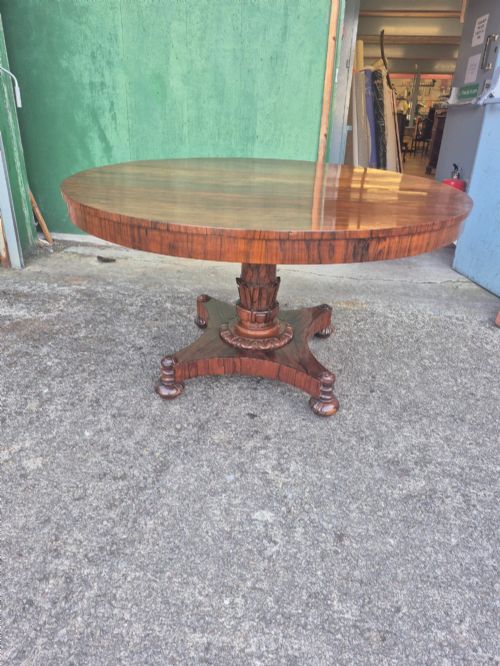
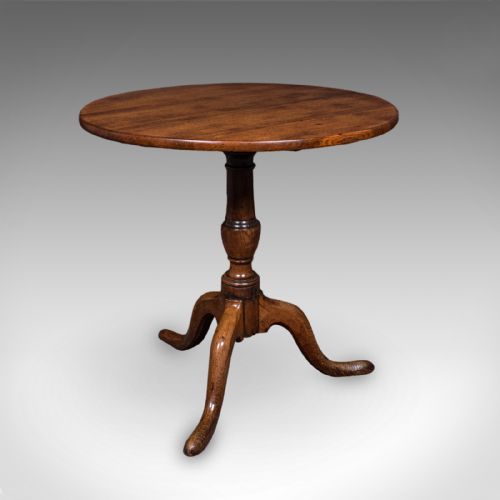
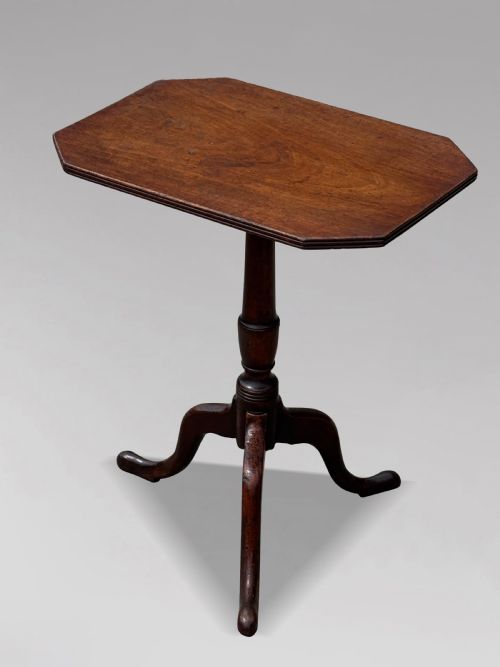
Mahogany and rosewood dominate the material record, frequently shaped with circular or octagonal tops supported by a central pillar and three splayed legs. Vernacular examples in oak and beech sit alongside high-status pieces featuring brass inlay or satinwood banding.
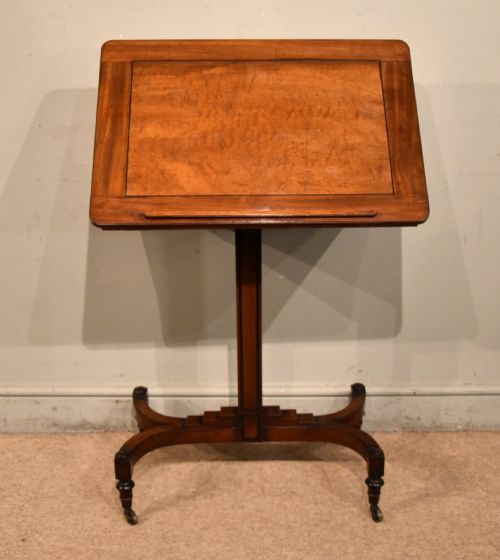
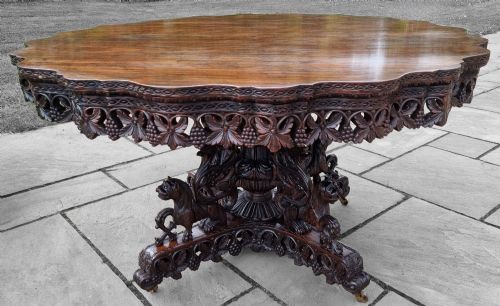
Buyers encounter numerous variations, from modest wine tables to large dining tables designed to tilt via a clever mechanism beneath the surface. The selection spans formal Chippendale style designs to simpler provincial tripod tables.
Materials and construction methods
Cabinet makers utilised dense hardwoods like mahogany, rosewood, and walnut, often applying veneers to stable secondary timbers. Turning lathes shaped the central pedestals, while specialised joinery secured the folding mechanism to the underside of the top.
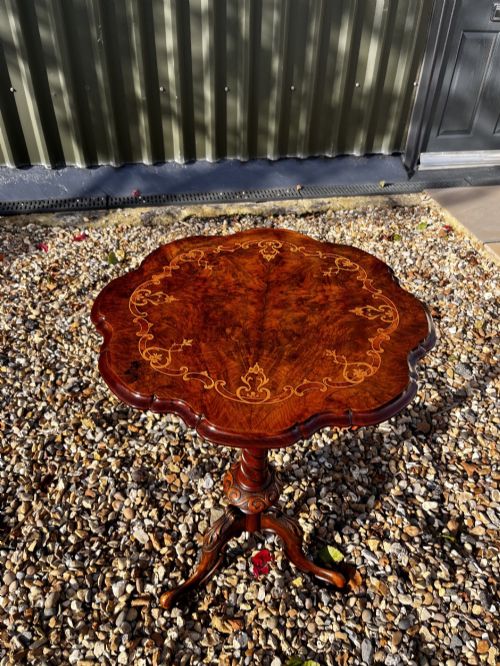
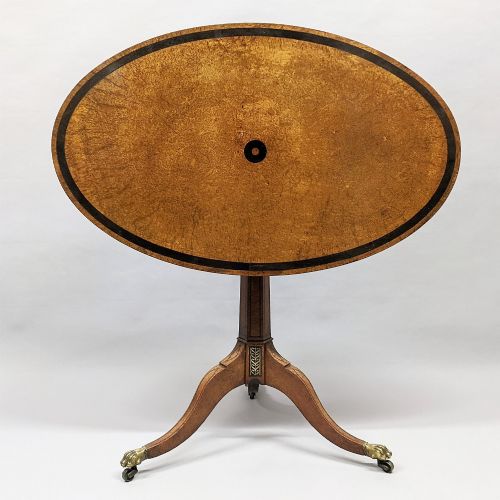
Inlay work incorporated brass, boxwood, and ebony into tabletops, contrasting sharply with the warm grain of the primary timber. Tripod bases required precise hand-cutting to ensure stable weight distribution across the three splayed feet.
Period Tilt Top Retail Price Guide 2026
Typical asking prices for period tilt top among the pieces listed under this phrase on Sellingantiques today, from the lower quarter to the upper quarter. They describe what is for sale here now, not the wider market.
Listings feature eight distinct periods ranging from the eighteenth century through the Victorian era, dominated by mahogany and rosewood.
Distinctions in craftsmanship
Quality rests in the stability of the tilt mechanism and the seamless movement of the catch holding the top rigid when lowered. Fine examples display well-proportioned turned pillars and substantial timber thickness that resists warping over centuries.
The precision of decorative inlay and the crispness of carved tripod legs separate standard workshop output from exceptional cabinet work. Selection of figured mahogany or rich rosewood veneer elevates the visual impact of the piece.
Gillow·James Mein
The Period Tilt Top Glossary
- Tilt top
- A table design featuring a hinged mechanism that allows the surface to pivot into a vertical position. This clever engineering saved valuable floor space in historical rooms.
- Tripod table
- A small freestanding table supported by a central pillar resting on three legs. These versatile items served as tea tables or wine stands.
- Breakfast table
- A large circular or oval dining table designed to tilt after the morning meal to clear the floor. They usually stand on a robust pillar with splayed legs.
- Snap top
- An alternative term for a tilt top table, referring to the audible catch that locks the surface into position. The spring or catch secures the tabletop firmly during use.
- Pie-crust edge
- A carved raised border shaped in undulating curves around the perimeter of a circular tabletop. This decorative edging prevents small items from rolling off.
Period Tilt Top: Frequently Asked Questions
What is a period tilt top table?
A period tilt top table is a historical piece of furniture featuring a hinged mechanism that allows the top to fold vertically. This design enabled the table to be stored against a wall when floor space was required for other activities.
Craftsmen produced these tables in various sizes, from small wine tables to large dining versions, primarily during the Georgian, Regency, and Victorian eras.
How do I use a tilt top table today?
These tables function brilliantly as occasional surfaces for lamps, drinks, or books in living rooms and hallways. Their ability to tilt flat allows them to fit into narrow alcoves or serve as decorative wall panels when not in active use.
Placing them away from direct heat sources prevents the solid timber or veneer from drying out and cracking over time.
How do I date a tilt top table?
Dating relies on observing the timber species, leg profiles, and construction techniques characteristic of different eras. Georgian examples often feature slender mahogany tripod bases, while Regency pieces frequently incorporate rosewood, brass inlay, or bolder pillar turns.
Victorian iterations commonly display heavier proportions and employ walnut or coromandel wood alongside traditional forms.
What timber was used for these tables?
Makers predominantly selected dense hardwoods such as mahogany, rosewood, and oak for their durability and attractive grain patterns. Finer pieces featured exotic veneers like satinwood, amboyna, and burr walnut on the main surface.
Secondary woods like beech and pine often provided hidden structural support within the tripod bases and framing.