

Period Tilt Top Table
A period tilt top table gives you a clever surface that folds flat against the wall when not in use, spanning George III, Regency, and Victorian rooms.
Period Tilt Top Table
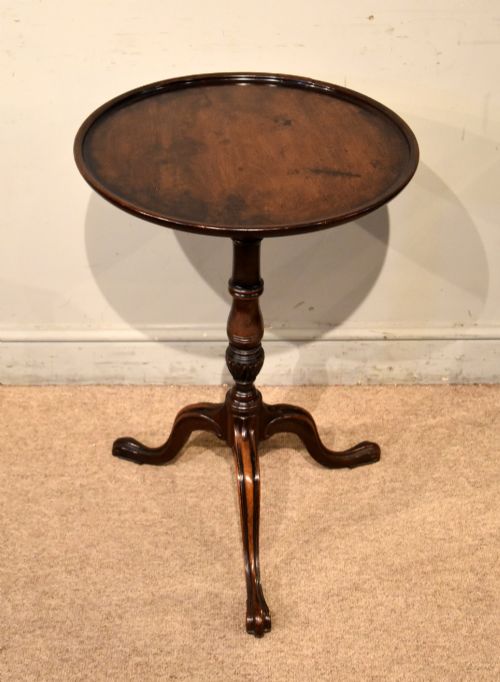
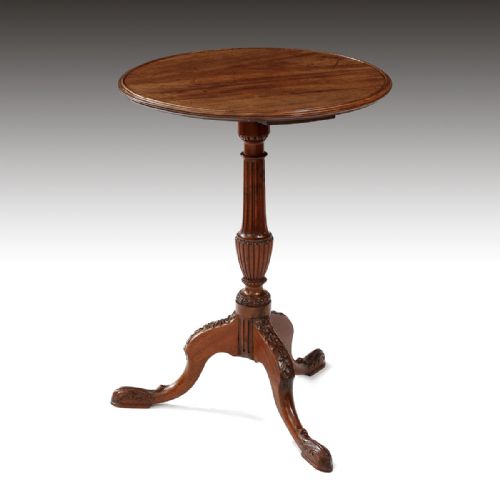
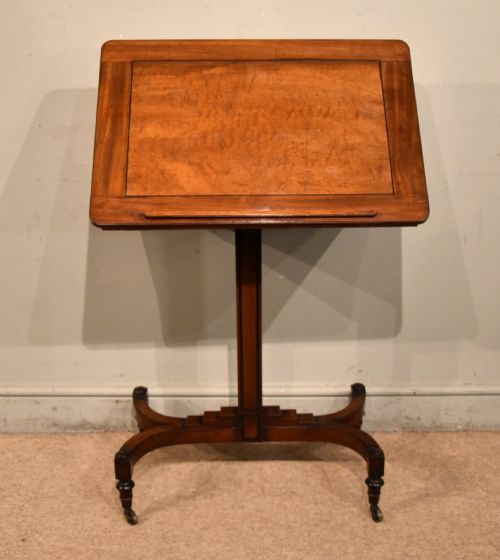
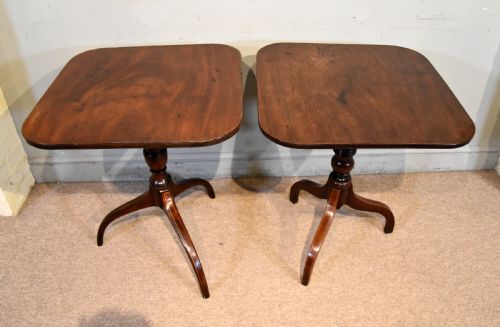
When you search for a period tilt top table, you find timber furniture designed to pivot on a central pillar and tripod base, saving space in historic interiors. These forms include breakfast tables, occasional tables, and snap top tripod tables that date from the eighteenth century through the nineteenth century.
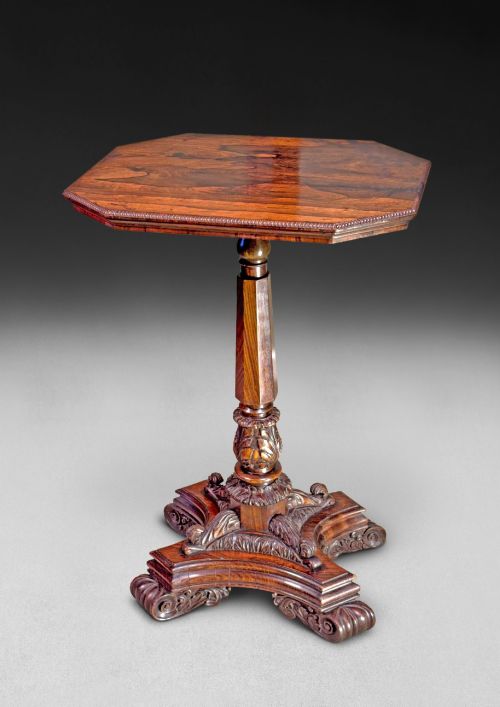
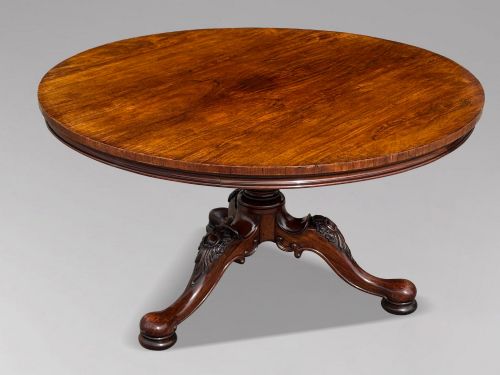
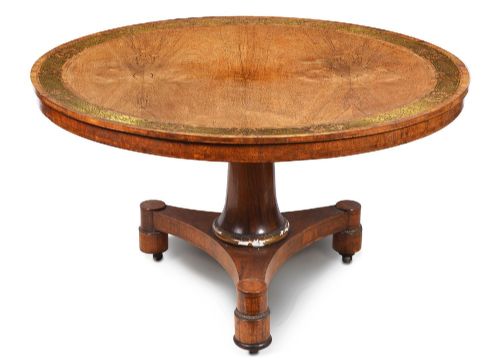
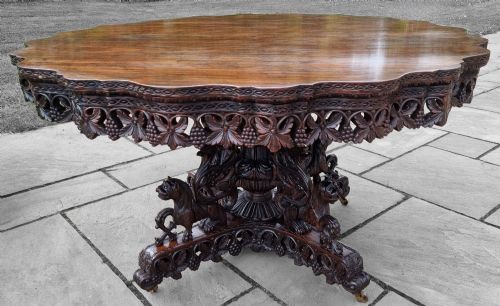
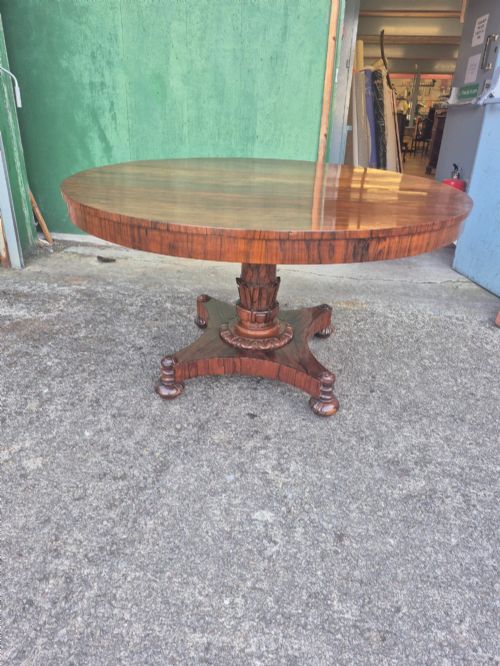
The most common versions on this page are mahogany examples from the Georgian and Regency eras, alongside oak vernacular pieces and rosewood breakfast tables. Makers utilised various timbers such as satinwood, coromandel, and walnut to create circular or oval surfaces supported by pillar bases.
How they were made
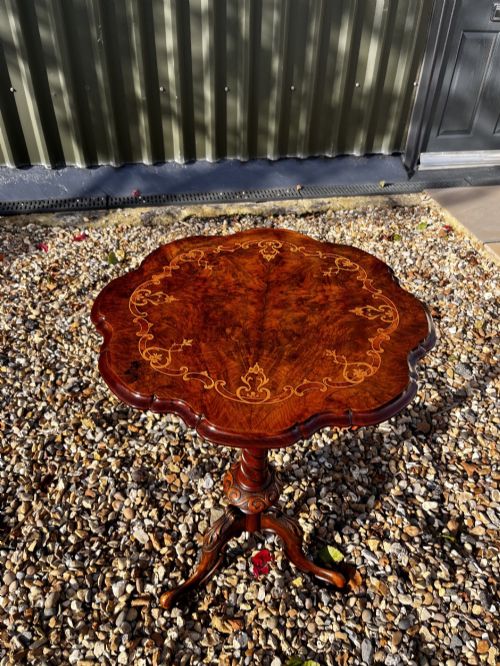
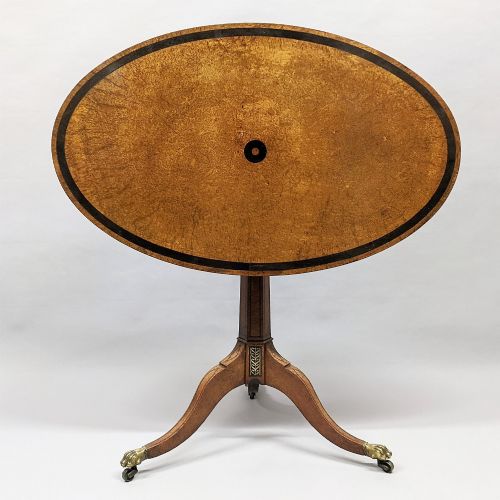
Cabinet makers constructed these tables using solid hardwoods like mahogany and oak, frequently applying rosewood, satinwood, and boxwood veneers to the surfaces. Brass inlay, marquetry, and banding added decorative detail to the borders of the circular tops.
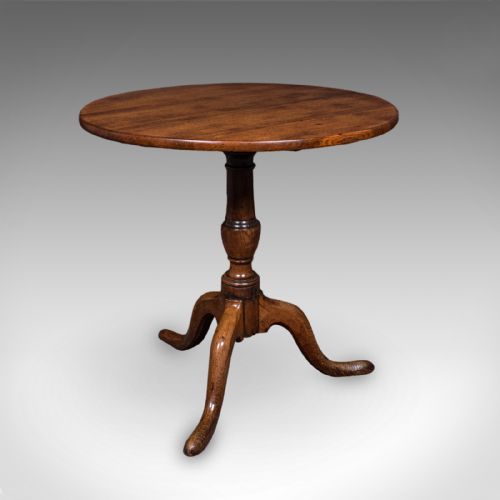
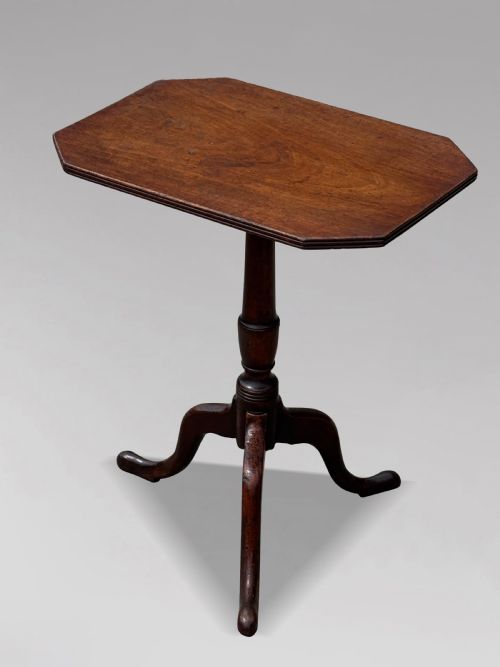
The pivoting mechanism relies on a wooden or brass catch beneath the surface, allowing the top to tilt vertically. This mechanism connects to a turned pillar that rests on three curving legs, often terminating in pad feet or brass castors.
Period Tilt Top Table Retail Price Guide 2026
Typical asking prices for period tilt top table among the pieces listed under this phrase on Sellingantiques today, from the lower quarter to the upper quarter. They describe what is for sale here now, not the wider market.
Listings feature pieces spanning the Georgian, Regency, William IV, and Victorian periods, constructed in mahogany, rosewood, oak, and satinwood.
What varies in quality
The distinction between ordinary and superior examples lies in the selection of the timber and the crispness of the carving on the tripod base. Figured mahogany or richly grained rosewood indicates a higher grade of manufacture, particularly when the top consists of a single board rather than joined planks.
Execution of decorative elements such as brass inlay, marquetry, and satinwood banding separates standard workshop production from finer cabinet work. The stability of the tilt mechanism and the retention of original brass fittings also determine the standing of an individual piece.
Gillow·James Mein
The Period Tilt Top Table Glossary
- Tilt top table
- A table with a hinged surface that pivots to a vertical position when not in use. This design allowed furniture to stand against a wall to clear floor space.
- Tripod table
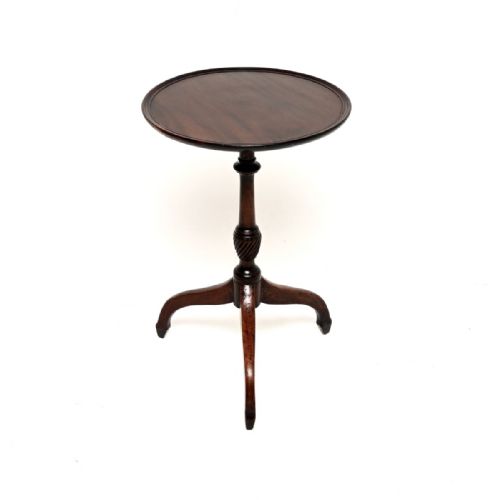
- A small occasional table supported by a pillar and three legs. These versatile pieces appeared frequently in eighteenth century parlours and drawing rooms.
- Snap top
- An alternative term for a tilt top table fitted with a spring catch. The catch locks the surface horizontal during use.
- Breakfast table
- A larger circular or oval dining table designed for morning meals. They often feature pedestal bases with tilt mechanisms.
- Pie-crust edge
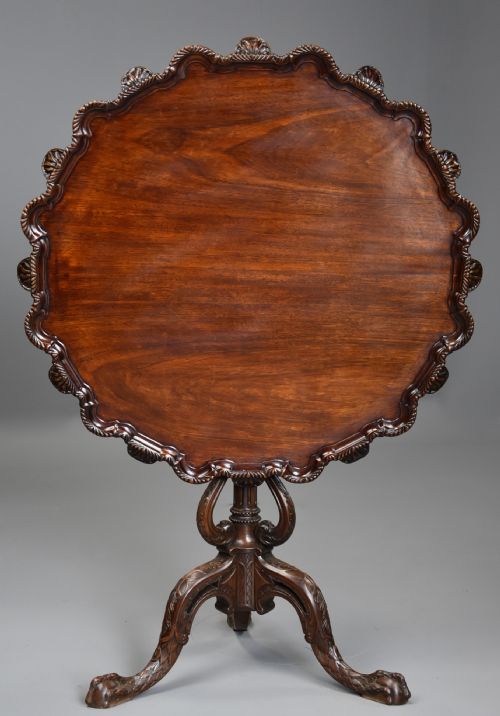
- A carved decorative rim raised around the perimeter of a circular table top. Cabinet makers shaped the timber into undulating curves resembling pastry work.
Period Tilt Top Table: Frequently Asked Questions
What is a period tilt top table used for?
These tables served primarily as occasional surfaces for reading, writing, or morning dining in historic interiors. Their pivoting mechanism allowed them to be folded away against room perimeters when floor space was required for other activities.
Today, owners utilise them as accent tables in living spaces or hallways. Their dual nature makes them practical for modern rooms where flexible furniture placement matters.
How do I identify a Georgian tilt top table?
Georgian examples typically feature solid mahogany or oak timbers with tripod bases terminating in pad or claw and ball feet. The proportions remain balanced, and the turned pillars often display restrained classical turning rather than heavy ornamentation.
Looking beneath the top reveals the birdcage or block mechanism characteristic of the period. These construction details help distinguish eighteenth century work from later nineteenth century reproductions.
What is the difference between a tripod table and a breakfast table?
Tripod tables are generally smaller occasional pieces with three legs supporting a single central pillar, often featuring the tilting mechanism. They function well beside seating or in corners as lamp tables.
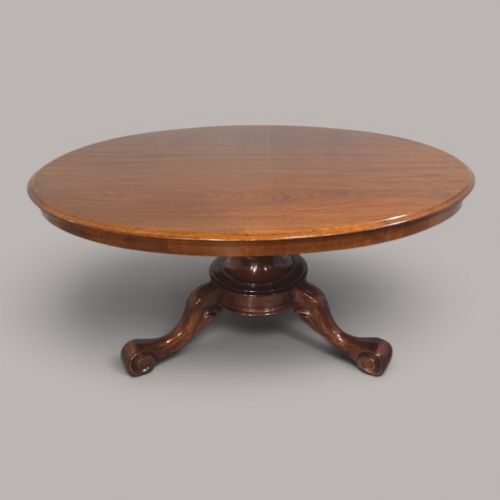
Breakfast tables are larger circular or oval dining tables supported by robust pedestals, frequently constructed during the Regency and Victorian eras. While many retain tilt mechanisms, their primary scale suits them for dining rather than light occasional use.
How do I care for antique rosewood and mahogany furniture?
Protect these hardwood surfaces by placing them away from direct sunlight and heat sources that cause timber to dry and split. Regular dusting with a soft, dry cloth preserves the polish without building up unnecessary residue.
Applying occasional specialist wax maintains the moisture and lustre of the grain. Avoid placing damp items directly onto the polished wood to prevent water marking.