



Period Tier Shelving
Period tier shelving gathers open etageres, whatnots and hanging book-shelves designed to hold books and display ornaments.
Period Tier Shelving
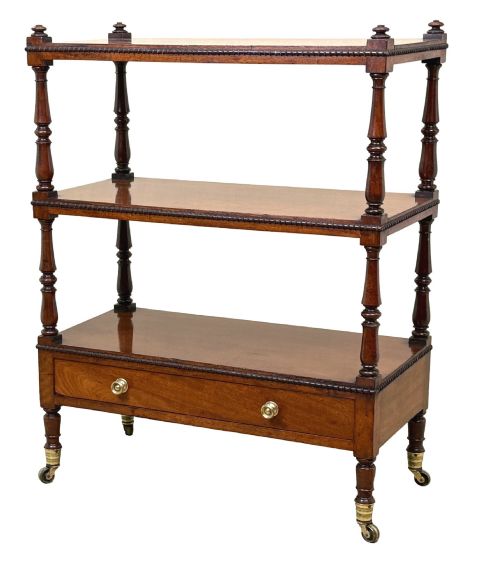
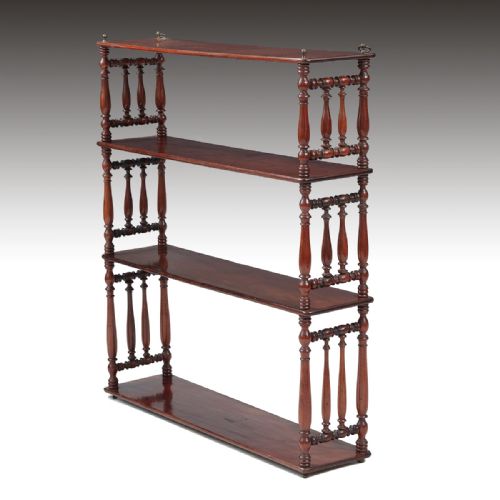
Period tier shelving encompasses multi-level wooden stands, etageres and wall-hung display units intended for domestic organisation and ornament. These pieces surface most frequently in mahogany or rosewood across Georgian, Regency and Victorian periods.
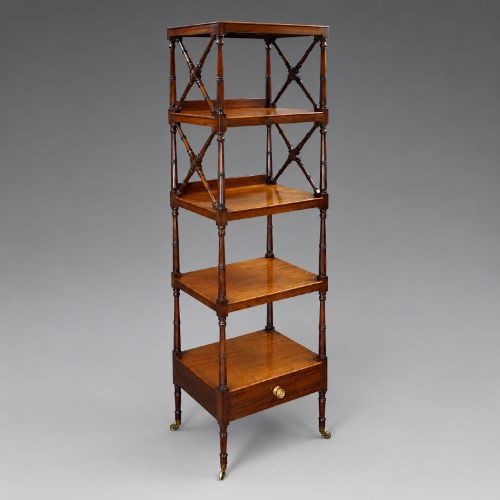
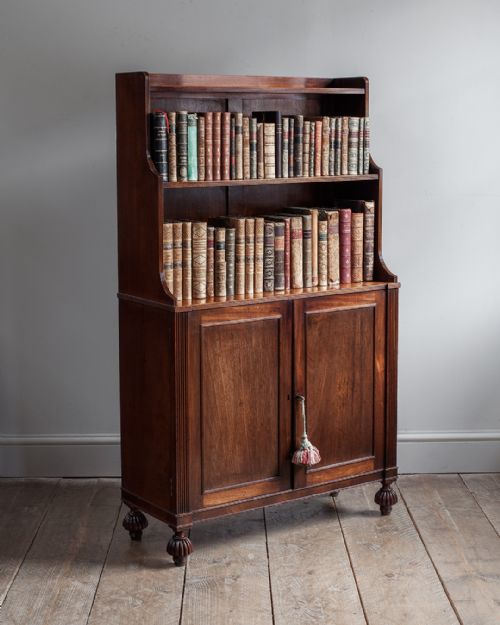
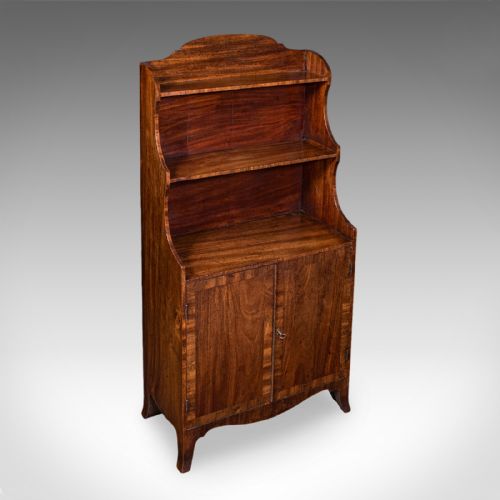
The dominant forms are freestanding whatnots and graduated waterfall bookcases that use tiers to utilise vertical wall and corner space. Compact scales and multiple shelves distinguish these designs from standard cabinets.
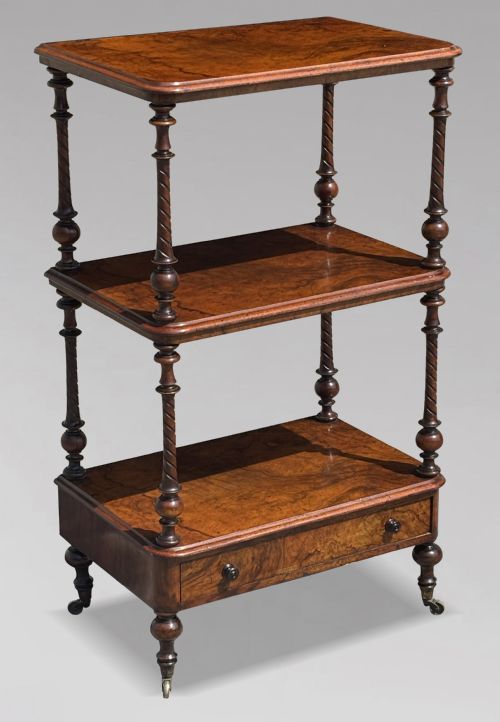
Examples range from George III hanging shelves to robust William IV etageres and later Victorian walnut three-tier stands. Each iteration provides open access to stored volumes or decorative porcelain.
Construction and Materials
Makers built these pieces primarily from solid and veneered timbers such as mahogany, rosewood and oak, often selecting figured flame mahogany for prominent display surfaces. Secondary woods provided structural stability behind polished primary veneers.
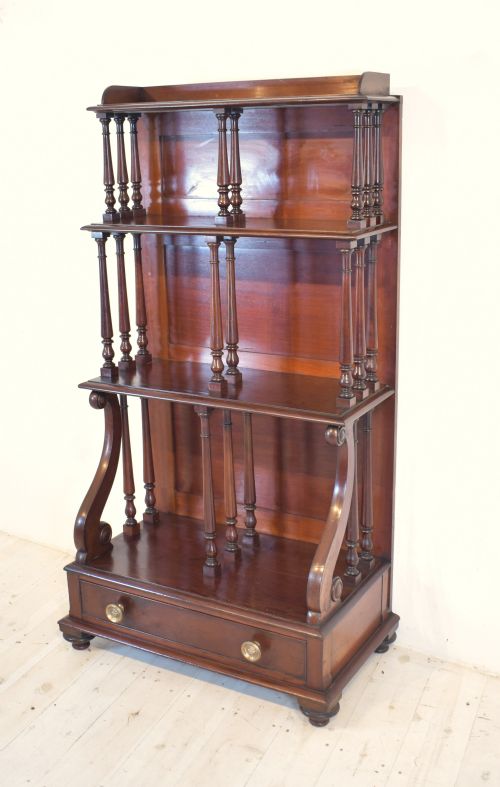
Metal elements including brass spindles, castors and ormolu mounts frequently reinforce the upright supports and mobile feet of freestanding etageres. Turned wooden columns and delicate side galleries secure the tiered platforms.
Joinery relied on traditional housing joints, dovetails and turned pillar mountings to bear the weight of stacked books across multiple levels. Simulated rosewood finishes also appear, achieved through skilled grain painting on alternative timbers.
Period Tier Shelving Retail Price Guide 2026
Typical asking prices for period tier shelving among the pieces listed under this phrase on Sellingantiques today, from the lower quarter to the upper quarter. They describe what is for sale here now, not the wider market.
Early makers designed tiny side drawers into compact whatnots, perfect for hiding secret love letters beneath your Shakespeare.
Judging Quality
The distinction between standard utility items and superior examples lies in timber selection, proportion and the crispness of turned supports. Finely figured grain and balanced tiered scaling elevate an etagere above a plain storage stand.
Original brass fittings, integrated drawers and well-executed fretwork galleries distinguish finer workshops from basic production pieces. The overall integration of turned uprights with structural shelves determines the visual harmony of the finished unit.
The Period Tier Shelving Glossary
- Etagere
- A set of open shelves for displaying small objects and ornaments. This French form became popular in English homes during the Regency period.
- Waterfall bookcase
- A set of graduating open shelves where each tier steps back from the one below. The stepped profile resembles the cascading flow of water.
- Ormolu
- Gilded bronze used for decorative mounts and furniture highlights. It adds metallic contrast to dark woods like rosewood and mahogany.
- Flame mahogany
- Mahogany veneer exhibiting a distinctive flickering flame-like grain pattern. Cabinet makers reserved this timber for principal display surfaces.
Period Tier Shelving: Frequently Asked Questions
What is a whatnot?
A whatnot is an open-shelved furniture piece designed to hold books, ornaments and small domestic items across multiple horizontal tiers.
These versatile stands appeared in various rooms to provide accessible display space without the visual weight of enclosed cabinets.
How do etageres differ from bookcases?
Etageres generally feature open sides and multiple tiers intended for general display rather than strict book storage.
Traditional bookcases focus on housing bound volumes, whereas etageres accommodate a mix of decorative objects and reading material.
Where were hanging shelves used?
Hanging wall shelves provided compact storage in parlours, studies and bedrooms where floor space remained limited.
Their lightweight construction allowed secure attachment to walls for holding small collections of books or ceramics.
How do I date a tier shelf?
Dating relies on timber choices, turning styles and overall proportions matched to periods like Georgian or Regency.
Earlier pieces often employ solid mahogany with subtle stringing, while later Victorian versions frequently utilise walnut.