

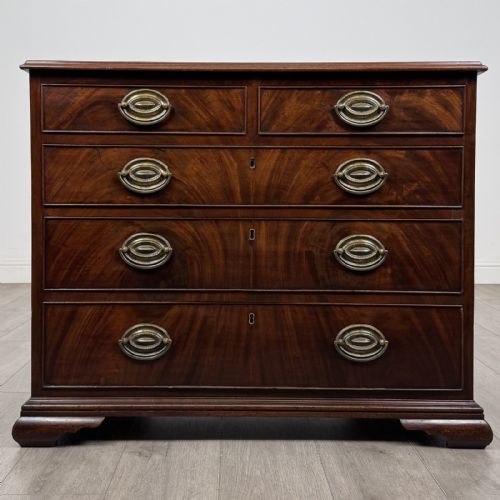
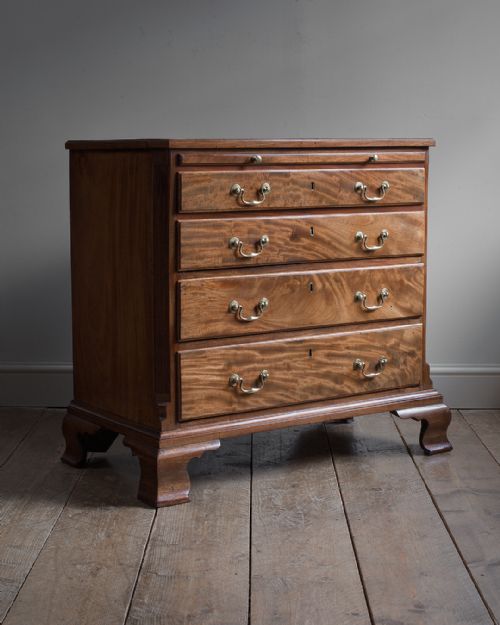
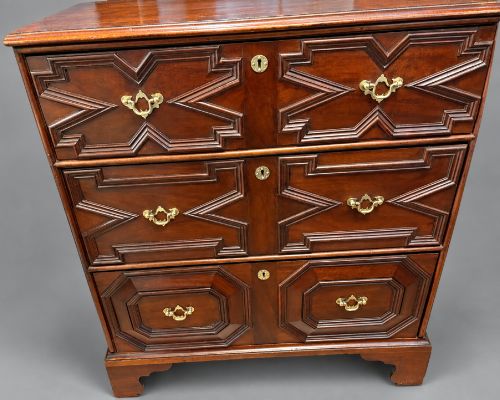
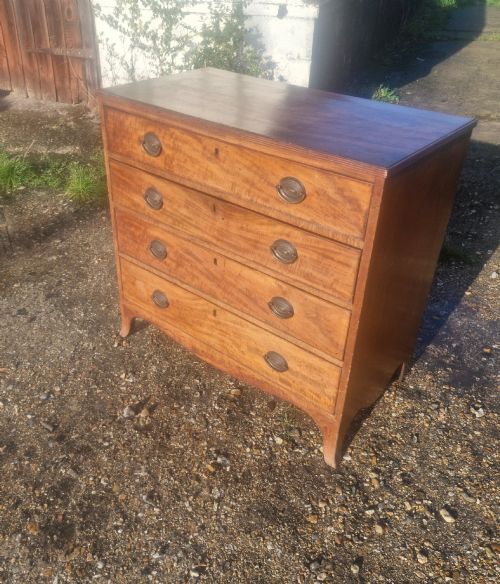
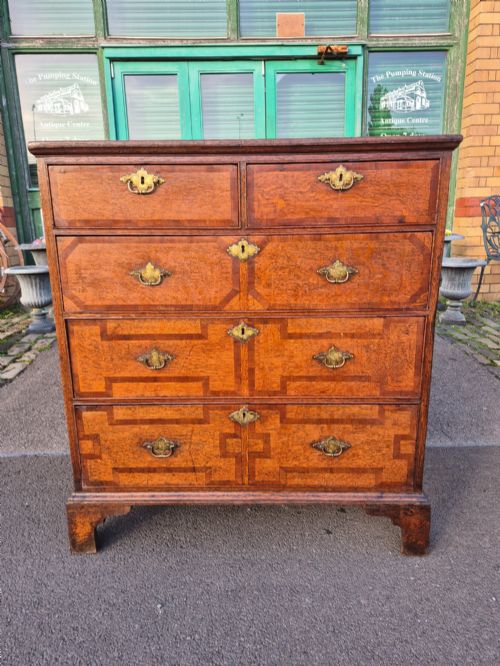
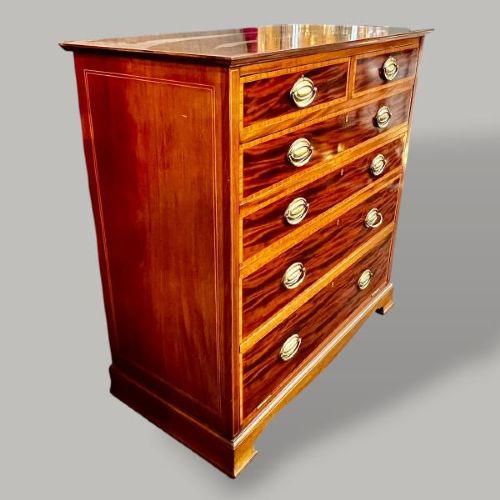
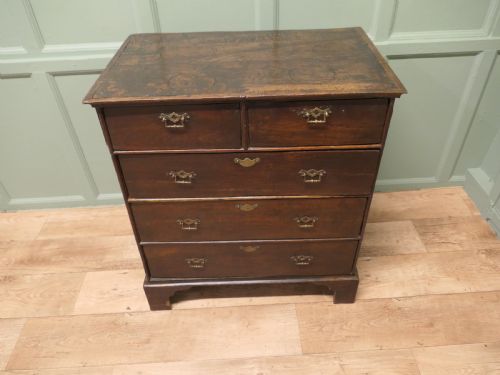
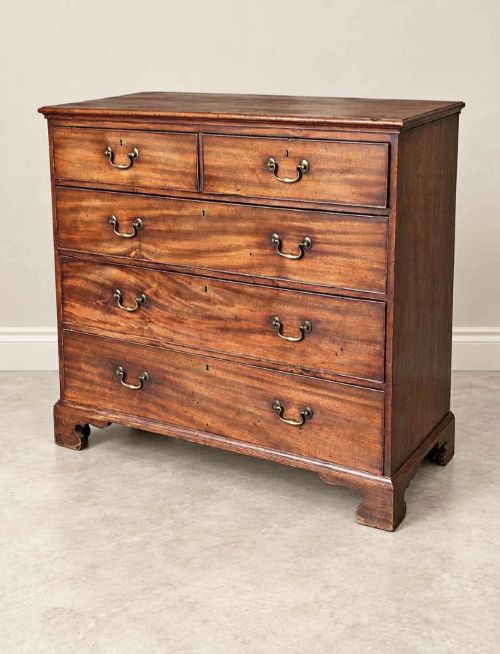
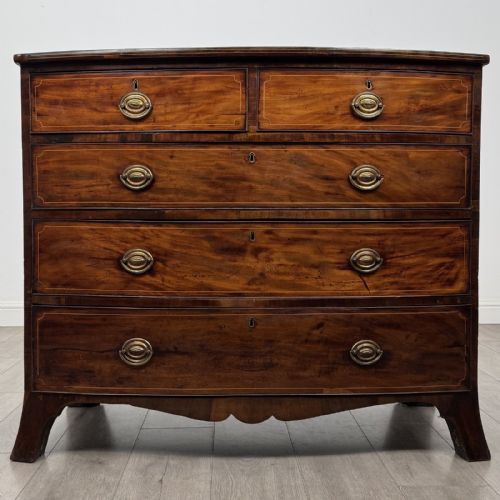
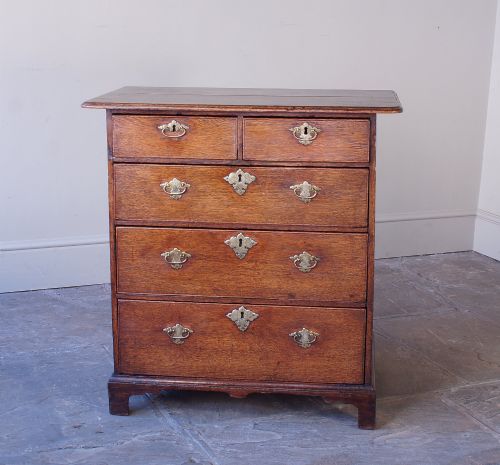
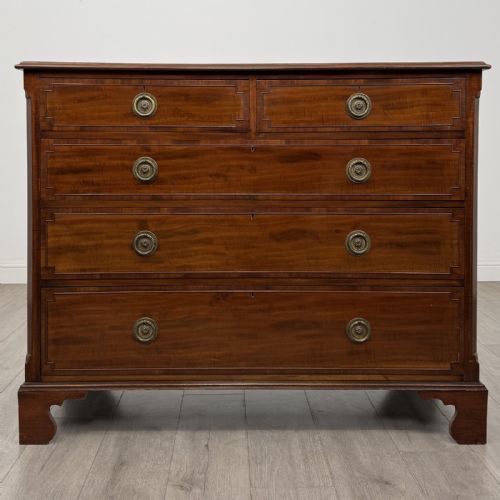
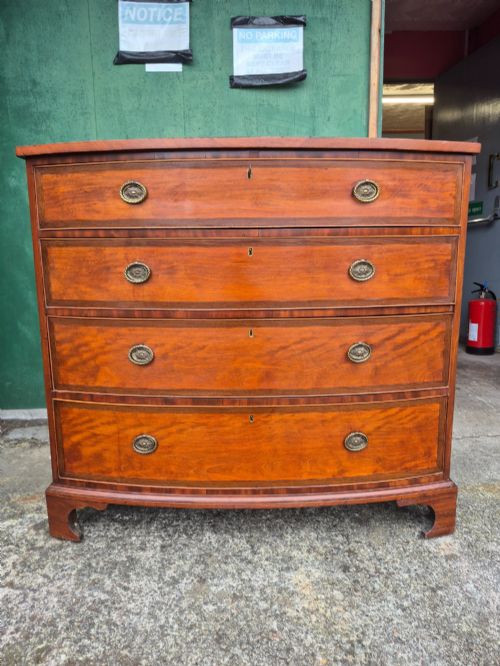
Period Tallboy Drawers
Period tallboy drawers stack storage vertical, bringing classic timber grain and proportion into rooms that need substantial presence without a broad footprint.
Period Tallboy Drawers
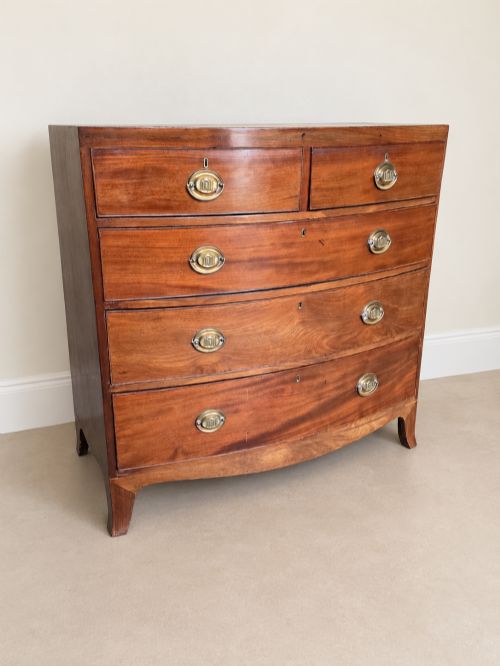
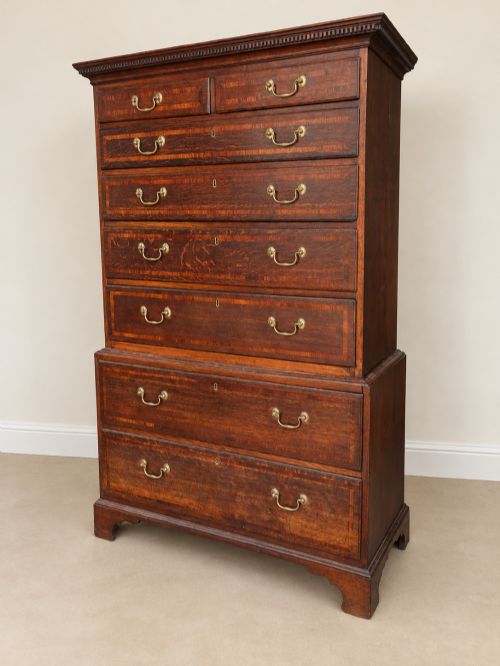
Period tallboy drawers encompass tall chests, chests-on-chests, and chests on stands originating from the seventeenth, eighteenth, and nineteenth centuries. These vertical storage pieces divide clothes organisation into multiple stacked sections, maximising vertical capacity in bedrooms and dressing chambers.
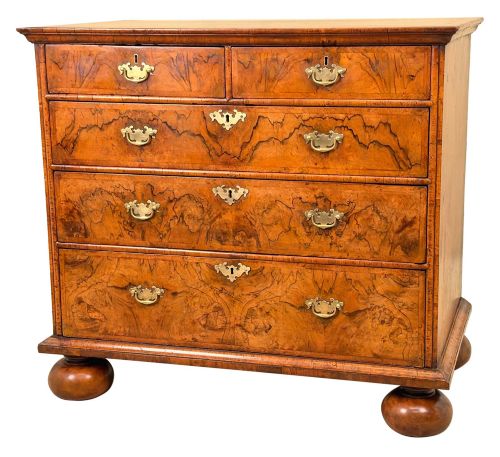
The version most commonly encountered on this page is the Georgian mahogany chest-on-chest or tall chest of drawers. Oak examples from the seventeenth century and walnut pieces from the Queen Anne and William and Mary periods also appear frequently among the listings.
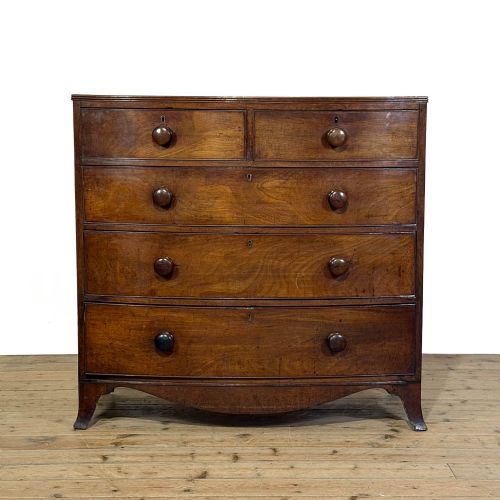
Makers utilised various forms, including bow-fronted designs and flat-fronted carcases raised on bracket feet or stands. Miniature furniture variants and secretaire iterations provide smaller or multi-functional alternatives to the standard tall vertical chest format.
Materials and construction
Cabinet makers relied heavily on solid oak for seventeenth-century pieces, transitioning to rich mahogany and figured walnut veneers as the eighteenth century progressed. Satinwood and flame mahogany veneer added decorative contrast on drawer fronts and cornices.
Joinery techniques involved hand-cut dovetails for drawer construction and pegged mortise and tenon frames for earlier carcases. Brass drop handles, escutcheons, and bracket feet completed the structural and decorative assembly.
Period Tallboy Drawers Retail Price Guide 2026
Typical asking prices for period tallboy drawers among the pieces listed under this phrase on Sellingantiques today, from the lower quarter to the upper quarter. They describe what is for sale here now, not the wider market.
Secret compartments hidden behind cornice mouldings reward owners who investigate the topmost reaches of historic tall chests.
Quality variations
Depth of timber figure and the selection of matching veneers dictate visual hierarchy across drawer fronts. Pieces utilising highly figured flame mahogany or symmetrical walnut oyster veneers sit at the upper end of the range.
The integrity of original brass hardware, surface patination, and uncompromised internal drawer linings separate superior examples from those with extensive timber replacement or modern modifications.
J Moorcroft
The Period Tallboy Drawers Glossary
- Tallboy
- A chest of drawers built vertically, typically comprising one chest stacked upon another or upon a low stand. This configuration doubles the storage capacity while preserving floor space.
- Chest-on-chest
- A tall storage unit formed by a smaller upper chest resting directly on a larger lower chest. This two-part construction aids movement up stairwells.
- Oyster veneering
- A decorative technique slicing small branches transversely to produce circular rings of grain resembling oyster shells. Cabinet makers arranged these patterns closely across seventeenth-century drawer fronts.
- Bracket foot
- A structural support projecting from the lower corners of a carcase, shaped like a bracket. These feet lift the weight of the tall chest cleanly off the floor.
- Secretaire
- A drawer fitted with a drop-front writing surface and internal pigeonholes. It combines desk functionality with standard drawer storage.
Period Tallboy Drawers: Frequently Asked Questions
How do I clean period wood?
Dust surfaces regularly with a dry, soft cloth to prevent particulate accumulation. Avoid silicone sprays and modern household detergents that strip historic wax finishes.
Apply a traditional beeswax polish sparingly when the timber appears dry, buffing gently to maintain the natural sheen. Keep tall furniture away from direct heat sources and strong sunlight to prevent timber splitting.
Can tallboys fit low ceilings?
Measure the total vertical clearance of the room carefully before selecting a tall chest or chest-on-chest. These pieces demand significant height due to their stacked construction.
Account for cornice overhangs and ensure adequate clearance for tilting the unit upright during installation. Low-ceilinged spaces suit standard chests rather than multi-tiered tallboys.
How do I tell oak from mahogany?
Oak displays prominent medullary rays and an open, coarse grain texture visible to the naked eye. Seventeenth and early eighteenth-century pieces typically utilise this robust native timber.
Mahogany exhibits a tighter, reddish-brown grain that darkens gracefully over centuries. Introduced later, it allowed cabinet makers to carve crisp details on cornices and bracket feet.
Why are some drawers lined?
Drawer linings protect delicate textiles from rough interior timber and conceal secondary woods like deal or pine. Oak and mahogany served as primary display surfaces while internal framing utilised accessible timbers.
Inspect the drawer sides and base boards to understand the original construction methods. Hand-planed surfaces inside drawers indicate traditional workshop production.