
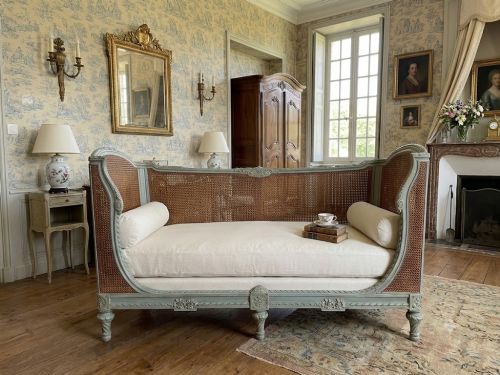


Period Style French Bench
A period style french bench brings nineteenth-century seating to a room, offering classic forms like the canapé and daybed for everyday use.
Period Style French Bench
A period style french bench encompasses nineteenth-century seating forms such as settees, daybeds, and canapés designed for domestic use. These pieces often follow traditional decorative lineages including Louis XVI, Louis XV, and French Empire aesthetics.
The versions most commonly encountered on this page date from the nineteenth century into the early twentieth century, spanning decades from eighteen hundred to nineteen thirty. Buyers find two-seater and three-seater configurations alongside daybeds built for reclining.
Makers and craftsmen working in these traditions utilised established forms like the canapé corbeille and gilt frame settees. Each item reflects historical European seating arrangements adapted for period interiors.
Materials and construction methods
Workshops utilised solid timbers including beech, walnut, and carved wood as structural foundations for these frames. Skilled artisans shaped these woods into curved rails and supportive legs characteristic of revival furniture.
Surface treatments involved painted finishes, gold paint, and giltwood application to enhance the visual weight of the timber. Caning was integrated into specific designs like daybeds to provide breathable seating surfaces.
Upholstery elements incorporate linen, damask upholstery, and other fabrics fixed across the seat frames. These textiles complete the functional seating area of each settee or sofa.
Materials recorded across these items include giltwood, cane, linen, damask upholstery, walnut, and beech.
Assessing quality and craftsmanship
The standard of carving defines the distinction between standard production and finer examples. Crisp floral motifs, precise fluting, and clean lines on the wooden frame indicate careful hand work by skilled artisans.
The integrity of the giltwood or painted finish impacts the overall presentation of the piece. Surfaces that retain their original layered application without heavy modern interference hold greater visual cohesion.
Structural stability depends on the soundness of the joinery within the beech or walnut frame. Pieces that maintain tight joints and solid load-bearing capacity demonstrate enduring utility.
The Period Style French Bench Glossary
- Canapé
- A traditional French settee or sofa featuring an upholstered seat and backrest. These items typically accommodate two or three people.
- Giltwood
- Timber treated with a thin layer of gold leaf or gold paint applied to the carved surface. This finish creates a reflective, decorative appearance on period frames.
- Louis XVI Style
- A neoclassical design movement characterised by straight lines, symmetry, and classical motifs such as fluted columns. Furniture from this tradition often displays restrained geometric proportions.
- Cane
- Strips of peeled rattan woven into an open pattern to form seat panels or backrests. This material offers flexibility and ventilation.
- Regency
- A British and European design period spanning the early nineteenth century that drew inspiration from classical antiquity and French Empire forms. Pieces from this era emphasise bold silhouettes and decorative mounts.
Period Style French Bench: Frequently Asked Questions
What is a french canape?
A canape is a traditional upholstered settee or sofa originating in France, designed for formal or domestic sitting rooms.
These pieces typically feature an exposed wooden frame supporting a padded seat and backrest for multiple occupants.
How do I date these benches?
Dating relies on examining the construction style, timber species, and decorative vocabulary associated with nineteenth-century periods.
Stylistic markers like Louis XVI straight legs or Rococo curved rails help place an item within its manufacturing era.
Where were these seats used?
These settees and daybeds served in reception rooms, salons, and bedchambers of period residences.
They provided functional seating and lounging spaces that reflected the social habits of nineteenth-century households.
Are daybeds and settees different?
Daybeds incorporate extended seating platforms intended for reclining during the day, whereas settees function primarily as upright two-seat or three-seat sofas.
Both forms share similar decorative carved wood and painted frames.
How do I care for giltwood?
Giltwood frames require gentle dusting with a soft dry cloth to prevent abrasion to the delicate gold leaf or painted surface.
Keep these items away from direct sunlight and excessive moisture to preserve the timber and finish.