

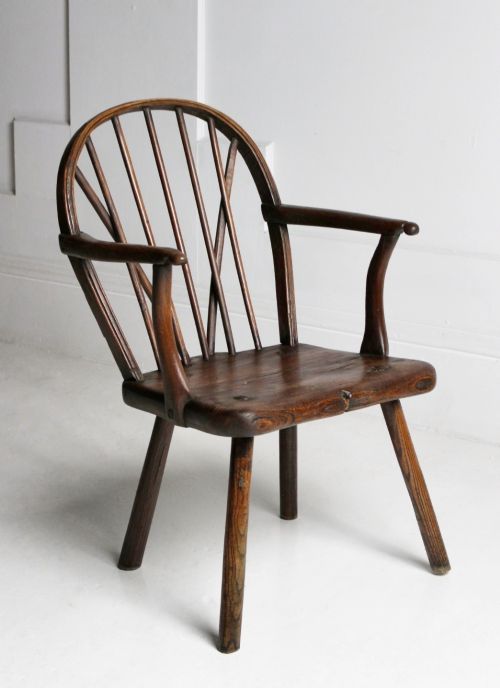


Period Spindle Armchair
These period spindle armchair options bring enduring craft and sturdy timber to your room.
Period Spindle Armchair
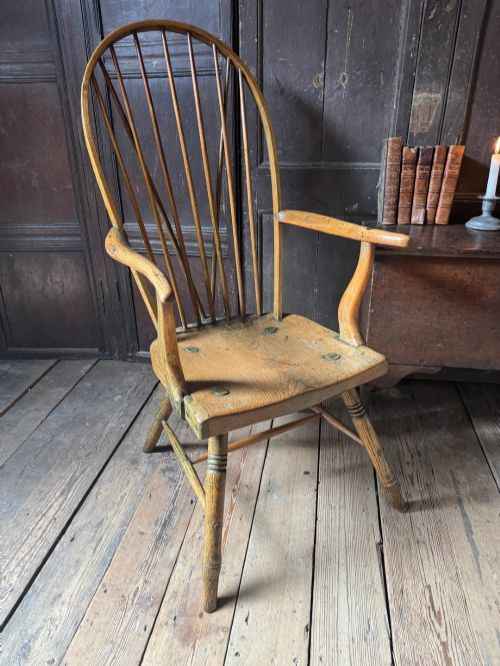
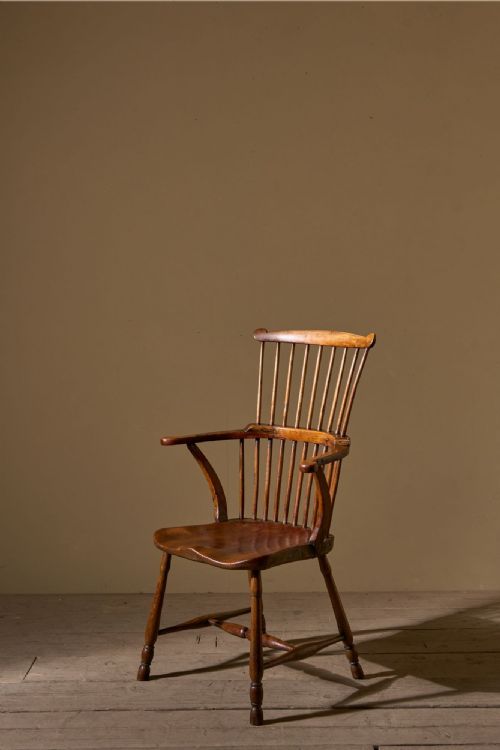
A period spindle armchair combines traditional seating forms with turned wooden uprights that support the back and arms. These chairs appear in vernacular styles from the eighteenth century onwards, often showcasing regional English designs.
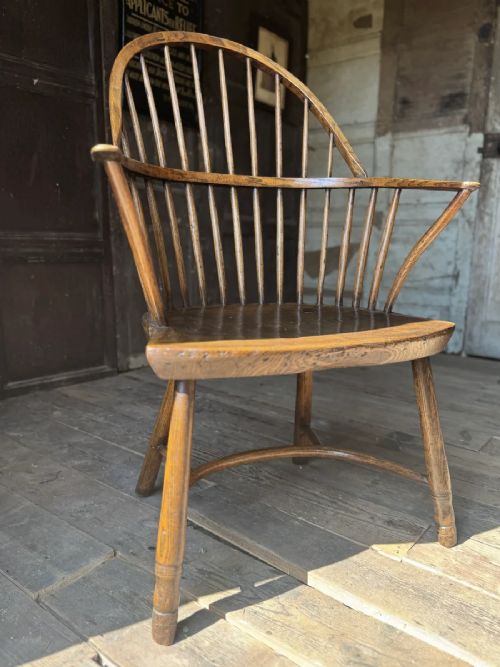
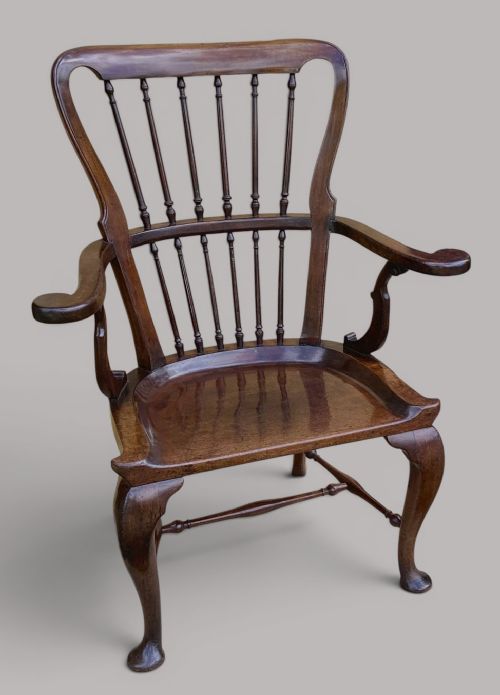
The selections on this page lean heavily towards country windsor types, stick back chairs, and salon models. You will encounter high hoop-back versions alongside child chairs and occasional mahogany armchairs.
Earlier examples utilise mixed timbers like elm and ash, while later Victorian and Edwardian pieces frequently employ mahogany or ebonised wood. Dining chairs and child chairs also surface within these varied stylistic groups.
How they were made
Joiners and chairmakers constructed these seats using native hardwoods such as ash, elm, and mahogany, often pairing different woods for the seat and the superstructure. Ash provided flexible strength for spindles and bent members, while elm offered a stable, resilient base for carved saddle seats.
Turning lathes shaped the vertical spindles and legs, while steam-bending created the curved backbows seen on windsor and hoop-back designs. Joinery relied on wedged tenons and traditional pegging to lock the framework together without excessive metal fastenings.
Period Spindle Armchair Retail Price Guide 2026
Typical asking prices for period spindle armchair among the pieces listed under this phrase on Sellingantiques today, from the lower quarter to the upper quarter. They describe what is for sale here now, not the wider market.
Materials recorded across the inventory include ash, elm, mahogany, oak, and tapestry alongside brass details.
What varies in quality
Quality rests in the harmony of the timber selection and the crispness of the spindle turnings. Earlier vernacular pieces display hand-carved saddle seats with deep contours, whereas lesser examples feature flat or thinly shaped boards.
Structural integrity depends upon the tightness of the joinery where legs and spindles meet the seat plank. Finer examples retain their original crinoline stretchers and retain a balanced stance without excessive replacement components.
The Period Spindle Armchair Glossary
- Spindle
- A slender, rounded rod of wood shaped on a lathe to form the vertical members of a chair back. These components provide structural support while keeping the chair light in appearance.
- Windsor chair
- A wooden seating form featuring a solid saddle-shaped seat into which the legs and back spindles are directly socketed. They typically combine bentwood bows with turned uprights.
- Crinoline stretcher
- A curved under-framing brace linking the legs of a chair to provide lateral stability. This feature is particularly characteristic of West Country windsor armchairs.
- Vernacular
- An architectural and furniture-making style rooted in local traditions rather than formal academic design. These pieces reflect regional materials and practical utility.
- Ebonised wood
- Timber treated with a dark finish to imitate the appearance of ebony. This technique gained popularity during the Victorian and Aesthetic periods.
Period Spindle Armchair: Frequently Asked Questions
What defines a spindle armchair?
A spindle armchair uses turned wooden uprights in the backrest and arms to distribute weight and provide open support. These chairs combine functional vernacular design with traditional carpentry.
They appear in various regional forms, ranging from country windsor types to later salon armchairs.
How do I care for antique wooden chairs?
Keep wooden chairs away from direct heat sources and sudden humidity changes to prevent timber shrinkage or cracking. Regular dusting with a dry cloth helps preserve the polished surface.
Avoid harsh chemical polishes and apply traditional wax sparingly when the wood appears dry.
What is a crinoline stretcher?
A crinoline stretcher is a curved wooden brace that connects the legs of a chair near the base. It strengthens the entire undercarriage and prevents the legs from spreading under weight.
This detail often helps identify specific regional workshop traditions, particularly in country pieces.
How are different wood types used?
Makers selected timbers based on their specific physical properties and structural requirements. Elm was frequently chosen for seats due to its resistance to splitting, while ash provided strength for bent parts.
Mahogany and ebonised woods appeared more commonly in later formal or aesthetic period seating.