



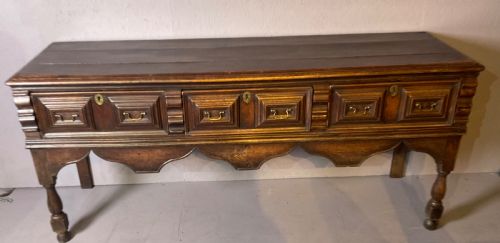


Period Serving Furniture
Period serving furniture encompasses robust oak dressers and refined mahogany side tables designed to assist dining across centuries.
Period Serving Furniture
Period serving furniture comprises tables, sideboards, dressers, and dumb waiters designed for the preparation and presentation of food. These utilitarian pieces originate from eras spanning the seventeenth century through to the Victorian period.
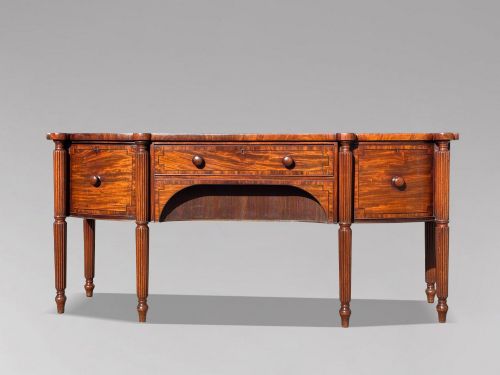
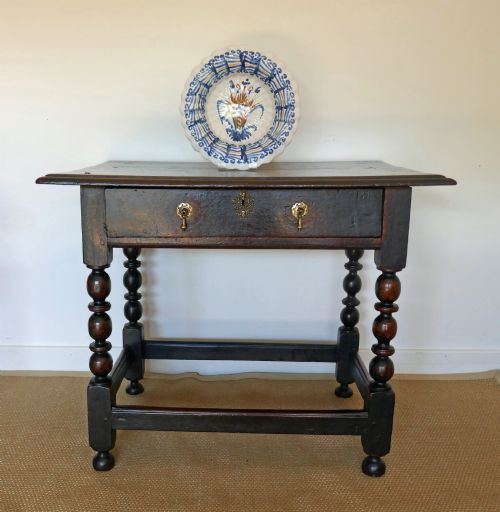
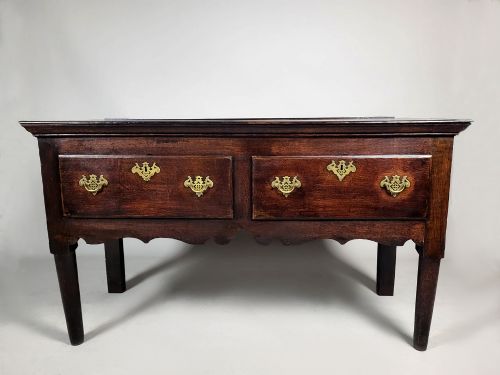
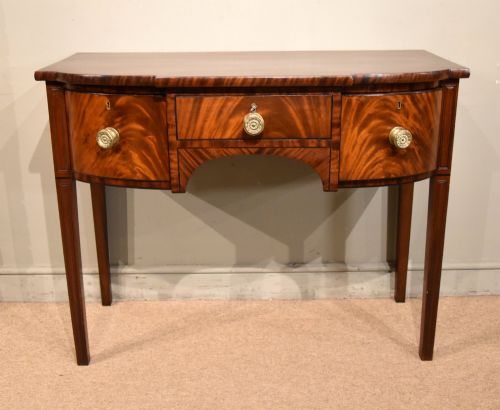
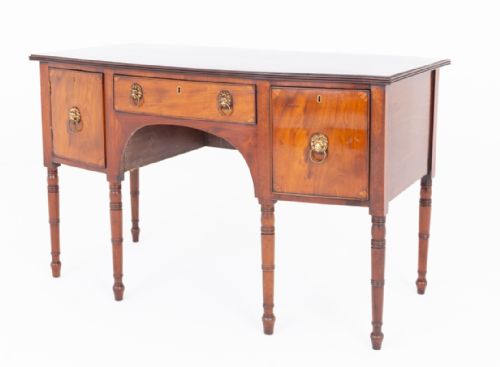
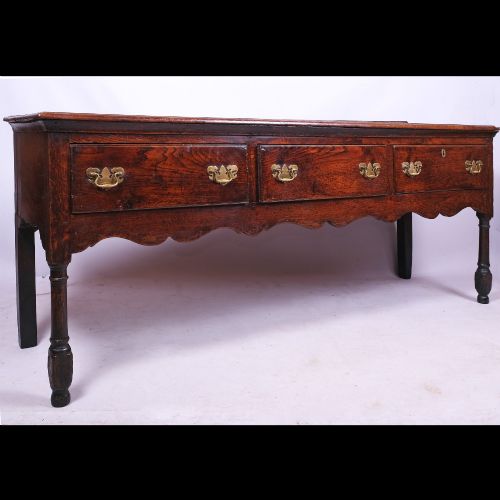
The selection centres heavily upon eighteenth-century George III mahogany serving tables and dumb waiters alongside seventeenth-century oak dresser bases and side tables. Country house pieces in oak sit alongside formal drawing-room designs in mahogany.
Buyers encounter diverse formats, from folding drop-leaf tier tables to large sideboard tables with brass fittings. Each piece reflects the dining customs and interior architecture of its specific period of origin.
Evaluating craftsmanship and proportion
Quality rests upon the selection of timber figures, such as dense flame mahogany or tightly grained oak, paired with balanced proportions. Superior pieces display crisp mouldings, original brass hardware, and careful attention to secondary timbers.
Signatures of finer workshops appear in the structural integrity of multi-tiered dumb waiters and the seamless integration of drop leaves. Altered surfaces or replaced components diminish the integrity of an antique piece.
Period Serving Furniture Retail Price Guide 2026
Typical asking prices for period serving furniture among the pieces listed under this phrase on Sellingantiques today, from the lower quarter to the upper quarter. They describe what is for sale here now, not the wider market.
Listings feature oak and mahogany pieces spanning from the seventeenth century through to the Victorian era.
Mack Williams and Gibton·Gillows
The Period Serving Furniture Glossary
- Dumb waiter
- A tiered freestanding stand with rotating or folding circular trays, designed to hold dishes without requiring servants at the table.
- Dresser base
- A low wooden sideboard featuring drawers and sometimes open potboards underneath, originating primarily in country houses.
- Side table
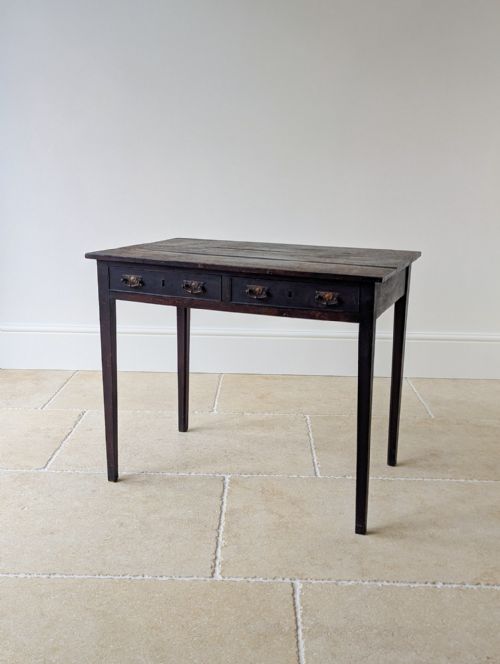
- A rectangular occasional table positioned against a wall for serving food or displaying items.
- Lowboy
- A small table with drawers, typically raised on four legs, used for serving or storage in seventeenth- and eighteenth-century interiors.
- Butler tray
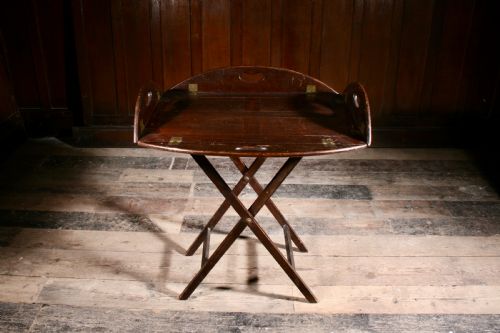
- A shallow wooden tray with hinged sides, designed to lift off its folding stand for carrying items.
Period Serving Furniture: Frequently Asked Questions
What is a dumb waiter used for?
A dumb waiter held extra plates, glasses, and dishes beside the dining table during meals. This allowed diners to help themselves without servants present.
Over time, these pieces evolved with multiple tiers, some featuring folding leaves or revolving trays to save space when not in use.
How do I tell oak pieces from mahogany?
Seventeenth- and early eighteenth-century pieces are predominantly constructed from oak, displaying an open grain and golden-brown tone. Mahogany became the favoured timber later in the eighteenth century, offering a darker reddish hue and denser grain.
Oak suits robust country furniture, whilst mahogany allows for finer carved details and veneering.
Where should I place a serving table?
Serving tables suit dining rooms or large hallways, functioning as surface space for serving food or displaying decorative objects. Their narrow depth allows them to sit flush against walls without obstructing pathways.
Butler trays on stands offer flexibility because the tray lifts off for independent use around the home.
How do I identify a George III period table?
George III period furniture dates from the reign of George III, spanning the latter half of the eighteenth century. These items frequently utilise mahogany, incorporating styles such as Sheraton with clean lines and subtle stringing.
Proportions remain classical, and construction relies on period joinery methods without modern mechanical fasteners.