

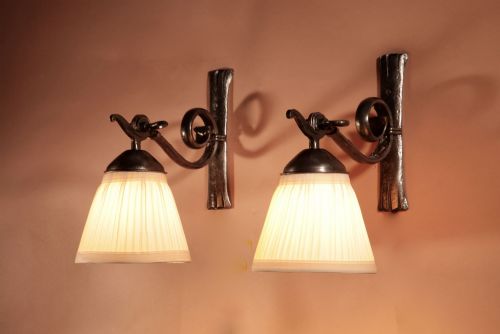

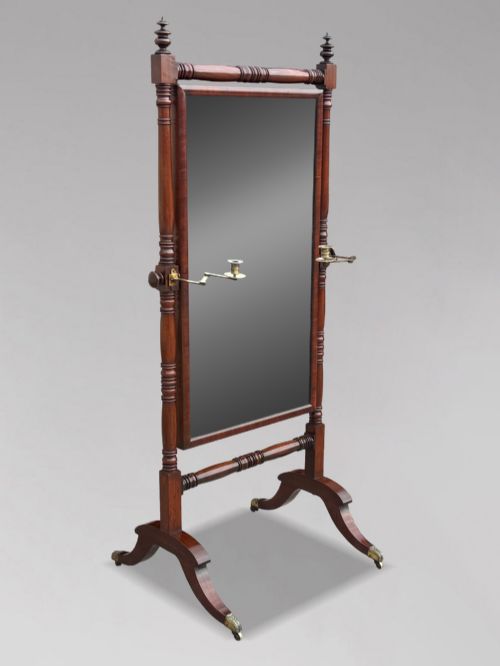
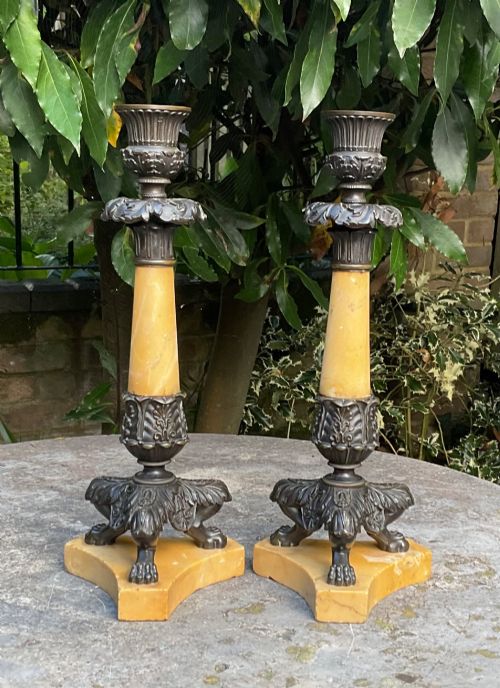
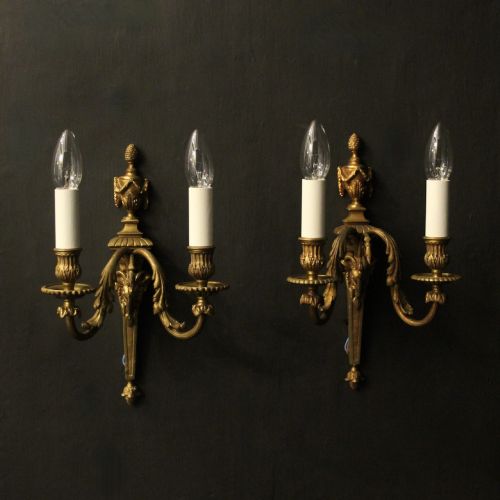

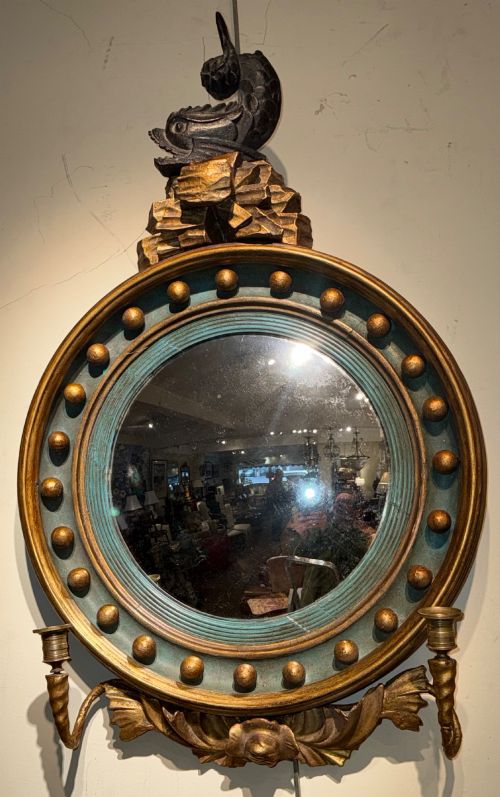

Period Sconces
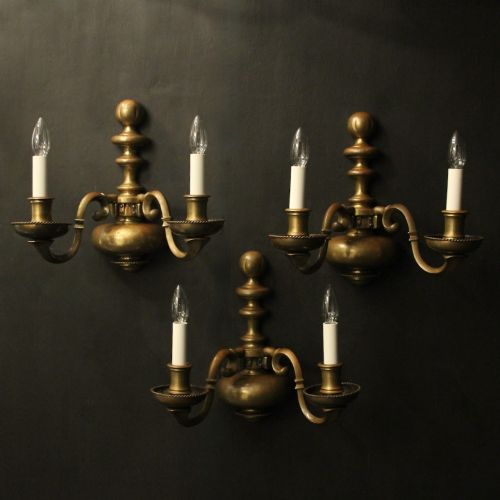
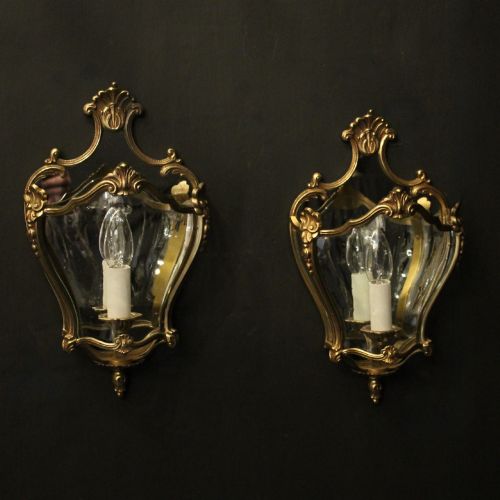
Period sconces bring candle and gas origins into electrical schemes, illuminating rooms through heavy cast bronze, giltwood and brass forms.
Period Sconces
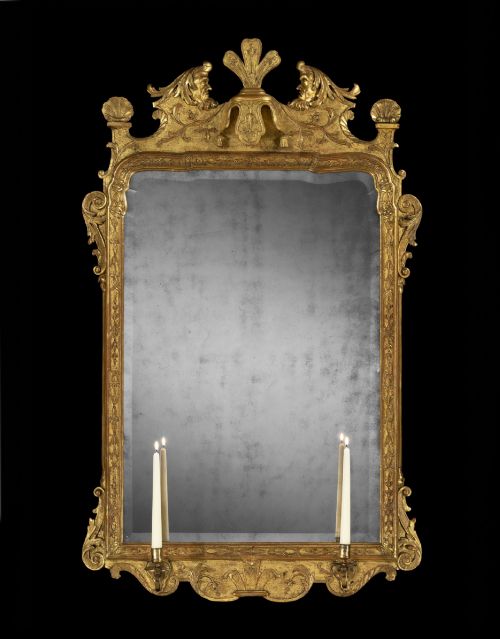
Period sconces encompass wall lights, lanterns and girandole mirrors designed to hold candles or direct illumination from walls across past centuries. When searching for period sconces, buyers encounter lighting fixtures spanning the Regency, Victorian and Edwardian eras alongside later 1930 designs.
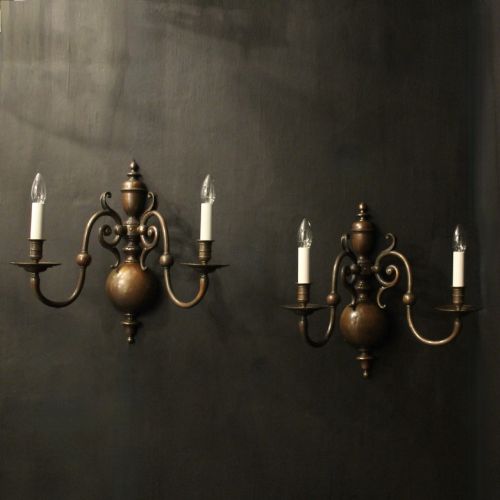
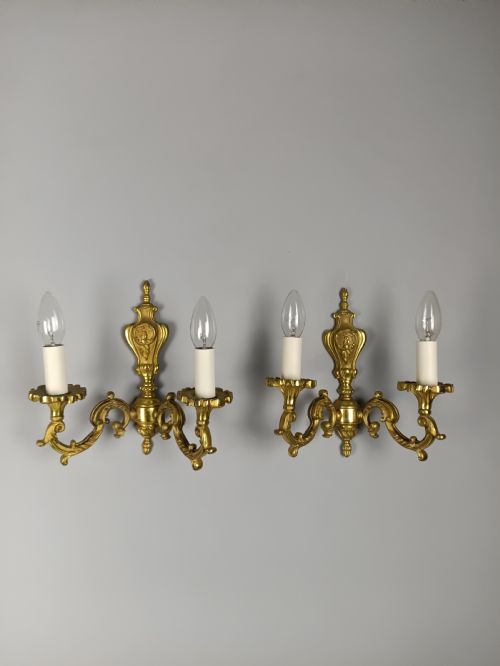
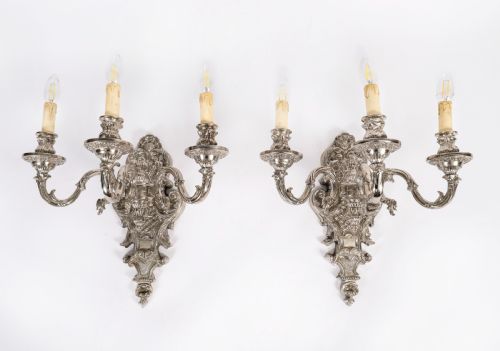
The most frequent examples on this page are matched pairs of French wall lights cast in gilded bronze or brass, often featuring twin arms. Alongside these, buyers find single lanterns, Arts and Crafts carriage style lights and convex mirrors fitted with candle arms.
Materials and construction
Foundry work dominates the construction of these fixtures, utilising cast bronze, brass and gilded metal shaped into Neoclassical, French Empire and Rococo styles. Artisans chased the metal surfaces by hand to sharpen leaf and scroll motifs before applying gilding or silver plating.
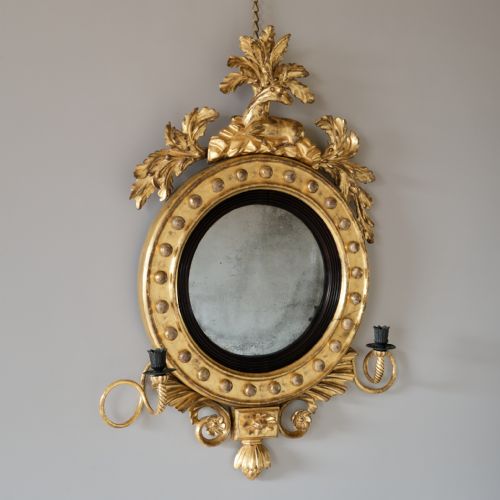
Mirrors and glass elements integrate directly into many designs, particularly in Regency girandole frames carved from giltwood and fitted with convex plates. Wrought iron, copper and chrome appear in later Art Deco and Arts and Crafts examples, demonstrating shifts in metalworking traditions.
Period Sconces Retail Price Guide 2026
Typical asking prices for period sconces among the pieces listed under this phrase on Sellingantiques today, from the lower quarter to the upper quarter. They describe what is for sale here now, not the wider market.
Griffins guard Victorian candle lamps while girandole mirrors throw candlelight across rooms designed centuries ago.
Distinctions in craftsmanship
Quality separates fixtures with crisp, deeply chased bronze and substantial cast brass from lighter stamped metal assemblies. The weight of the casting and the precision of the surface detail reveal the maker's hand in historical lighting.
Original mercury gilding or heavy fire gilding holds its depth and lustre differently than modern chemical treatments. Retaining original components such as backplates, candle drip pans and matching arms distinguishes the finer survivors from assembled pairs.
Gillow
The Period Sconces Glossary
- Girandole
- A wall mirror featuring one or more candle arms attached to the frame. These reflective sconces multiplied candlelight in dark rooms.
- Giltwood
- Timber carved and coated with a fine layer of gold leaf. This material defines many Regency and earlier decorative mirrors.
- Ormolu
- Gilded bronze used extensively in French decorative arts and lighting fixtures. The technique involves applying a gold amalgam to bronze through heat.
- Convex mirror
- A round looking glass with a curved surface that captures a wide field of a room. Regency examples often incorporate eagle crests and candle sconces.
- Applique
- A French term frequently applied to wall-mounted lighting fixtures. These pieces project from the wall to distribute illumination.
Period Sconces: Frequently Asked Questions
How do I wire old sconces safely?
Wiring historic wall lights requires professional rewiring to meet modern electrical safety standards while preserving original backplates and channels. Conduit and internal cables must be threaded carefully through slender arms without damaging antique metalwork.
Qualified electricians can adapt older French and English fixtures to take modern small SES or BC lamp holders. Maintaining the integrity of the original chassis ensures the piece mounts securely to a wall junction box.
Where should I mount period sconces?
Placing wall lights at eye level or slightly above ensures proper illumination distribution without glare. Dining rooms, hallways and drawing rooms historically utilised pairs of sconces to flank mirrors, doorways or fireplaces.
Sizing the fixture to the wall space prevents the piece from appearing lost on large expanses of plaster or crowded by surrounding furniture. Height adjustments must account for whether the sconces originally held candles or electric lamps.
How do I clean gilded bronze sconces?
Dusting gilt bronze and brass requires a soft, dry brush to lift debris from recessed chased ornament without abrading the surface. Moisture and chemical polishes strip historical patination and gold leaf from antique metal.
Professional conservation cleaning is necessary if heavy grime obscures the detail of French Empire or Rococo castings. Gentle maintenance preserves the accumulated tone that signals age.
How do I date a brass wall light?
Dating hinges on identifying stylistic markers, casting methods and fixing screws associated with specific periods like Regency, Victorian or Art Deco. Hand-filed components and threaded fasteners often indicate earlier manufacturing techniques.
Comparing the decorative vocabulary against documented design manuals helps narrow the decade of production. Materials such as chrome and green enamel point firmly to 1930s modernist output.