



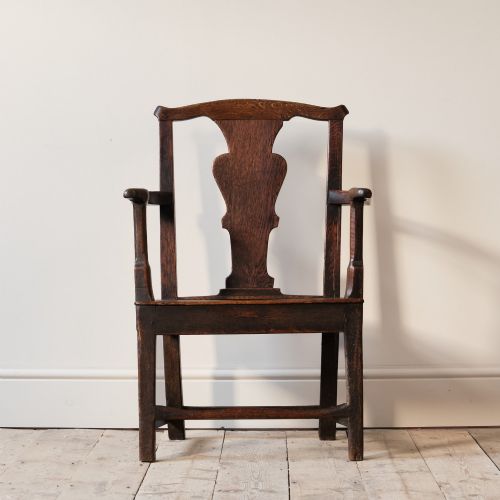
Period Rustic Armchairs
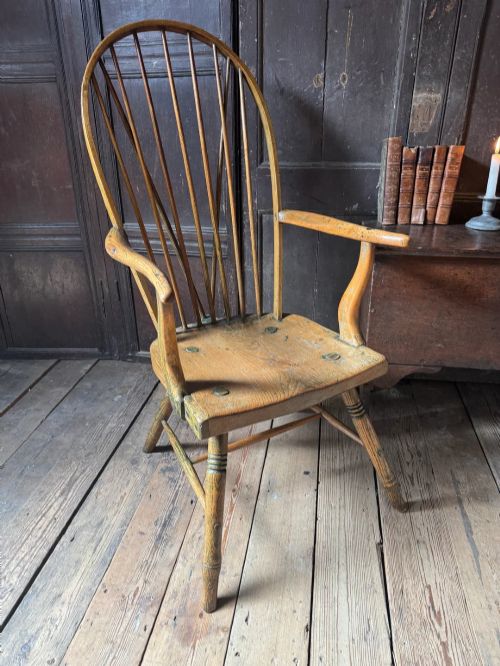
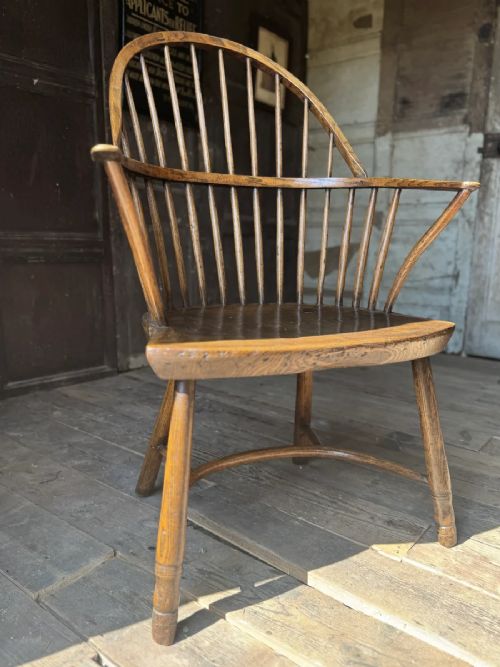
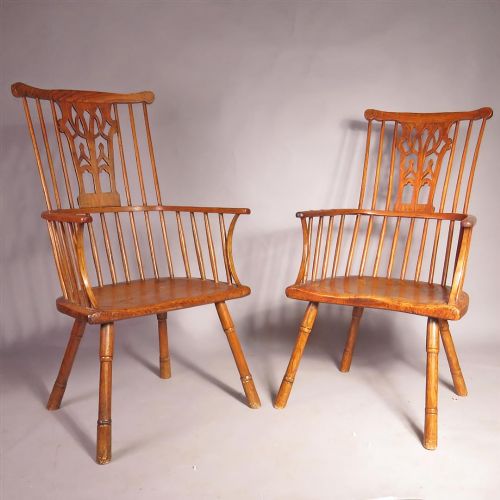
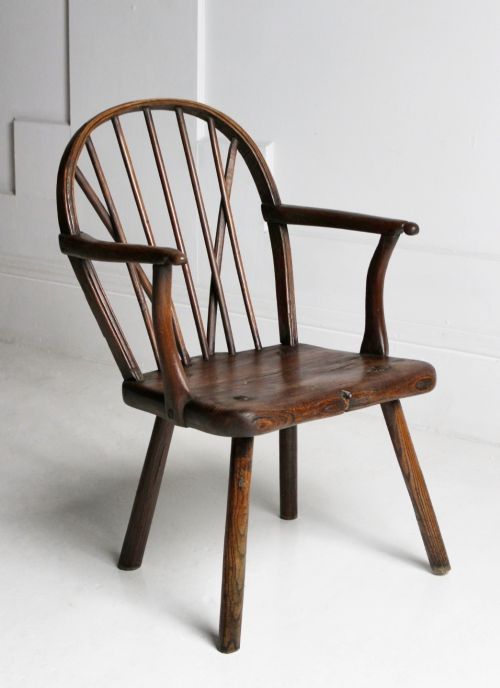
These period rustic armchairs are solid timber seats of country manufacture, built to last and carrying the honest marks of daily household use.
Period Rustic Armchairs
When you search for period rustic armchairs, you are looking at utilitarian seating produced by regional makers rather than city workshops. These pieces include Windsor armchairs, wainscot chairs, ladderbacks, and vernacular stick backs designed for comfort and durability in country homes.
The selections span from the seventeenth century through the Edwardian era, taking in Georgian country pieces and Victorian vernacular forms. You will find standard armchairs alongside child chairs and high chairs built for domestic life.
Elm, ash, and oak dominate these listings, often paired with rush seats or constructed entirely from solid timber. The forms range from high hoop-backs with crinoline stretchers to low fireside seats and sculptural tree seats.
How they were made
Makers built these chairs using native hardwoods like oak, elm, ash, and yew, selecting timber for strength in the legs, arms, and spindles. Solid oak forms the structure of wainscot and panelled chairs, while flexible ash and elm suit the bent parts of Windsor hoops.
Construction relies on traditional joinery, with pegged mortise and tenon joints in panelled oak frames and wedged tenons in Windsor seats. Rush seating provides a woven platform for ladderbacks and vernacular chairs, fastened directly to the frame.
Period Rustic Armchairs Retail Price Guide 2026
Typical asking prices for period rustic armchairs among the pieces listed under this phrase on Sellingantiques today, from the lower quarter to the upper quarter. They describe what is for sale here now, not the wider market.
Some chairs retain the distinct tooth marks of the family dog from the eighteenth century.
What varies in quality
Quality rests in the balance of the proportions and the integrity of the timber grain selected by the original maker. Better examples show careful turning on stretchers and spindles, along with well-sculpted seats that follow the natural growth of the wood.
The survival of original surfaces and uncompromised joinery elevates a piece above those altered by later repairs or replacement components. Wear on the footings and arms reveals the age and authenticity of the timber without diminishing its structural character.
The Period Rustic Armchairs Glossary
- Windsor armchair
- A wooden chair featuring a solid saddle-shaped seat into which the legs and back spindles are directly inserted. These typically combine elm seats with ash or yew superstructures.
- Wainscot chair
- An early heavy wooden armchair constructed from panelled oak with arms and a high back. They belong to the seventeenth century and represent a more formal domestic seating style.
- Vernacular
- Objects designed and built by local tradesmen using regional traditions rather than polite architectural patterns. These pieces prioritise practical function over high-style ornamentation.
- Crinoline stretcher
- A curved under-stretcher linking the legs of a Windsor chair to provide rigidity. The shape resembles the hoops of a crinoline skirt popular in period dress.
- Stick back
- A chair design where turned wooden spindles form the back rest, secured into a solid seat base. This method is common in country vernacular seating.
Period Rustic Armchairs: Frequently Asked Questions
What is a vernacular armchair?
A vernacular armchair is a piece built by local craftsmen using traditional regional methods rather than following metropolitan design patterns.
These chairs focus on practical utility and draw on available local timbers like elm, ash, and oak.
How do I identify a Windsor chair?
A Windsor chair is characterised by a thick wooden seat that acts as the central hub for all components.
Legs and back spindles fit directly into bored holes in the seat slab, often supported by curved stretchers below.
Where were country armchairs made?
These chairs originated in rural workshops across Britain, with specific regional styles developing in areas like the West Country or Wales.
Makers utilised the hardwoods growing near their workshops, which accounts for the mix of oak, ash, and elm found in the pieces.
How should I care for a rush seat?
Rush seats require a stable indoor humidity level to prevent the natural fibres from drying out and becoming brittle.
Keep them away from direct heat sources and clean gently with a dry brush to remove dust from the weave.