



Period Pier Table
A period pier table brings architectural elegance to a hallway or drawing room, designed originally to stand neatly between tall windows.
Period Pier Table
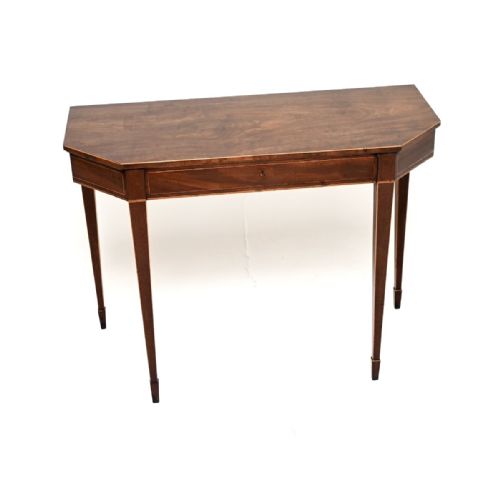
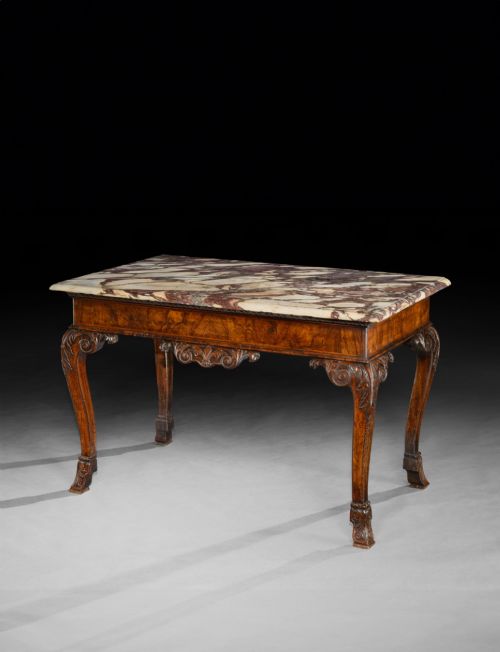
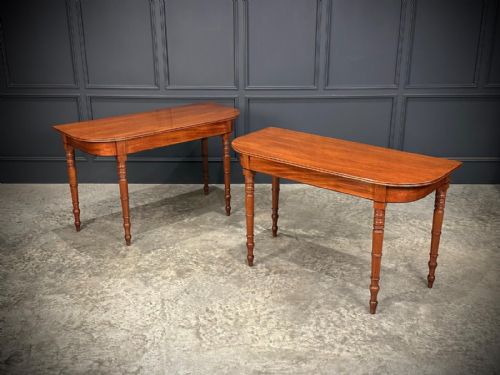
A period pier table is a specialised form of side or console table, designed to fit a specific wall space between windows. The pieces seen here span the eighteenth and nineteenth centuries, taking in Georgian, Regency, and French Empire styles alongside later revivals.
Buyers will most frequently encounter mahogany and rosewood examples from the Regency and George III periods, often featuring demi-lune or rectangular tops. Walnut and satinwood appear with comparable regularity, while French styles introduce gilt-wood, parcel-gilding, and inset mirrors.
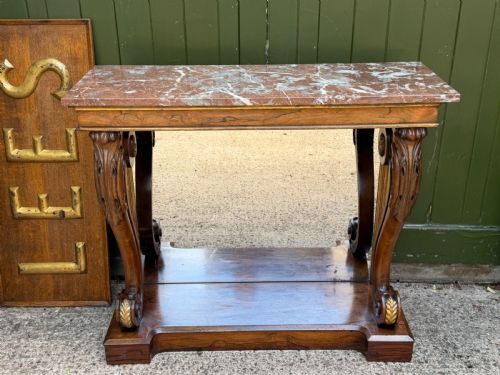
Many of these tables incorporate stone surfaces, with carrara and other marble tops appearing alongside timber. Forms range from simple architectural side tables to elaborate console tables paired with mirrors.
Materials and construction methods
Cabinetmakers utilised dense timbers such as mahogany, rosewood, and walnut for the primary frames, often applying flame veneer or satinwood to create decorative contrast. Boxwood stringing and neo-classical marquetry frequently accent the flat surfaces of late eighteenth-century examples.
Heavy marble slabs form the tops of many Regency and French Empire pieces, requiring robust underframes to support the stone safely. Gilt-wood and parcel-gilt details on walnut or softwood carcasses involve traditional carving and gilding techniques found in French and English workshops.
Period Pier Table Retail Price Guide 2026
Typical asking prices for period pier table among the pieces listed under this phrase on Sellingantiques today, from the lower quarter to the upper quarter. They describe what is for sale here now, not the wider market.
Several tables come paired with their original mirror backs, ensuring they have spent two centuries watching rooms reflect past lives.
Factors that distinguish individual pieces
The sophistication of the timber figure and the precision of the inlay set finer examples apart from simpler pieces. Well-figured flame mahogany and carefully matched rosewood demonstrate superior material selection by the original cabinetmaker.
The crispness of carved details, whether in the acanthus leaves of a George II walnut table or the gilded mounts of a French Empire console, indicates the skill of the hand that shaped it. Original marble tops and integrated mirror backs also contribute significantly to the standing of a piece.
The Period Pier Table Glossary
- Demi-lune
- Having a half-moon shape with a curved front and a flat back designed to sit flush against a wall. This profile is particularly common in George III satinwood and mahogany examples.
- Parcel-gilt
- Partially gilded with gold leaf to highlight specific carved details while leaving the underlying timber visible. It appears frequently on walnut and rosewood console tables.
- Console table
- A table supported by wall brackets or console legs rather than four independent vertical supports. Many nineteenth-century pier tables adopt this structural form.
- Gilt-wood
- Timber, often lime or pine, that has been coated with thin layers of gold leaf. This finish defines many French Empire and revival pier tables.
Period Pier Table: Frequently Asked Questions
Where should I place a pier table?
These tables find their traditional home against the wall space situated between two tall windows, often beneath a matching wall mirror. Their shallow depth allows them to sit comfortably in narrow hallways or drawing rooms without obstructing movement.
Modern interiors often use them as focal points in entrance halls or living spaces to display decorative objects or lamps. The inclusion of a flat marble or timber top provides a practical surface while maintaining a slender profile.
Are marble tops original to these tables?
Many console and pier tables were designed specifically to carry heavy marble slabs, particularly those originating from French Empire and Regency workshops. Carrara and other fine stones provide a durable and cool surface that contrasts with the timber frame.
Inspect the underside of the top and the supporting rails to see how the stone rests within the structure. Original marble usually shows appropriate signs of age and fits the rebate of the frame precisely.
What is the difference between a pier table and a console table?
A pier table is strictly designed to stand against the pier, which is the solid wall space between two windows. A console table is a broader category that includes tables fixed to a wall with brackets or resting on front legs.
In practice, historical cabinetmakers used the terms interchangeably as console forms evolved to suit pier spaces during the eighteenth and nineteenth centuries. Both types prioritize a flat front and a shallow depth to hug the wall.