




Period Parlour Chairs
Period parlour chairs gather the elegance of Regency, Victorian, and Edwardian sitting rooms into seating designed to anchor a traditional interior.
Period Parlour Chairs
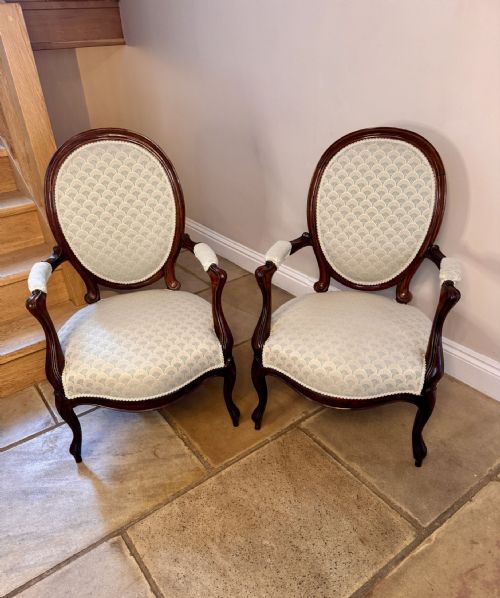
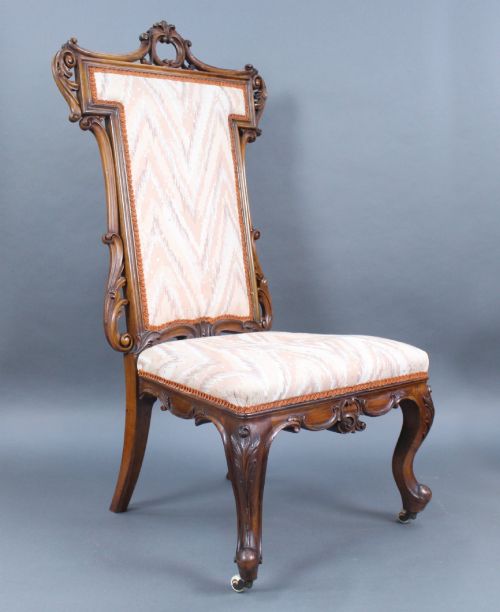
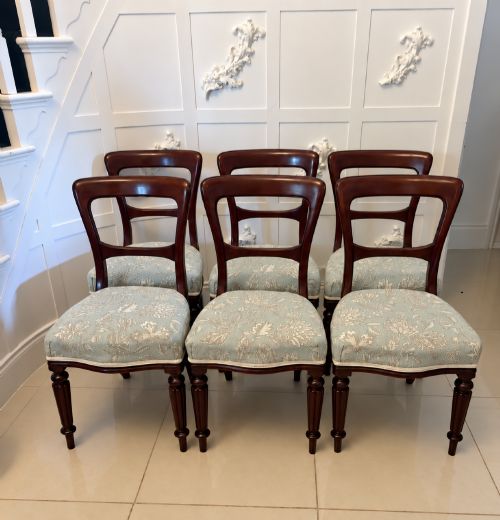
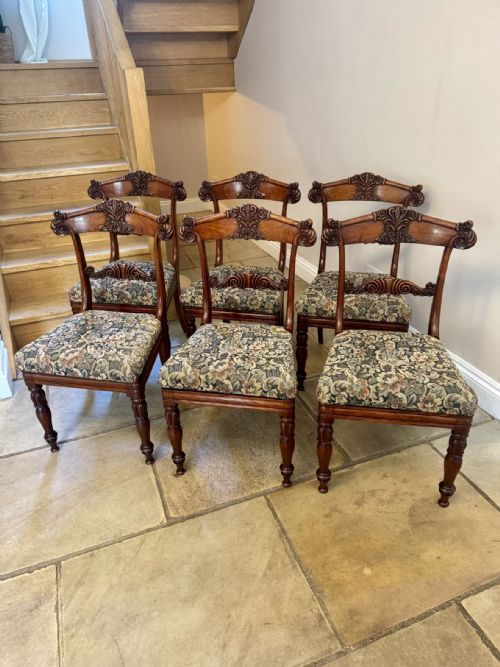
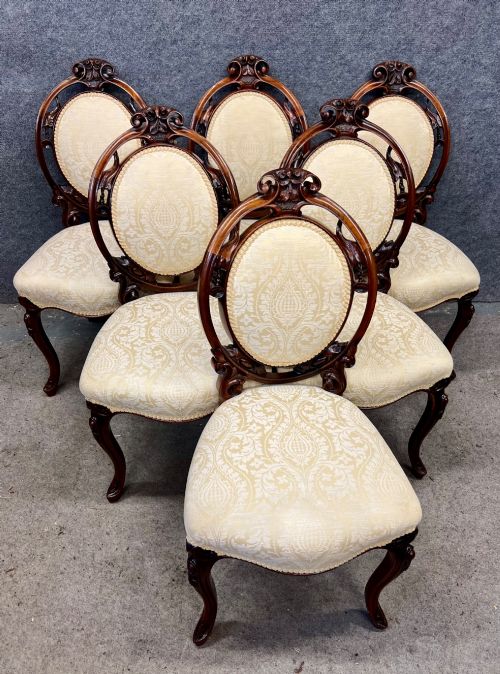
Period parlour chairs encompass a diverse range of seating designed for formal reception rooms, spanning dining chairs, occasional chairs, and matching salon suites. When exploring period parlour chairs, buyers most frequently encounter mid-to-late Victorian walnut and mahogany examples alongside refined Regency rosewood sets.
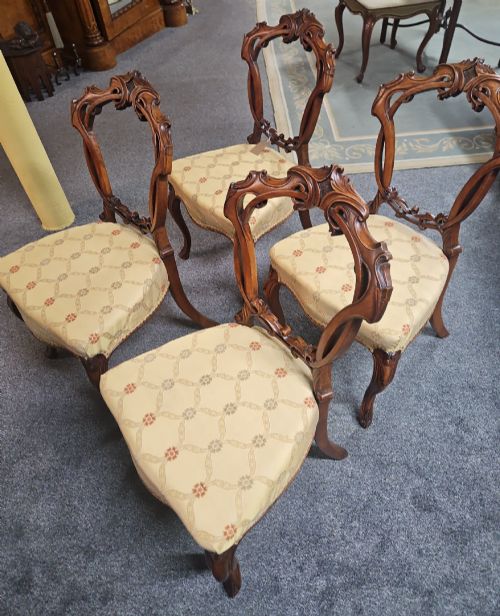
The selection ranges from individual carved armchairs and gilt fauteuils to large sets of dining chairs and multi-piece upholstered salon suites. These pieces reflect the shifting social habits of the nineteenth and early twentieth centuries, moving from the restrained lines of the Regency era to the ornate curves of the Victorian Rococo Revival.
Makers and manufacturers of the period utilised robust hardwoods to create both functional dining seats and decorative occasional pieces intended for display. The inventory demonstrates a strong representation of mahogany and walnut framing, frequently paired with contemporary textile upholstery or recent reupholstery in traditional brocades.
Materials and Construction
Cabinet makers relied primarily on dense hardwoods such as mahogany, walnut, and rosewood to construct the structural frames of these seats. These timbers provided the necessary strength for intricate hand carving on the crest rails, cabriole legs, and reeded supports.
Upholstery methods involved deep springing systems, horsehair stuffing, and heavy textile coverings ranging from simple fabric to burgundy deep pile brocade. Metal accents, including brass castors and gilt finishes on French-influenced frames, completed the decorative scheme of high-status seating.
Period Parlour Chairs Retail Price Guide 2026
Typical asking prices for period parlour chairs among the pieces listed under this phrase on Sellingantiques today, from the lower quarter to the upper quarter. They describe what is for sale here now, not the wider market.
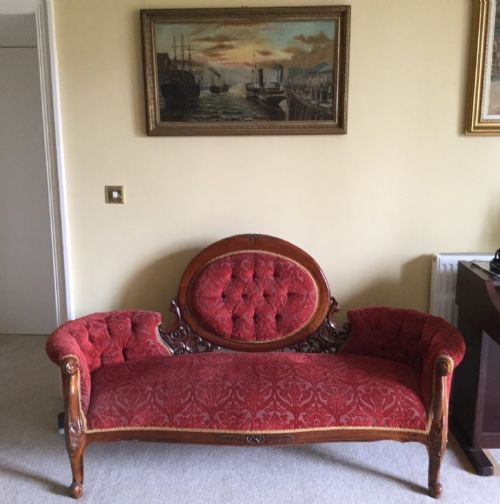
Couples once used double-ended sofas for polite conversation, allowing them to sit side by side while facing opposite directions.
Distinctions in Quality
The division between standard domestic seating and superior parlour furniture rests upon the depth and crispness of the timber carving. Finer examples display meticulous hand-worked detail along the walnut or mahogany rails, whereas lesser pieces rely on simpler, machine-cut profiles.
Cohesion within larger sets significantly influences the standing of a group, particularly when matching sets of six, twelve, or complete salon suites survive intact. Original timber patination, intact structural joinery, and the quality of the underlying sprung frame further separate ordinary chairs from exceptional pieces.
Jas James Shoolbred
The Period Parlour Chairs Glossary
- Fauteuil
- An open-armed upholstered armchair with exposed wooden framing, typically originating from French design traditions. These chairs offer a lighter visual profile than fully padded armchairs.
- Reeded legs
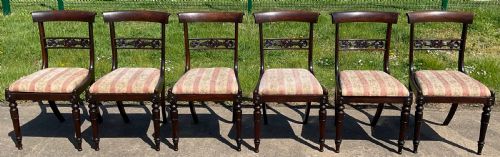
- Cylindrical furniture legs decorated with parallel convex mouldings that resemble bundled reeds. This decorative turning appears frequently on Regency and Victorian mahogany dining chairs.
- Salon suite
- A matching set of seating furniture, usually comprising a settee and several matching armchairs or occasional chairs. These suites were designed to furnish formal drawing rooms in a unified style.
- Brocade
- A rich, heavy shuttle-woven fabric featuring raised decorative patterns, often utilised for the reupholstery of period sofas and settees. It provides both visual texture and historical authenticity.
Period Parlour Chairs: Frequently Asked Questions
How do I date a Victorian parlour chair?
Dating relies heavily on observing the timber choice, leg style, and carving motifs. Early Victorian pieces often retain heavy mahogany frames with classical influences, while later decades favour walnut with exuberant Rococo Revival curves.
The progression from Regency reeded legs to mid-century cabriole supports provides a reliable chronological guide. Examining construction methods inside the seat frame further clarifies the manufacturing decade.
Were these chairs used for dining?
Many chairs categorised under this heading served around formal dining tables rather than exclusively in parlours. Larger sets of six or twelve mahogany and rosewood chairs were built specifically for substantial dining rooms.
Smaller occasional chairs and salon suites remained in the drawing room for entertaining guests. The distinction typically rests upon the height of the seat and the presence of arms.
What is an occasional chair?
An occasional chair is a movable, decorative seat designed to be brought into use on specific occasions rather than kept in a permanent spot. These pieces often featured elaborate walnut carving or ebonised finishes for visual impact.
They populated corners of parlours and drawing rooms to supplement primary seating when visitors arrived. Their lighter scale made them simple to reposition around the room.
How should I care for antique upholstery?
Maintaining textile upholstery requires regular gentle vacuuming with a soft brush attachment to prevent dust accumulation. Direct sunlight should be avoided to prevent the fading of delicate fabrics and brocades.
For wooden frames, applying a traditional beeswax polish nourishes the mahogany or walnut surface. Professional conservation is recommended for deep cleaning or repairing antique sprung bases.