

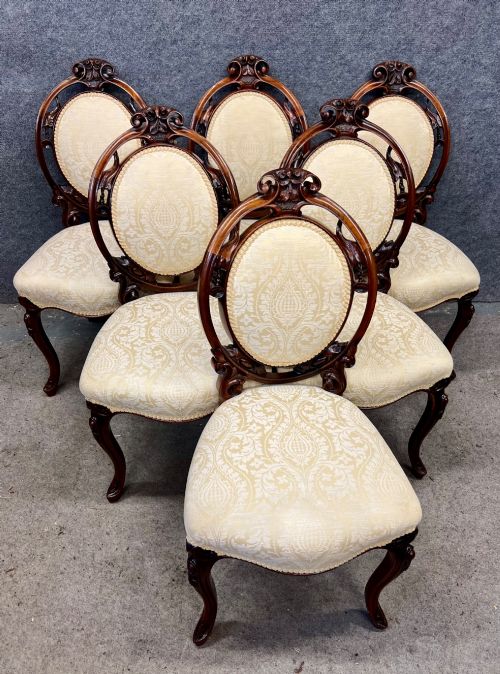


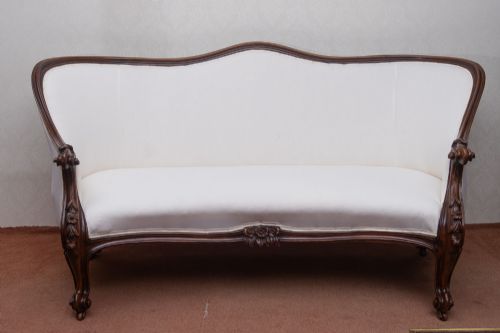


Period Parlor Seating
Period parlor seating comprises the dining chairs, sofas, and occasional chairs that furnished nineteenth-century rooms, offering solid timber frames and traditional upholstery for daily use.
Period Parlor Seating
Period parlor seating encompasses dining chairs, sofas, settees, and occasional chairs originating from the Regency, Victorian, and Edwardian eras. Buyers searching for period parlor seating will primarily encounter matching sets of dining chairs alongside larger upholstered sofas and individual parlor chairs.
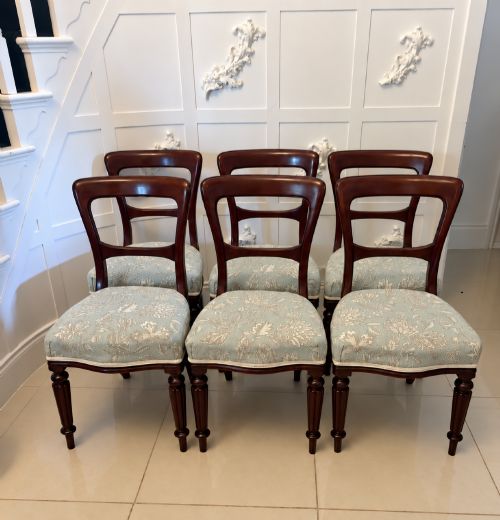
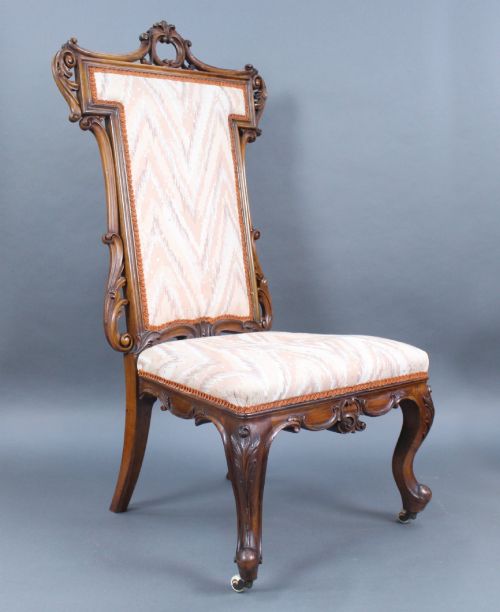
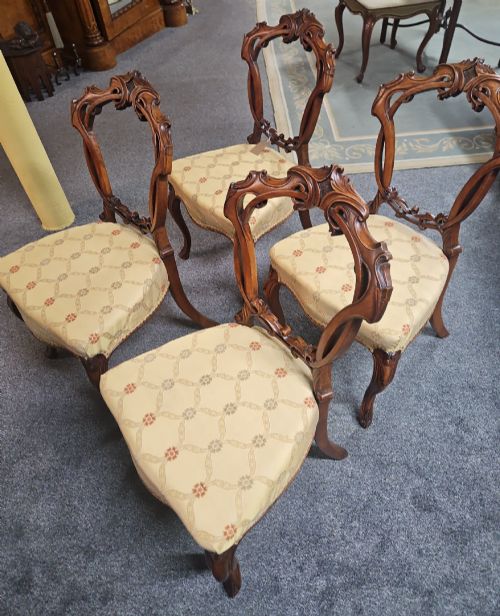
The dominant forms documented on this page range from sets of six mahogany dining chairs to carved walnut occasional chairs and giltwood French-style settees. These pieces reflect the formal entertaining habits of the nineteenth century, built for parlors, drawing rooms, and dining spaces.
Origins span formal English designs in mahogany and rosewood alongside continental influences such as Louis XVI style giltwood fauteuils. The selection balances sturdy seating meant for the dining table with decorative framed sofas intended for the formal reception room.
Materials and construction
Construction relies heavily on dense hardwoods, specifically mahogany, walnut, and rosewood, chosen for their structural strength and capacity for detailed carving. Frames are joined using traditional woodworking joints rather than modern fasteners, ensuring long-term stability across generations.
Upholstery incorporates traditional textile materials layered over webbing and springs, finished with fabric coverings that range from plain textiles to patterned upholstery fabric. Giltwood appears on continental-influenced pieces, applying gold leaf over carved wooden bases.
Period Parlor Seating Retail Price Guide 2026
Typical asking prices for period parlor seating among the pieces listed under this phrase on Sellingantiques today, from the lower quarter to the upper quarter. They describe what is for sale here now, not the wider market.
Meticulous Victorians insisted on matching wood tones down to the grain, ensuring dining chairs blended seamlessly even when pulled away from the table.
Factors that separate the grades
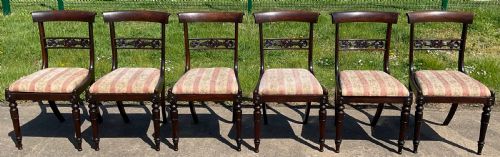
The completeness of matching sets heavily influences overall desirability, particularly when encountering matched sets of six or twelve dining chairs. Original timber surfaces and undisturbed joinery demonstrate superior preservation compared to heavily altered examples.
The Period Parlor Seating Glossary
- Giltwood
- Timber treated with a thin layer of gold leaf applied over a prepared gesso surface. It appears on decorative nineteenth-century French seating.
- Reeded
- A decorative moulding formed of parallel convex strips resembling bundled reeds. It is frequently seen carved into the legs of Regency and Victorian chairs.
- Settee
- A medium-length upholstered wooden bench with a back and armrests designed for two or more occupants. These served as primary seating in nineteenth-century parlors.
- Rosewood
- A heavy, dark timber with distinct figuring utilised in high-grade Regency dining chairs. Its natural density allowed for smooth turning and polishing.
Period Parlor Seating: Frequently Asked Questions
What is the difference between a settee and a sofa?
Historically, settees tend to be lighter, two-seat wooden framed pieces with partial upholstery, whereas sofas are larger and more heavily padded for full reclining comfort.
In nineteenth-century parlors, settees often sat against drawing room walls as decorative reception seating while large sofas anchored the main living space.
How do I identify Regency chairs?
Regency chairs typically feature dark woods like rosewood or mahogany, often displaying classical classical revival motifs, sabre legs, or reeded details.
They date from the early nineteenth century and lean toward restrained classical lines influenced by Neoclassical and Louis XVI styles.
Can I use antique dining chairs daily?
Antique mahogany and walnut dining chairs were built for heavy daily use and remain structurally robust if the frame joints are sound.
Regular checks on the under-framing ensure these nineteenth-century seats safely withstand modern weight and daily sitting.
How do I clean nineteenth century upholstery?
Cleaning depends entirely on whether the fabric is original historic textile or a later replacement covering. Gentle surface vacuuming with a low-suction attachment removes dust without disturbing the underlying webbed structure.