
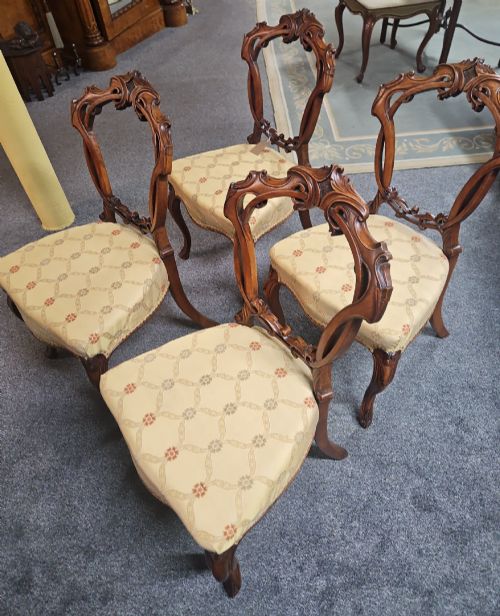
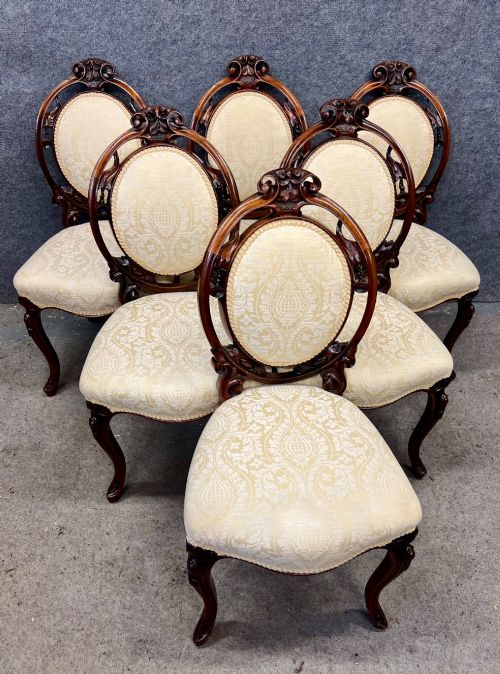

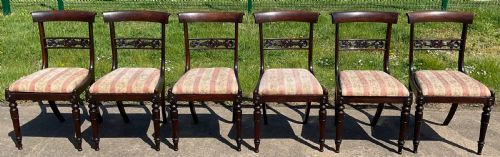


Period Parlor Chair
These period parlor chair selections span the Regency and Victorian eras, offering refined seating in mahogany, walnut, and rosewood for traditional interiors.
Period Parlor Chair
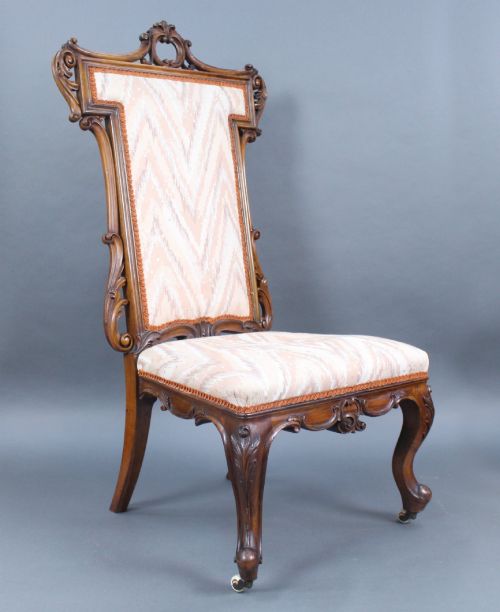
A period parlor chair encompasses seating designed for formal reception rooms during the Regency and Victorian eras, spanning from the early nineteenth century into the twentieth century. These pieces include single occasional chairs, sets of dining chairs, and matching elements within larger salon suites.
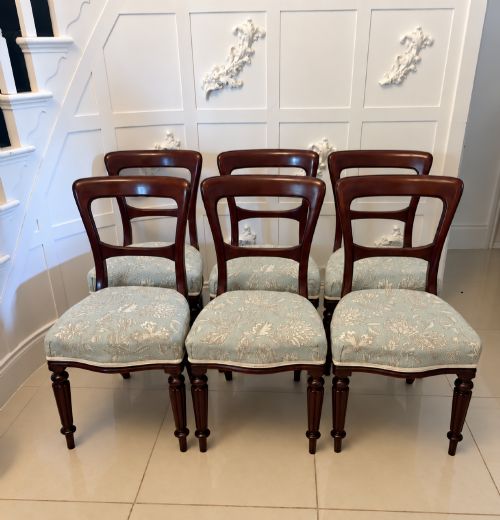
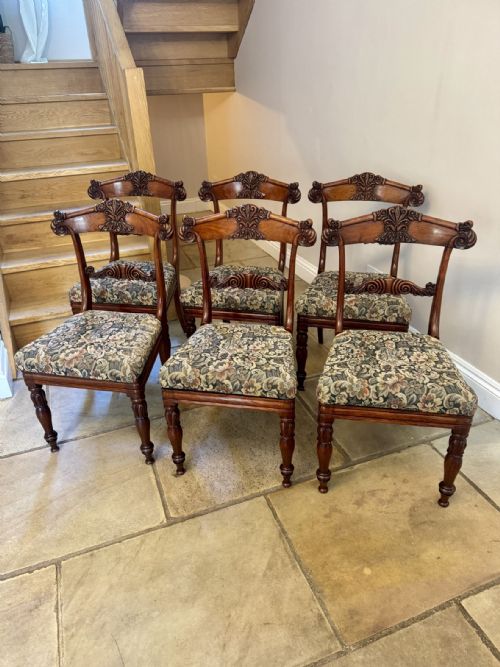
The most common examples encountered in these listings are Victorian walnut or mahogany chairs alongside Regency rosewood dining chairs. Buyers often select these forms to anchor a room with traditional woodwork and period upholstery.
Makers and designers of the time produced these seats in various regional interpretations, including French gilt styles and Aesthetic Movement ebonised frameworks. Each variation reflects the prevailing interior taste of its specific decade.
How they were made
Cabinetmakers constructed the structural frames of a period parlor chair predominantly from dense hardwoods such as mahogany, walnut, and rosewood, often utilising carved ornamentation to define the style. Brass hardware and gilt finishes occasionally appear as decorative accents.
Upholstery techniques involved traditional sprung bases covered in fabrics like brocade and various textiles. Re-upholstery is common in surviving examples to maintain structural and decorative integrity.
Listings feature items spanning the Regency and Victorian eras, constructed primarily from mahogany, walnut, and rosewood.
What varies in quality
The distinction between standard examples and the finest pieces lies in the crispness of the wood carving and the selection of timber veneers. Superior chairs exhibit deeply defined motifs, balanced proportions, and robust joinery.
The choice of upholstery materials and the fidelity of the period style further separate basic production from exceptional craftsmanship. Sets that retain uniform timber grain and matched upholstery show higher original intent.
Jas James Shoolbred
The Period Parlor Chair Glossary
- Regency
- A British design period spanning the early nineteenth century, known for classical restraint and the use of rosewood and mahogany. Pieces from this era often draw influence from Greek and Roman precedents.
- Victorian
- A broad nineteenth-century era encompassing diverse revivals including Rococo and Gothic styles. Furniture from this period frequently displays heavy timber framing and elaborate carving.
- Rosewood
- A dense, heavily figured dark timber frequently utilised during the Regency era for high-status furniture. Its rich grain adds visual depth to chair rails and backrests.
- Ebonised
- Wood finished with a dark stain or black lacquer to imitate ebony. This treatment became popular during the Aesthetic Movement.
- Fauteuil
- An open-armed upholstered armchair with exposed wooden framing, originating in France. These seats typically feature carved walnut or gilt structures.
Period Parlor Chair: Frequently Asked Questions
How do I date a period parlor chair?
Dating relies on identifying the characteristic timber choices, leg profiles, and decorative motifs associated with specific nineteenth-century decades. Regency pieces typically show classical restraint, whilst Victorian examples often display more exuberant carved walnut or mahogany frames.
Examining the underlying construction methods and joinery provides further clues to the manufacturing decade. Comparing the piece against documented examples from the same stylistic movement helps confirm the era.
Are these chairs suitable for daily dining?
Many examples listed as dining chairs were built for daily use from durable hardwoods like mahogany and walnut. Their sturdy frames continue to function well around a modern dining table.
It remains wise to check the rigidity of the joints and the condition of the sprung base before regular use. Professional reinforcement can secure historical frames without altering their appearance.
What is the difference between an occasional chair and a salon suite?
An occasional chair is a standalone seat intended for flexible placement within a room rather than permanent positioning. These single pieces often feature decorative carving suited to a parlor setting.
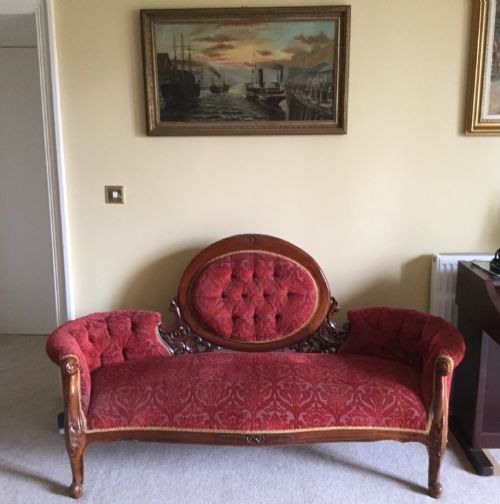
A salon suite consists of matching seating, such as a settee paired with armchairs and side chairs, designed to create a cohesive furnishing scheme. These matched groups shared identical timber, fabric, and decorative motifs.
How should I care for antique wood and upholstery?
Preserving the timber involves keeping the chairs away from direct heat sources and sudden humidity changes to prevent wood splitting. Regular dusting with a soft cloth maintains the finish without chemical buildup.
Upholstered surfaces benefit from gentle vacuuming using a low-suction attachment to remove particulate matter. Professional textile cleaning is recommended for antique brocades and delicate fabrics.