






Period Open Shelving
Period open shelving brings accessible display and storage into a room, offering practical tiers for books and objects through timeless furniture forms.
Period Open Shelving
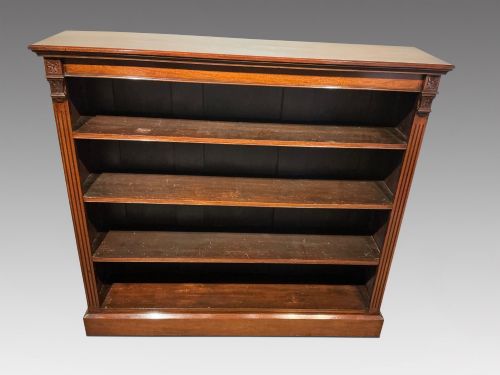
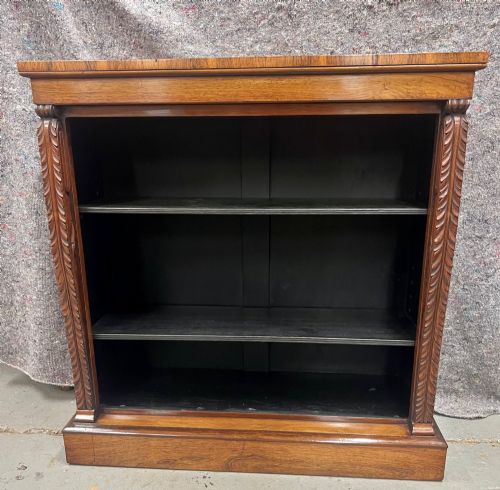
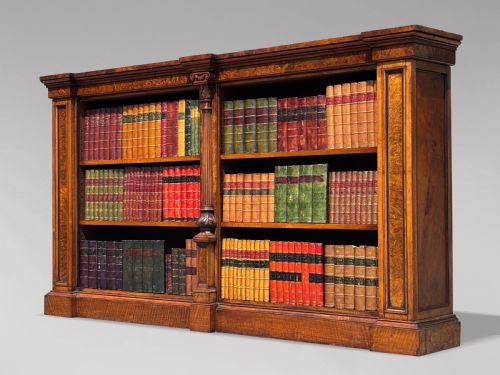
Period open shelving encompasses bookcases, etageres, whatnots, and wall shelves spanning Georgian, Regency, Victorian, and Edwardian eras. Buyers searching for period open shelving typically encounter mahogany, rosewood, and walnut formats designed for open display.
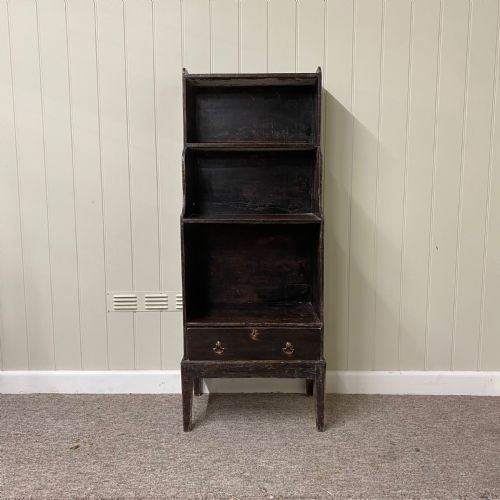
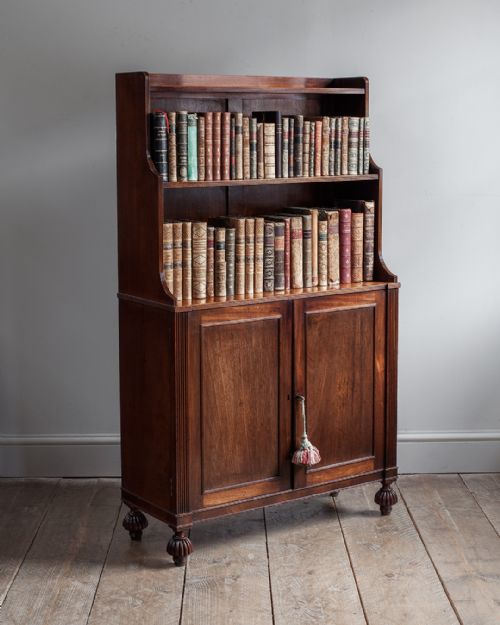
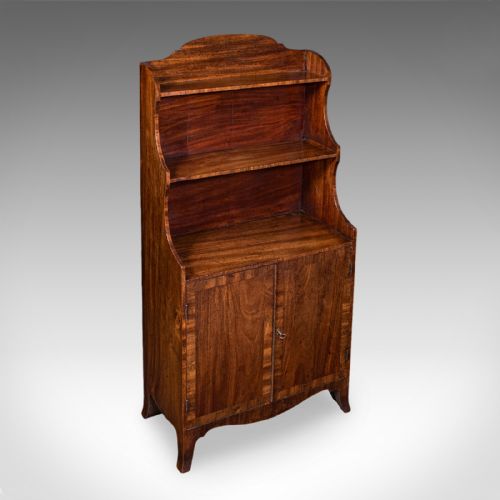
The selections range from tiered whatnots and etageres to low open bookcases and waterfall bookcases. Regency and Georgian examples appear frequently alongside Victorian and early twentieth-century variations.
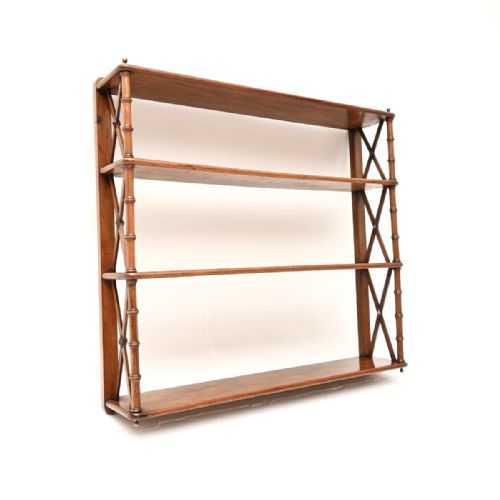
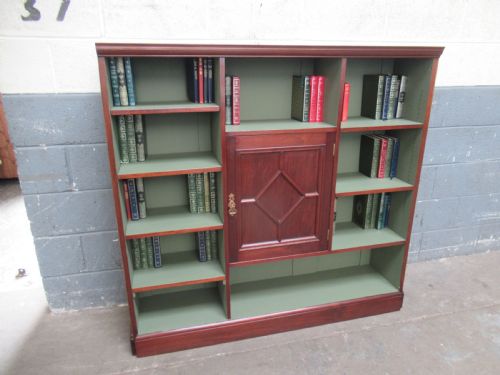
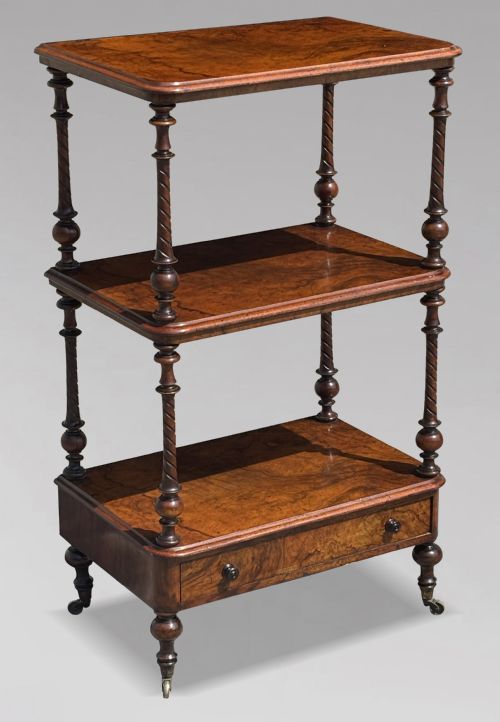
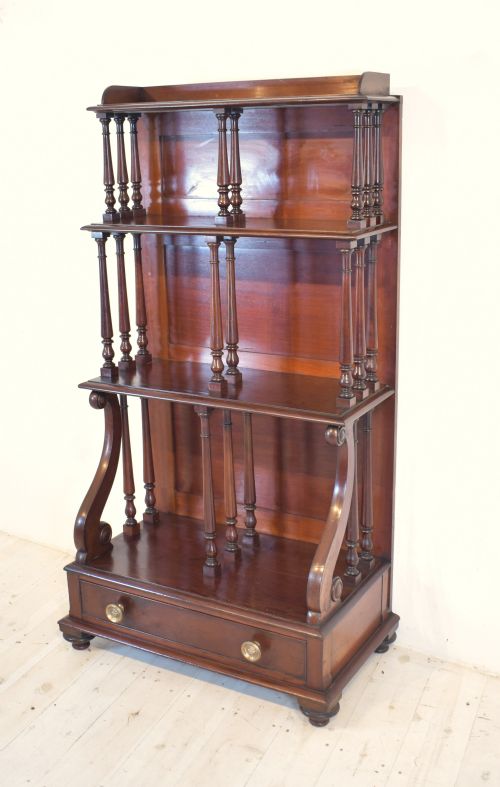
Many pieces incorporate multiple tiers supported by turned columns or uprights, whilst others feature integrated cupboards or leather dummy books. These configurations provide varied surfaces for arranging books, ceramics, and decorative objects.
Materials and construction methods
Cabinetmakers utilised dense timbers such as mahogany, rosewood, walnut, and oak to construct these pieces, often selecting flame mahogany or burr walnut for decorative grain patterns. Brass fittings, leather accents, and parcel gilt detailing frequently complement the primary woods.
Joinery techniques relied on precise assembly of shelves, uprights, and vertical partitions to support substantial weight without sagging. Tiered whatnots and etageres employed turned wooden columns or delicate uprights to separate individual levels.
Period Open Shelving Retail Price Guide 2026
Typical asking prices for period open shelving among the pieces listed under this phrase on Sellingantiques today, from the lower quarter to the upper quarter. They describe what is for sale here now, not the wider market.
Some Regency rosewood bookcases come equipped with leather dummy books to conceal actual storage spaces.
Distinctions in craftsmanship
Quality separates ordinary utility pieces from exceptional works through the selection of timber veneers and the crispness of turned supports. Superior examples display thoughtful proportions and harmonious grain matching across expansive surfaces.
The integration of secondary materials, such as finely tooled leather inserts or cast brass mounts, elevates the execution. Subtle design elements, including unusual tiered formats or refined moulding profiles, distinguish the better pieces.
The Period Open Shelving Glossary
- Whatnot
- A moveable piece of furniture with multiple tiers used for displaying ornaments and small objects. It typically stands on slender legs or columns.
- Etagere
- A set of open shelves for displaying small articles, sharing functional similarities with the whatnot. These tiered stands date predominantly from the Georgian and Regency periods.
- Waterfall bookcase
- A standing set of open shelves where each successive tier steps back from the one below it. This format gained popularity during the Regency era.
- Breakfront
- A piece of furniture whose central section projects forward from the flanking wings. This architectural arrangement adds depth and visual interest to larger bookcases.
- Simulated rosewood
- A painted or stained finish applied to a less costly timber to mimic the rich grain and colour of genuine rosewood. Craftsmen used this technique during the nineteenth century.
Period Open Shelving: Frequently Asked Questions
What is an etagere?
An etagere is an open-shelved display unit designed for ornaments and small objects. These tiered structures provide accessible surfaces around a room.
Originating in France, the form was adopted by British cabinetmakers to showcase ceramics, books, and decorative pieces during the Georgian and Regency eras.
How do I style open shelving?
Open shelving suits the display of books, decorative boxes, and collected objects within living spaces. Grouping items by height and material creates a balanced arrangement.
Allowing negative space between objects prevents visual clutter and highlights the timber grain and architectural lines of the furniture itself.
What distinguishes a whatnot?
A whatnot is characterised by multiple open tiers held aloft by slender uprights or columns. They were traditionally placed in parlours and drawing rooms.
These pieces offer vertical display capacity while maintaining a light physical footprint due to their open construction and slender supports.